
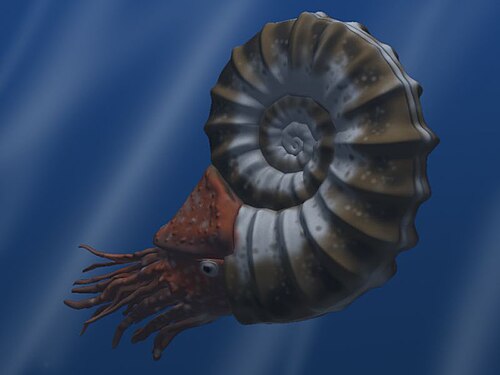





Ammonite
Snap your beach or creek find and Snappit checks the patterns, shape and surrounding rock to suggest what it might be. Then dig into the field guide with your young fossil hunter.

Identify and collect rocks, shells and fossils with your phone.


Drag a photo here, or choose one below.
JPG, PNG or WebP · Up to 10 MB

Photograph the find dry, in daylight, next to a ruler or coin, showing both the pattern and the surrounding rock. Don't dig specimens out where collecting is restricted.



Compare the suggested name with what you see in your photo. Then open its field-guide entry for fun facts and look-alikes to rule out.

Browse the field guide here, or save your finds as collectible cards in the Snappit app. Build collections and learn something new together.
From the Snappit field guide: spiral ammonites, shark teeth and ancient shells, with kid-friendly facts about the creatures that left them. Open a card to look closer.
A shell-shaped mark in a stone might be a real fossil, or a mineral pattern that only looks like one. Look for repeated biological structure, raised or sunken relief, and the surrounding rock. Showing the whole stone as well as the interesting bit helps separate a likely fossil from a lucky shape.

Living things grow in patterns, so fossils often show repeated parts: shell ribs, chambered coils, evenly spaced segments or steady growth lines. Random cracks and lumps usually change direction or spacing abruptly. A pattern that repeats across the whole object is a much stronger clue than one suggestive corner.

Symmetry means the two sides, or several sections around a center, mirror each other in an organized way. Relief means the pattern is raised or pressed in rather than just a color stain. A shell mold may be a shallow imprint; a burrow may stand out as a filled tube.

The matrix is the rock surrounding a fossil. Show how your find meets it: a shell outline inside a pebble, an impression on a flat rock layer, or a fragment weathering out of stone. This context helps, though some fossils turn up loose and some mineral patterns sit in rock too.

Where you picked up the stone can help you compare possibilities, but it isn't a firm rule. Beach pebbles, river cobbles and glacial gravel have often traveled a long way, so the spot you found it may be far from where the fossil-bearing rock formed.
Compare real field-guide examples: Ammonite · Petrified Wood

A fossil shell may survive as original shell, mineral replacement, a mold or a cast. Modern shells can also turn heavy, stained or packed with sediment. Check the surrounding material and preserved structure, and don't rely on weight, color or a stony look alone to decide a shell is fossilized.

Mineral dendrites, usually manganese oxide, form branching patterns that look like tiny plants. Look for recognizable leaves, veins, stems or repeated anatomy rather than branching alone. Some plant fossils are flat impressions, so a lack of depth doesn't rule them out, and a close expert look may be needed.

Body fossils preserve part of the organism, like a shell, tooth, bone or piece of wood. Trace fossils preserve behavior: burrows, trails, borings or footprints. In photos, traces usually look like repeated grooves or tubes in the rock rather than one object with obvious anatomy.

Beach and river stones often show only a slice through a fossil, not the whole creature. A shell might appear as a curved, ribbed arc, a cluster of chambers, or a pale patch with repeating lines. Look for order: even spacing, matching curves, or a clear edge between the fossil and the surrounding pebble.
Rock type matters. Fossils in a limestone pebble are far more common than true plant fossils on a smooth slate fragment, where a plant-like mark is often just a stain. Still, where you found a stone isn't always where it formed. Waves, rivers and glaciers can carry fossil-bearing rock a long way.

Tooth-shaped stones get mistaken for teeth all the time, because lots of hard rocks taper to a point. A convincing tooth usually shows a clear crown, a smooth, enamel-like surface and a distinct root. Bone fragments may show spongy internal texture or joint-like ends, but some weathered rocks mimic both.
Trace fossils record activity rather than body parts. Burrows can appear as filled tubes inside rock, while tracks and trails are preserved on rock layer surfaces. Repeated structure and the type of rock matter more than whether a mark is raised or sunken. Recent scratches and erosion can mimic traces.
Take one clear photo with the full object, part of the host rock and a coin or ruler for scale, so size and context are in the same frame.

Low-angle light from a window or lamp makes ribs, chambers, pores and shallow impressions cast small shadows that overhead light hides.

Use a surface that's already exposed. Don't scrape, oil or break the piece to show more detail; a clear photo of it as found keeps the evidence intact.
Look for repeated ribs, chambers or recognizable anatomy. Those make a fossil likely, but cracks, mineral growth and erosion can imitate biological shapes too. Photograph the whole pebble with the pattern; one suggestive curve isn't enough to call it a fossil.
It might be. Ammonites coil flat, like a rolled-up rope, with evenly spaced ribs and, on worn surfaces, wavy suture lines between chambers. Fossil snails coil into a cone instead, and spiral stains or concentric mineral nodules can mimic the outline. Check the center and the chamber pattern, not just the curl.
Often. A real tooth usually shows a smooth, glossy enamel crown, a sharp edge and a clear change from crown to root. Plain triangular stones are common look-alikes. Naming the exact species from one photo is harder unless the shape, surface and any serrations are very clear.
Check a broken end. Fossil bone usually shows a solid outer layer around a spongy, honeycomb-like interior. Some rocks and concretions weather into very bone-like shapes, so outline alone can fool you. Photograph the whole piece and any natural break, not just the most convincing angle.
A trace fossil preserves activity, like burrowing, feeding or walking, rather than the animal itself. Traces can sit inside rock or on an exposed layer surface. A photo of the repeated pattern and surrounding stone helps, but recent marks and erosion can look similar, so where the rock comes from still matters.
Not on its own. A photo can narrow the fossil type, but age and rarity depend on the rock it came from. Similar forms lived across long time spans, and odd-looking finds aren't automatically rare. Use the result as a starting point, then check a regional geology or fossil guide.
It could, but branching mineral dendrites are the most common plant look-alike. Look for organized leaves, veins or other real anatomy, not just branching. Being flat doesn't settle it, since real plant fossils often survive as thin films or impressions.
Yes. Snappit is a free iPhone and Android app for kids exploring with a grown-up. Snap a fossil, rock or shell and it suggests a match with short, kid-friendly facts, then turns it into a collectible card with a rarity tier in your family's private collection. No ads, no chat, free IDs every day, and an optional subscription for unlimited snaps.
The Snappit appAges 4+ · No ads
Take what you learn here into Snappit and turn your next walk or day out into a shared adventure.
Save your discoveries as collectible cards in the app, with rarity tiers and themed collections to explore.
Short, friendly facts give young readers something to notice, ask about, and remember. The app is made for ages 4 and up, without ads.
Discover new collection themes, try the daily discovery, and earn badges as you keep exploring together.


