A short visit
For a 60–90-minute visit, choose the fennecs, otters and one domestic-animal stop, then leave a little playground time. For 2–3 hours, add the marmosets, read some dialect stories and revisit the enclosure that caught your attention.
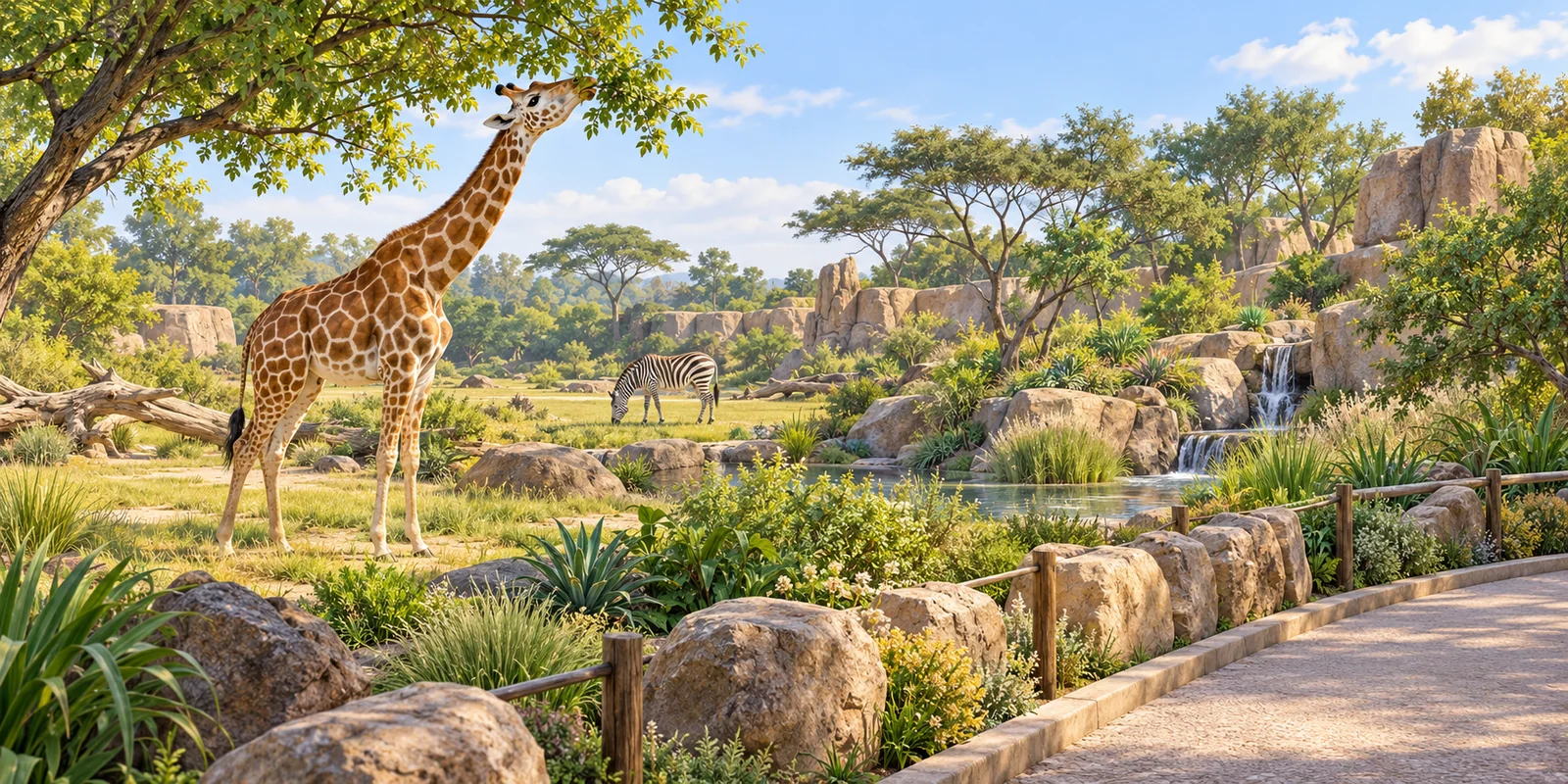 Illustration
Come to Zoo der Minis Aue to discover how much there is to notice in a small animal.
Come to Zoo der Minis Aue to discover how much there is to notice in a small animal. This leafy zoo on the edge of Aue brings together miniature domestic breeds and naturally small wild-animal species. Start by choosing one of each to look for: perhaps a miniature donkey and a fennec fox. It gives children a simple question to carry around the enclosures: what makes this animal a ‘mini’?
The farm animals are a good place to unravel that question. American miniature donkeys and Ouessant sheep are small domestic types; the foxes and otters belong to wild-animal species kept here in the zoo. These are animals in human care, rather than wildlife to search for in the surrounding countryside. Look at ears, feet and body shape as well as size. A small donkey is still recognisably a donkey, while a tiny monkey moves through its enclosure in a very different way.
There is a playground and a petting enclosure, so the day can alternate between quiet watching and letting off steam. Another detail worth pausing for is the Erzgebirgisch on the animal signs: short dialect stories sit alongside standard German. If someone in your group reads German, try a passage aloud. The unfamiliar words make a surprisingly good reminder that this is an Erzgebirge zoo with its own local voice. Wondering what that bird or insect is? Find out on your visit using the Snappit nature app.
Work on Aue’s zoo began in June 1960 on a former school garden, supported by local fundraising and volunteer labour. Its first residents were two tawny owls called Adam and Eva. The focus on smaller animals developed in the mid-1990s as a way to make better use of a site with little room to expand. Since August 2020, the dialect stories on the signs have added another local thread to the visit.
Give the fennecs, small-clawed otters and marmosets a little watching time before moving on to the miniature farm animals. Pick a behaviour to follow: an otter investigating its surroundings, a monkey changing perches, or a goat deciding where to stand. If an animal is resting out of sight, try again after the playground. Older children can compare the miniature donkeys with the ponies and read the enclosure labels to separate species names from breed names. For a more guided visit, book one of the zoo’s hour-long tours in advance. Staff choose any animal encounters according to the animals’ condition on the day.
Last admission is 17: 30 during summer time and 15:30 during winter time. On 24 and 31 December opening hours are 09:00–12:00. Bring layers for unhurried outdoor watching in cooler weather. The snack kiosk beside the ticket desk operates in good weather, so make a separate food plan for a wet or wintry visit.
For a wheelchair, mobility aid or pushchair, call 03771 23773 before setting out and ask about the easiest entrance approach, path surfaces, any steps and toilet access for your needs. The zoo’s admission list provides free entry for one accompanying person when the visitor’s disability pass has the German ‘B’ mark.
Compare the little donkeys, ponies and goats, then look for the Ouessant sheep.
Make time for the fennec foxes, small-clawed otters and common marmosets.
A playground and petting enclosure break up the animal watching for younger visitors.
Animal signs include short stories in Erzgebirgisch alongside standard German.
For a 60–90-minute visit, choose the fennecs, otters and one domestic-animal stop, then leave a little playground time. For 2–3 hours, add the marmosets, read some dialect stories and revisit the enclosure that caught your attention.
Let each person choose an animal and record three things: its name, one body feature and one behaviour. At the end, compare a domestic miniature with a naturally small species. Drawing works just as well as writing.
Choose waterproof layers and a few priority animals for a shorter outing. If you want to finish with a meal beside the zoo, confirm the restaurant is open before setting out. The outdoor playground is easier to enjoy in a dry spell.
Look at the ears before anything else. Compare their size with the fox’s face, then see whether it is watching, resting or exploring. Give a resting animal space and come back later rather than trying to attract it.
Watch how the otters use their front feet. Follow one animal for a while and see what draws its attention. The German name to look for is Zwergotter.
Look for the white ear tufts, then follow one individual as it chooses a perch. Their German name is Weißbüscheläffchen. The zoo also keeps pygmy marmosets, so compare the names carefully.
Compare the ears and mane with those of the ponies. American miniature donkeys are a small domestic type within the domestic donkey species. Watch for a change in ear position as an animal listens.
Compare the miniature pony’s proportions with a full-sized horse you have seen. These are domestic horses of a small type. Look at the shape of the mane and muzzle, then compare them with the donkeys.
Take a moment to watch how the miniature domestic goats use the space around them. Choose one to follow with your eyes: does it stay close to another goat, investigate something or settle down?
Choose one guinea pig and follow it with your eyes without tapping or calling. Look for differences in coat colour and the way animals settle beside one another. Leave any handling to a staff-led encounter.
If a ferret is awake, watch how its long body bends as it moves. A quiet pause lets you notice more than a quick glance. A staff-led encounter may be possible on a booked tour, depending on the animal.
All animals in this selection belong to the zoo’s captive collection. Domestic breeds and forms are labelled separately from wild-animal species. Individual animals may be resting or off view.
Find the Ouessant sheep and look for that breed name on the sign. Compare it with the general word “sheep”: a domestic breed and a species describe different things.
Each card links to a full Explore page with photos, traits, and fun facts.
Start with the big picture, then zoom in to explore individual wildlife observations around this place.
Getting there
Head to Damaschkestraße 1, 08280 Aue-Bad Schlema. There are a few spaces outside and a zoo car park about 200 m away on Schwarzenberger Straße, above the Friedhof / Tiergarten bus stop. Check current bus connections before travel.
Leave time inside
Arrive well before last admission, which is 17:30 in summer time and 15:30 in winter time. Allow about 2–3 hours for a relaxed family visit; 60–90 minutes can work for a shorter look.
Cash and tickets
Bring cash for the souvenir till, which is cash-only. Check the official price list for admission and any event supplement.
Access needs
Ask the zoo about surfaces, steps and toilet access before bringing a wheelchair or pushchair if these would affect your visit.
Book a tour early
Email [email protected] with your preferred tour, group size and date. Places depend on staffing, and particular animal encounters cannot be promised.
Food break
Einkehr am Tiergarten is immediately beside the zoo. Check its opening before relying on lunch there; the ticket-desk snack kiosk is weather-dependent.
Animals set the pace
Watch from visitor areas, keep fingers away from enclosure mesh and let staff guide any permitted touching or feeding.
Dogs
Dogs may come into the zoo on a lead. Keep enough space for both the zoo animals and other visiting families.
Recent snaps will appear here as new observations are added.

North Carolina, US
You might spot American Robin and Eastern Gray Squirrel.
View guide →

Florida, US
You might spot Anhinga, American Alligator, and Wood Duck.
View guide →

New Mexico, US
You might spot Wood Duck, Duck, and Canada Goose.
View guide →

Michigan, US
You might spot African Lion, Komodo Dragon, and Brown Bear.
View guide →
Take the discovery with you
Identify the wildlife you spot, learn as you go, and keep a collection of the adventure.