Sycamore
Platanus occidentalis
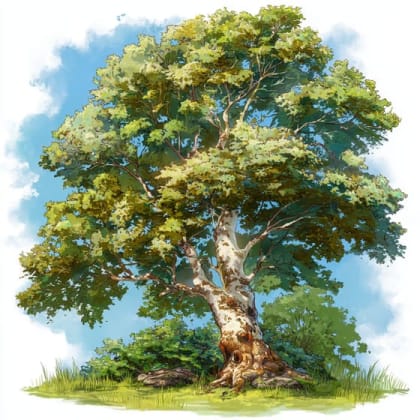
The Sycamore tree has big, green leaves and a distinctive bark that changes color. It’s a great tree for climbing!
Habitat: Riversides and open spaces
The Sycamore is easily recognized by its distinctive patchy bark, which peels away to reveal white, green, and brown colors, resembling camouflage. It has large, maple-like leaves with several pointed lobes and produces fuzzy, spherical seed balls that often hang through winter.
Category
TreesRarity
Common
Danger
1/5 · Very low
Snaps
43
In winter, its fuzzy seed balls look like festive ornaments hanging from the branches!
Its amazing bark peels off in patches, showing a cool mosaic of greens and browns!
Sycamore trees are super strong, often surviving big floods and storms!
The largest sycamore trees can grow wider than a car, with massive trunks!
Sycamore can shed its outer bark, which helps it remove pollutants and parasites from its trunk.
Sycamore has strong, deep roots that help it stabilize riverbanks and withstand floodwaters.
Sycamore's unique seed balls break apart, allowing tiny, parachute-like seeds to travel far by wind and water.
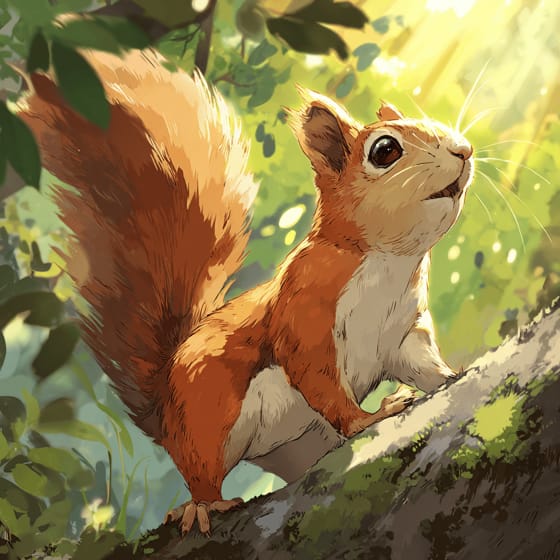
Sciurus carolinensis
Squirrels feast on the abundant seeds.
Meleagris gallopavo
Turkeys forage fallen seeds in winter.
Myiarchus crinitus
Often nests in sycamore hollows.
Castor canadensis
Beavers sometimes chew its bark and wood.
Deciduous plants periodically shed all their leaves, typically during autumn or dry seasons.
Shade tolerant plants are adapted to grow and thrive in areas with low light levels, requiring less direct sunlight.
Broadleaf trees are angiosperms characterized by flat, wide leaves that are typically shed annually in temperate climates.
Rapid growing plants exhibit accelerated growth rates, quickly increasing in size and biomass within a short period.

Forest habitats are terrestrial environments dominated by dense tree cover, supporting a high diversity of plant and animal life.

This trait characterizes organisms with an exceptionally long lifespan compared to others of their kind.
Danger
1/5 · Very low
Do not pick or eat anything you find. Some plants and mushrooms can be harmful.
30-50 m
15-25 m
No
150-300 cm
200-500 years
Riversides and open spaces
Achenes in spherical clusters
Fast
Zoom in to split clusters and explore where this object has been snapped.

Arkansas, US
You might spot African Lion, Red Fox, and Common Ostrich.
View guide →
Louisiana, US
You might spot African Lion, Giraffes, and Equus Africanus Asinus.
View guide →
North Carolina, US
You might spot African Lion, Giraffes, and Common Ostrich.
View guide →
New York, US
You might spot African Lion, Tiger, and Snow Leopard.
View guide →
Kentucky, US
You might spot African Lion, Komodo Dragon, and Rosy Boa.
View guide →
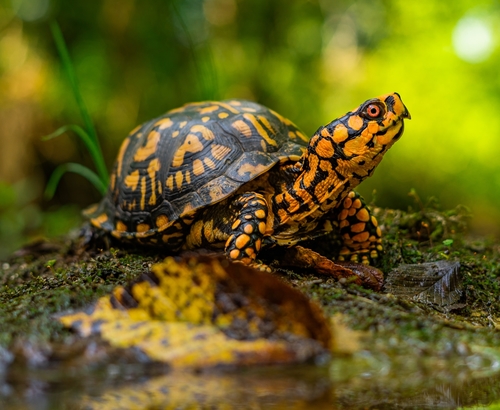
Virginia, US
You might spot Eastern Box Turtle, Sycamore, and Grape Family.
View guide →