

King Penguin
Aptenodytes patagonicus
The King Penguin is the second largest penguin. They have bright orange markings on their heads and are very social birds.
Habitat: Sub-Antarctic islands
The King Penguin has a sleek, black back and a bright white belly. Its most striking features are the vibrant orange-yellow patches on its upper chest and either side of its head, contrasting with its slender black bill.
Category
BirdsRarity
Rare
Danger
2/5 · Low
Snaps
Be the first to snap!
Baby King Penguins are fuzzy brown balls, looking very different from their parents!
King Penguins carry their single egg on their feet to keep it warm, not in a nest!
The entire breeding cycle, from egg to independent chick, can take over a year!
They are the second biggest penguin species, right after the mighty Emperor Penguin!
King Penguins can dive over 300 meters deep because of their dense bones, helping them reach prey far below the ocean surface.
King Penguins have powerful flippers and a torpedo body that helps them 'fly' through water to chase down swift prey.
King Penguins have special glands above their eyes that help filter salt from seawater, allowing them to drink ocean water.
King Penguins primarily eat small fish and squid, which they skillfully catch by diving deep in the ocean.
Age differences: Chicks are fed regurgitated, partially digested food by their parents.
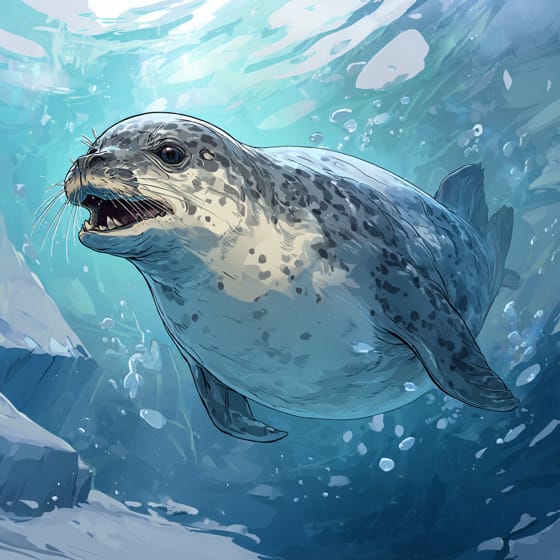
Hydrurga leptonyx
Adults and chicks are hunted by this large, powerful seal.
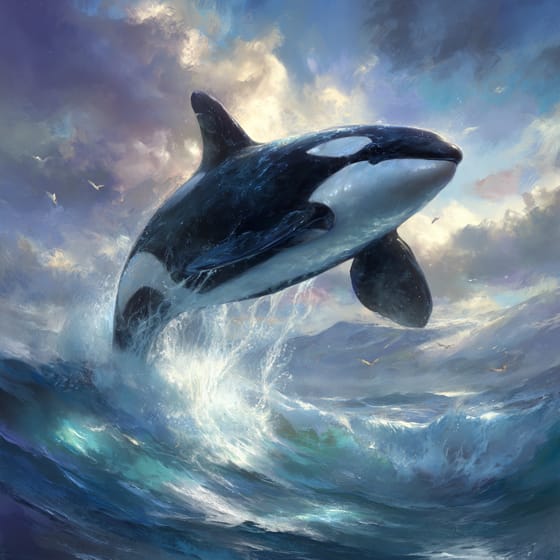
Orcinus orca
Orcas are apex predators of the Southern Ocean and hunt penguins.
Stercorarius skua
Skaus prey on eggs and young chicks in their breeding colonies.
Electrona carlsbergi
A primary food source, caught during deep dives.
Kondakovia longimana
This squid is a significant part of their varied ocean diet.
Wildlife encompasses all undomesticated animal and plant life existing in their natural habitats.
Feathered describes animals, primarily birds, possessing a covering of feathers.
Characterized by having toes connected by a membrane, typically aiding in swimming.
Social animals live in organized groups, cooperating for survival benefits such as foraging, defense, and raising offspring.

Aerial creatures spend a significant portion of their lives airborne, utilizing flight for various activities such as hunting, migration, or nesting.

Piscivorous organisms are animals that primarily subsist on a diet of fish.

Coastal habitats are dynamic environments located along the interface between land and sea, influenced by tides, waves, and saltwater.
Danger
2/5 · Low
Watch quietly from a distance and never try to feed or chase wild animals.
85-95 cm
9-18 kg
15-20 years
15 km/h
King Penguins primarily eat small fish and squid, which they skillfully catch by diving deep in the ocean.
Sub-Antarctic islands
Pursuit
1
Zoom in to split clusters and explore where this object has been snapped.
Recent snaps will appear here as new observations are added.

Michigan, US
You might spot African Lion, Wolverine, and Giraffes.
View guide →
South Carolina, US
You might spot African Lion, Komodo Dragon, and Giraffes.
View guide →

Texas, US
You might spot Harbor Seal, Chinstrap Penguin, and Cotton-Top Tamarin.
View guide →

Bavaria, DE
You might spot African Lion, Arachnida, and Insect.
View guide →