




Brown Thrasher
Toxostoma rufum
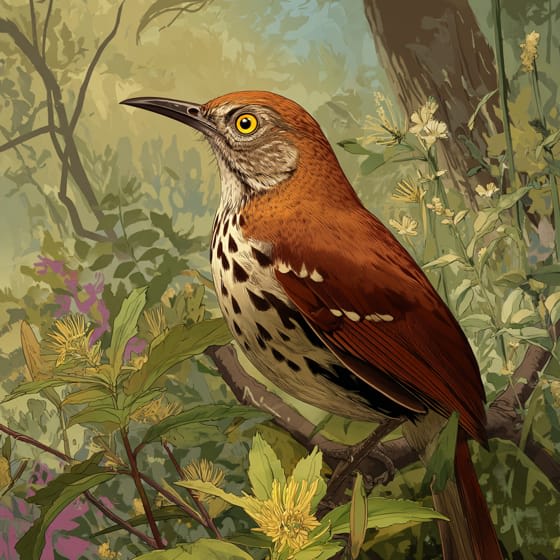
The Brown Thrasher is a lively bird with a beautiful brown coat and bright yellow eyes. They love to sing and can imitate other birds' songs!
Habitat: Wooded areas and gardens
The Brown Thrasher has striking reddish-brown upperparts and a very long tail. Its white underside is heavily streaked with dark brown, and it features two distinct white wing bars and piercing yellow eyes. A long, slender, slightly downcurved bill sets it apart.
Category
BirdsRarity
Common
Danger
1/5 · Very low
Snaps
11
A male Brown Thrasher's song can have over 1,000 unique phrases!
Their bright yellow eyes help them spot tiny movements in dense foliage!
These birds are famously aggressive, even chasing cats and humans from their nests!
They possess the largest song repertoire of any North American bird!
Brown Thrashers can imitate many different bird calls because of their complex vocal cords, helping them sound impressive.
Brown Thrashers use their strong, curved bills to sweep aside leaves, helping them uncover hidden insects and snacks.
Brown Thrashers aggressively defend their nests, dive-bombing intruders to protect their precious eggs and chicks.
Brown Thrashers feast on insects, spiders, berries, and seeds, sweeping leaves to find their food.
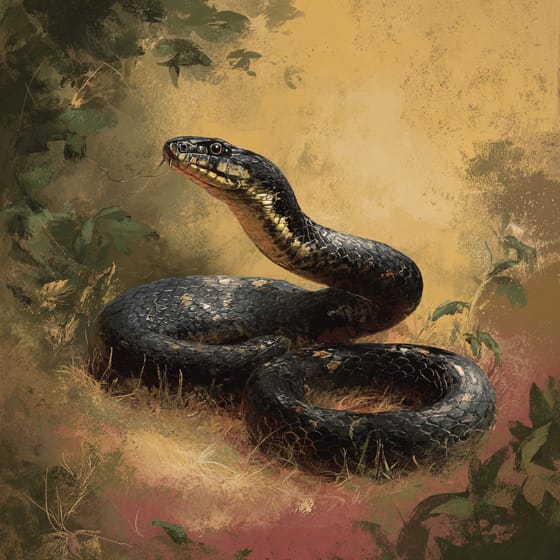
Pantherophis obsoletus
Preys on eggs and nestlings.
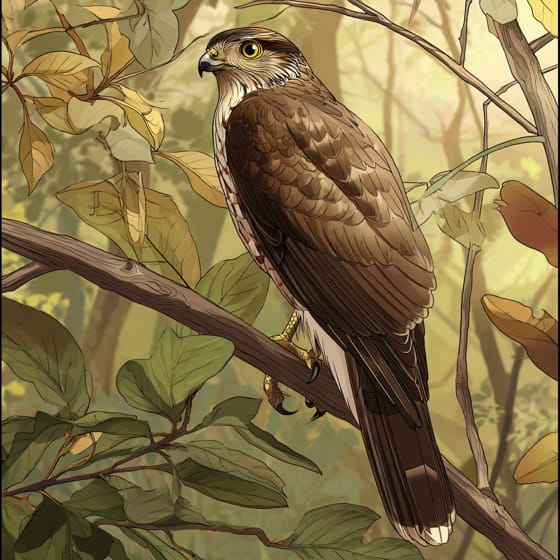
Accipiter cooperii
Hunts adult birds.
Rubus allegheniensis
Consumes its fruits.
Phyllophaga fusca
Forages for its larvae.
Wildlife encompasses all undomesticated animal and plant life existing in their natural habitats.
Feathered describes animals, primarily birds, possessing a covering of feathers.
Social animals live in organized groups, cooperating for survival benefits such as foraging, defense, and raising offspring.
This trait identifies organisms whose diet includes both plant and animal matter.

Singing animals produce complex vocalizations, often for purposes of attracting mates, defending territory, or communicating within their species.

Arboreal animals live primarily in trees, utilizing them for shelter, food, and protection from predators.

Forest habitats are terrestrial environments dominated by dense tree cover, supporting a high diversity of plant and animal life.
No aliases listed yet.
Danger
1/5 · Very low
Brown Thrashers are friendly birds and not dangerous. Just enjoy watching them from a distance!
23-30 cm
31-34 cm
0.06-0.08 kg
2-12 years
45 km/h
Brown Thrashers feast on insects, spiders, berries, and seeds, sweeping leaves to find their food.
Wooded areas and gardens
Foraging
Zoom in to split clusters and explore where this object has been snapped.
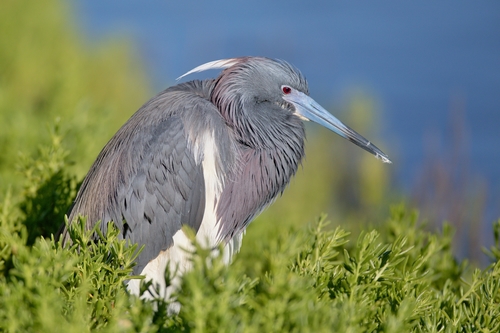
Florida, US
You might spot Tricolored Heron, Roseate Spoonbill, and Wood Stork.
View guide →

Alabama, US
You might spot African Lion, Komodo Dragon, and Common Ostrich.
View guide →
Florida, US
You might spot African Lion, Cheetahs, and Mainland Clouded Leopard.
View guide →
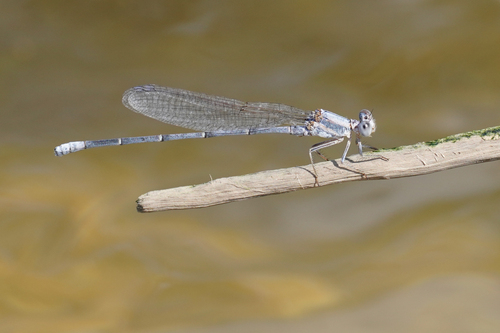
Texas, US
You might spot Powdered Dancer and Glassy-Winged Sharpshooter.
View guide →
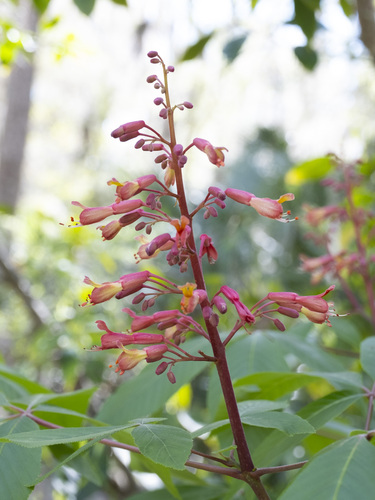
Texas, US
You might spot Red Buckeye, American Beautyberry, and Pond Slider.
View guide →
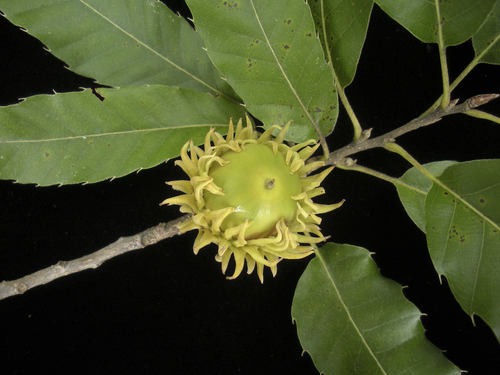
Virginia, US
You might spot Sawtooth Oak, Wineberry, and Blue Mistflower.
View guide →