





Cooper's Hawk
Astur cooperii
Cooper's Hawks are clever birds of prey that love to hunt for small animals. They have beautiful feathers and can fly really fast through trees to catch their dinner.
Habitat: Forests
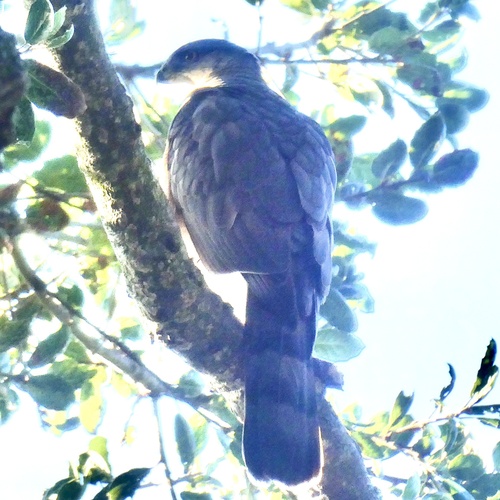
The Cooper's Hawk has short, rounded wings and a long tail, giving it an agile shape. Adults display a blue-gray back, dark cap, and rusty barred underparts, while juveniles are brown-backed with streaky breasts. Its relatively large head helps distinguish it from similar accipiters.
Category
BirdsRarity
Common
Danger
2/5 · Low
Snaps
202
Cooper's Hawks are super agile and can even catch birds mid-flight in dense woods!
Female Cooper's Hawks are much bigger than the males, sometimes by half their weight!
Their eyes change from bright yellow in youth to fiery red as they get older!
They build their nests in the crotch of a tree, often reusing nests from previous years.
Cooper's Hawk can weave through dense forests because its short, rounded wings and long tail help it maneuver swiftly.
Cooper's Hawk has excellent vision and explosive speed that help it ambush unsuspecting birds from hidden perches.
Cooper's Hawk can quickly flip upside down in flight to grab prey that attempts to escape upwards.
These fierce hunters mostly eat small to medium-sized birds, with some small mammals too.
Feathered describes animals, primarily birds, possessing a covering of feathers.
Aerial creatures spend a significant portion of their lives airborne, utilizing flight for various activities such as hunting, migration, or nesting.
An ambush predator hunts by patiently waiting and concealing itself, then launching a sudden attack when unsuspecting prey comes within range.
Forest habitats are terrestrial environments dominated by dense tree cover, supporting a high diversity of plant and animal life.

This trait identifies organisms whose diet consists entirely or primarily of animal tissue.

Diurnal animals are primarily active during daylight hours, typically resting or sleeping at night.

This trait identifies organisms that exhibit exceptional swiftness in movement for hunting, escape, or travel.
Danger
2/5 · Low
Watch birds from a distance and be quiet so you don't scare them away.
The easiest way to identify Cooper's Hawk is to use the Snappit nature identifier app.
35-50 cm
60-90 cm
0.2-0.7 kg
8-12 years
65 km/h
These fierce hunters mostly eat small to medium-sized birds, with some small mammals too.
Forests
Zoom in to split clusters and explore where this object has been snapped.
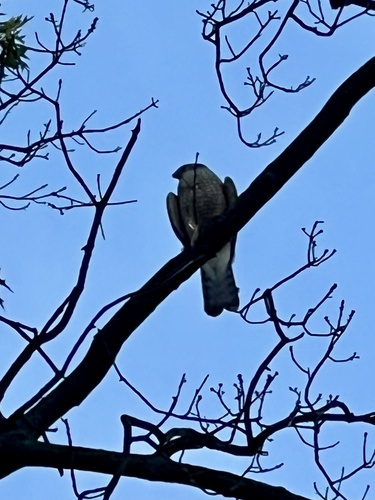
Jun 19, 2026
BloomingdalePhoto attribution
(c) Frederick Nunley, some rights reserved (CC BY)
License: CC BY 4.0 ↗
Image may be shown cropped inside the card frame.
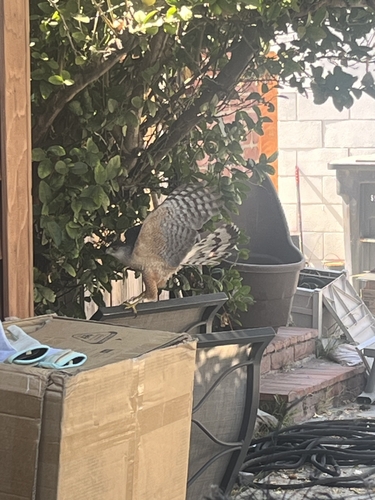
Jun 4, 2026
Village Green, Los AngelesPhoto attribution
(c) Stella, some rights reserved (CC BY)
License: CC BY 4.0 ↗
Image may be shown cropped inside the card frame.
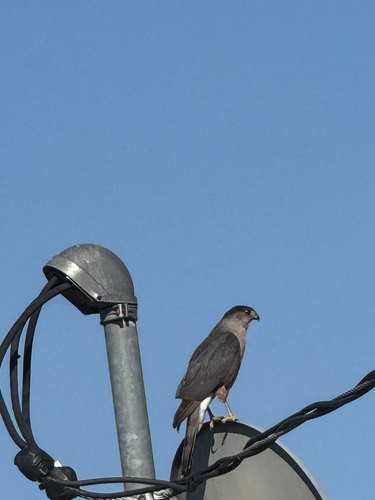
Jun 4, 2026
Alvarado Terrace Historic DistrictPhoto attribution
(c) Malena Lacque, some rights reserved (CC BY)
License: CC BY 4.0 ↗
Image may be shown cropped inside the card frame.
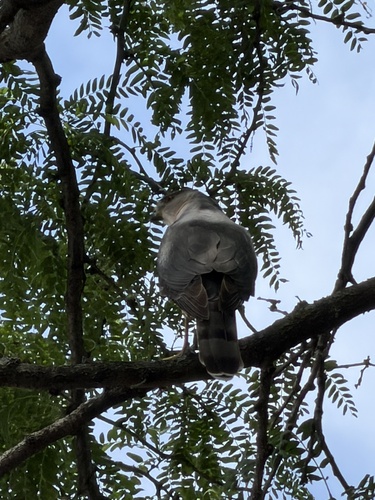
Jun 2, 2026
Dundee-Happy Hollow Historic DistrictPhoto attribution
no rights reserved
License: CC0 1.0 ↗
Image may be shown cropped inside the card frame.
Jun 2, 2026
Atchison VillagePhoto attribution
(c) Karen Offereins, some rights reserved (CC BY)
License: CC BY 4.0 ↗
Image may be shown cropped inside the card frame.

Massachusetts, US
You might spot Eastern White Pine and Common Eastern Bumble Bee.
View guide →

California, US
You might spot Monarch, Canada Goose, and Western Gull.
View guide →

Rhode Island, US
You might spot Rugosa Rose and American Herring Gull.
View guide →

District of Columbia, US
You might spot Eastern Gray Squirrel, Duck, and House Sparrow.
View guide →
.jpg)
District of Columbia, US
You might spot Eastern Gray Squirrel, Duck, and House Sparrow.
View guide →

Indiana, US
You might spot Eastern Fox Squirrel, Duck, and Canada Goose.
View guide →
Take the discovery with you
Snap it with Snappit to identify it, learn what makes it special, and add the discovery to your collection.





.jpg&width=800)






