Carrion Crow
Corvus corone
Carrion crows are clever birds with shiny black feathers. They often gather in groups and can be seen hopping around parks and fields.
Habitat: Open fields, parks, and woodlands
The Carrion Crow is a medium-sized bird entirely covered in sleek, glossy black plumage, including its strong beak and legs. It has a robust, compact body shape, visually distinct from the shaggy-throated raven or the grey-necked hooded crow.
Category
BirdsRarity
Common
Danger
1/5 · Very low
Snaps
9
Carrion crows sometimes 'mob' larger birds of prey, working together to chase them out of their territory!
Crows sometimes engage in playful behavior, like sliding down snowy roofs or dropping and catching objects mid-flight!
These clever birds have been observed dropping nuts onto roads, letting cars crack them open for an easy meal!
They can remember human faces for years, even alerting other crows to "dangerous" people they recognize!
Carrion Crows can use twigs or stones as tools to access food because this helps them forage efficiently for hidden treats.
Carrion Crows can solve complex puzzles to get food because their high intelligence helps them adapt to new challenges easily.
Carrion Crows can remember individual human faces for years because this intelligence helps them identify friends or foes.
Carrion Crows are omnivores, eating almost anything they can find, from insects and seeds to human refuse!
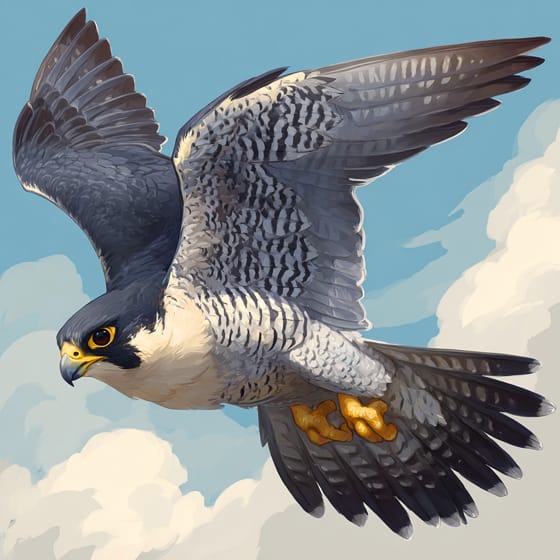
Falco peregrinus
Crows can occasionally fall prey to swift peregrine falcons.
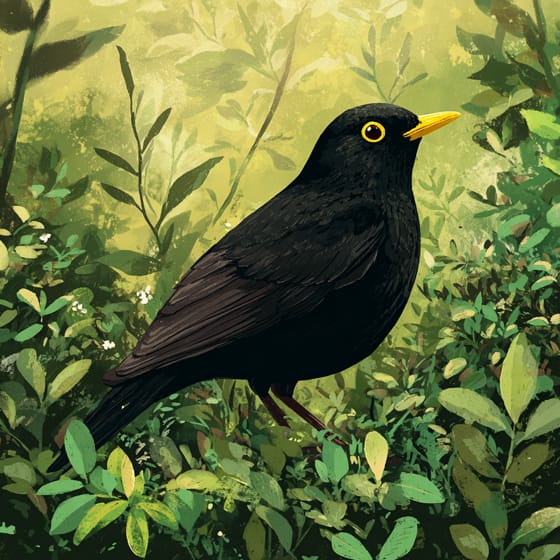
Turdus merula
Carrion Crows frequently prey on eggs and nestlings of smaller birds.
Arion ater
Slugs and other invertebrates are a common and nutritious food source.
Apodemus sylvaticus
Crows will opportunistically hunt small mammals like mice.
Wildlife encompasses all undomesticated animal and plant life existing in their natural habitats.
Feathered describes animals, primarily birds, possessing a covering of feathers.
Social animals live in organized groups, cooperating for survival benefits such as foraging, defense, and raising offspring.
This trait identifies organisms whose diet includes both plant and animal matter.

Singing animals produce complex vocalizations, often for purposes of attracting mates, defending territory, or communicating within their species.
This trait describes organisms that manipulate external objects to achieve a specific goal.

Forest habitats are terrestrial environments dominated by dense tree cover, supporting a high diversity of plant and animal life.

Describes a species whose presence and role have a disproportionately large effect on its environment.
Danger
1/5 · Very low
Carrion crows are not dangerous, but it's best to enjoy watching them from a distance.
45-50 cm
84-100 cm
0.4-0.6 kg
10-15 years
55 km/h
Carrion Crows are omnivores, eating almost anything they can find, from insects and seeds to human refuse!
Open fields, parks, and woodlands
Foraging
Zoom in to split clusters and explore where this object has been snapped.

England, UK
You might spot Blue Shark, Great White Shark, and Tiger Shark.
View guide →

South Holland, NL
You might spot Grey Heron, Eurasian Jackdaw, and Common Moorhen.
View guide →

Vienna, AT
You might spot Red Squirrel, Hooded Crow, and Grey Heron.
View guide →

England, UK
You might spot Cinnabar Moth, Common Moorhen, and Marmalade Hover Fly.
View guide →

England, UK
You might spot African Lion, Horse, and Giraffes.
View guide →

Nouvelle-Aquitaine, FR
You might spot House Sparrow, Common Wall Lizard, and Common Moorhen.
View guide →