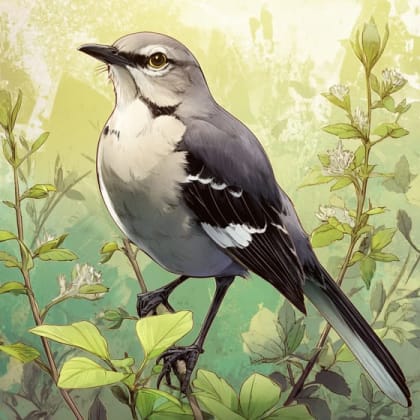
Barn Owl
Tyto alba
The Barn Owl has a heart-shaped face and is known for its ghostly appearance! It often hunts in fields and can fly silently to catch its prey.
Habitat: Farmlands and open fields
The Barn Owl has a striking white, heart-shaped face and dark, beady eyes. Its underside is pure white or pale buff, contrasting with golden-brown upperparts speckled with grey and black dots. This unique face makes it easily distinguishable.
Category
BirdsRarity
Common
Danger
2/5 · Low
Snaps
2
A Barn Owl's big eyes can't move, so they move their entire head to look around!
Barn Owls often nest in old barns or abandoned buildings, giving them their name!
They can sometimes have two families of babies in one year if food is plentiful!
They swallow their prey whole, then later cough up a pellet of undigested bones and fur.
Barn Owls have super soft, specialized feathers that let them fly almost silently, surprising their prey.
Barn Owls have asymmetrical ear openings and a facial disc that help them pinpoint tiny sounds, even in total darkness.
Barn Owls can turn their heads almost all the way around, up to 270 degrees, to spot prey without moving their bodies.
They are expert hunters who mostly eat small rodents like voles and mice.
Microtus pennsylvanicus
A primary food source, keeping their populations in check.
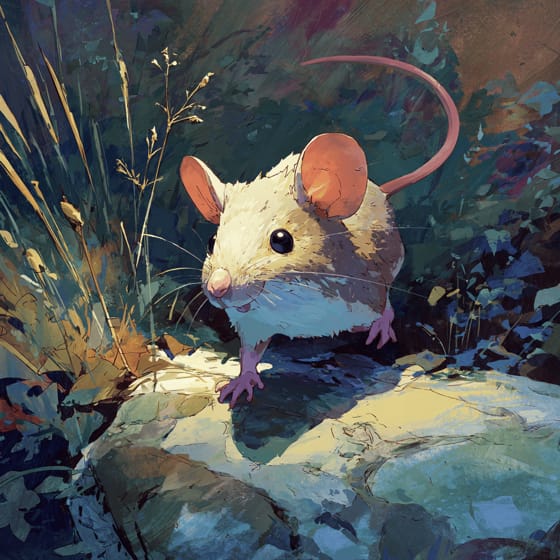
Mus musculus
A common prey item, especially near human settlements.
Sorex araneus
A small, fast mammal often caught by owls.
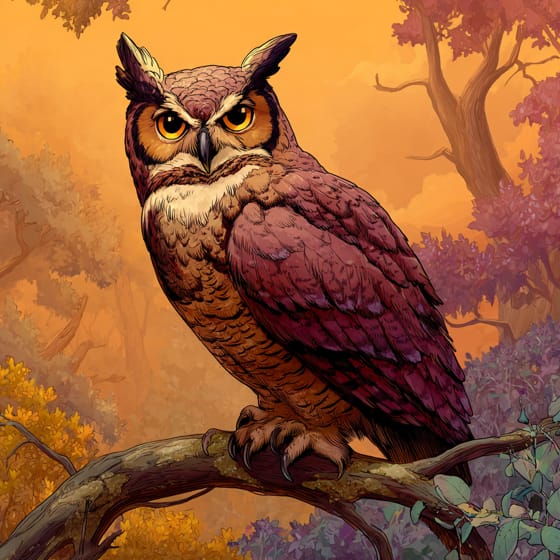
Bubo virginianus
Can sometimes prey on smaller Barn Owls if given the opportunity.
Wildlife encompasses all undomesticated animal and plant life existing in their natural habitats.
Feathered describes animals, primarily birds, possessing a covering of feathers.
An ambush predator hunts by patiently waiting and concealing itself, then launching a sudden attack when unsuspecting prey comes within range.
Forest habitats are terrestrial environments dominated by dense tree cover, supporting a high diversity of plant and animal life.

This trait identifies organisms whose diet consists entirely or primarily of animal tissue.

Nocturnal animals are primarily active during the nighttime hours, typically resting or sleeping during the day.
Danger
2/5 · Low
Watch quietly from a distance and never try to feed or chase wild animals.
32-40 cm
80-95 cm
0.3-0.6 kg
1-4 years
32 km/h
They are expert hunters who mostly eat small rodents like voles and mice.
Farmlands and open fields
Pursuit
Zoom in to split clusters and explore where this object has been snapped.