





Northern Mockingbird
Mimus polyglottos
The Northern Mockingbird is a cheerful bird known for its beautiful songs. It can mimic the sounds of other birds and even some animal noises!
Habitat: Open areas, parks, and gardens
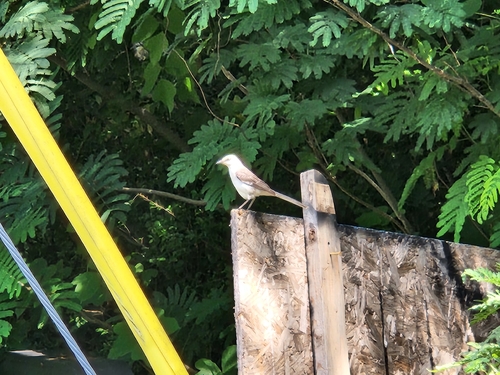
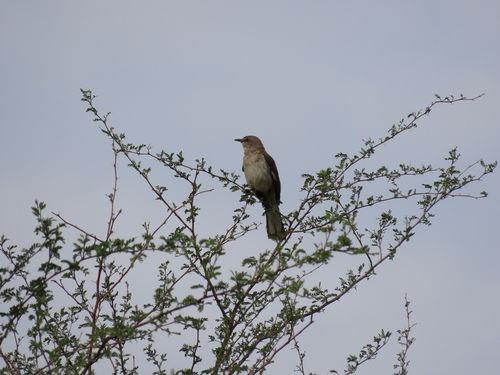
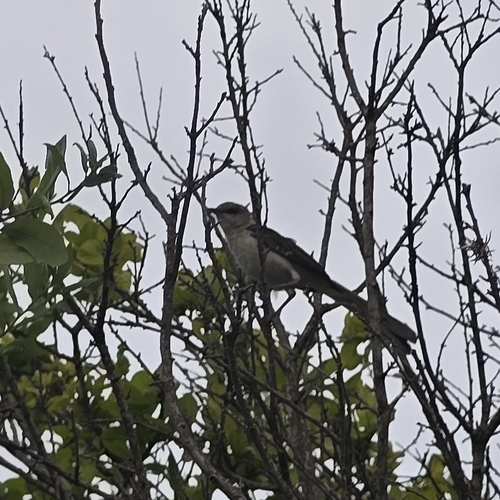
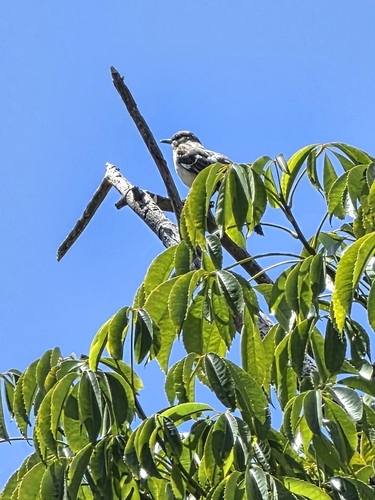
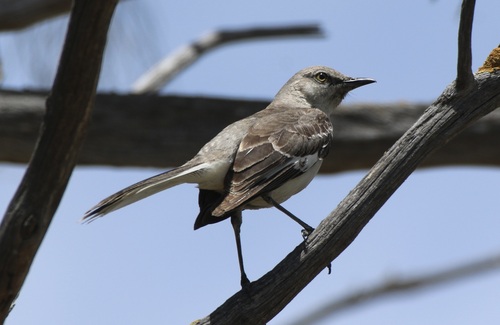
The Northern Mockingbird has a slender body with grayish-brown plumage, a lighter belly, and striking white patches on its wings visible in flight. It also features a long, dark tail with white outer feathers, differentiating it from similar thrashers.
Category
BirdsRarity
Common
Danger
1/5 · Very low
Snaps
452
A single Northern Mockingbird can learn over 200 distinct songs in its lifetime!
Mockingbirds sometimes sing throughout the night, especially during the breeding season!
They are known to remember human faces, recognizing individuals who disturbed their nests!
This clever bird sometimes runs on the ground, not just hops, when searching for food!
Northern Mockingbird can imitate hundreds of sounds, from other birds to car alarms, because of its complex vocal cords that help it attract mates and defend territory.
Northern Mockingbird has a fierce territorial instinct that helps them bravely chase away much larger animals, including cats and even humans, from their nest.
Northern Mockingbird can flash its white wing patches because this display helps them startle hidden insects into moving, making them easier to catch.
These omnivores enjoy a mix of insects, berries, and seeds throughout the year.
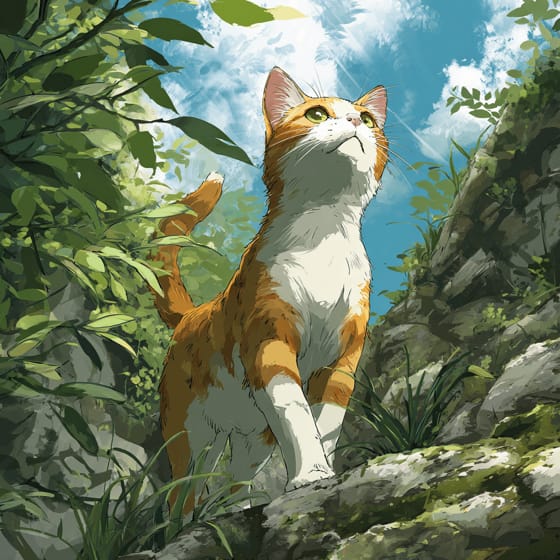
Felis catus
Domestic cats frequently prey on their nests and young.
Quercus virginiana
Oaks provide safe nesting sites and cover from predators.
.jpg&width=800)
Rubus allegheniensis
Mockingbirds consume the ripe berries, dispersing seeds.
Spharagemon equale
They actively forage for grasshoppers and other ground insects.
Wildlife encompasses all undomesticated animal and plant life existing in their natural habitats.
Feathered describes animals, primarily birds, possessing a covering of feathers.
Social animals live in organized groups, cooperating for survival benefits such as foraging, defense, and raising offspring.
This trait identifies organisms whose diet includes both plant and animal matter.

Singing animals produce complex vocalizations, often for purposes of attracting mates, defending territory, or communicating within their species.

Diurnal animals are primarily active during daylight hours, typically resting or sleeping at night.

This habitat trait indicates species that can coexist with humans in urban and suburban environments, utilizing man-made structures and green spaces.
Danger
1/5 · Very low
Mockingbirds are not dangerous, but it’s best to watch them from a distance and not disturb their nests.
The easiest way to identify Northern Mockingbird is to use the Snappit nature identifier app.
20-28 cm
31-38 cm
0.045-0.058 kg
8-10 years
48 km/h
These omnivores enjoy a mix of insects, berries, and seeds throughout the year.
Open areas, parks, and gardens
Zoom in to split clusters and explore where this object has been snapped.
Jun 20, 2026
Arrowmont School of Arts and CraftsPhoto attribution
(c) Zack, some rights reserved (CC BY)
License: CC BY 4.0 ↗
Image may be shown cropped inside the card frame.
Jun 12, 2026
Mesilla PlazaPhoto attribution
(c) Suanne Pyle, some rights reserved (CC BY)
License: CC BY 4.0 ↗
Image may be shown cropped inside the card frame.
Jun 7, 2026
SeaWorld San AntonioPhoto attribution
(c) Jason Layman, some rights reserved (CC BY-SA)
License: CC BY-SA 4.0 ↗
Image may be shown cropped inside the card frame.
Jun 6, 2026
Huntington Desert GardenPhoto attribution
(c) Cristhian Mace, some rights reserved (CC BY)
License: CC BY 4.0 ↗
Image may be shown cropped inside the card frame.
Jun 6, 2026
ProfessorvillePhoto attribution
(c) Cricket Raspet, some rights reserved (CC BY)
License: CC BY 4.0 ↗
Image may be shown cropped inside the card frame.

Alabama, US
You might spot Elf Orpine, Canada Goose, and Leatherleaf Mahonia.
View guide →

Florida, US
You might spot Anole, Eastern Box Turtle, and Golden Silk Spider.
View guide →

Tennessee, US
You might spot House Sparrow, Northern Mockingbird, and Gulf Fritillary.
View guide →

Tennessee, US
You might spot Black Bear, Yellow Wakerobin, and Pipevine Swallowtail.
View guide →

California, US
You might spot Monarch, Canada Goose, and Western Gull.
View guide →

Alabama, US
You might spot Anole, Eastern Gray Squirrel, and Asian Lady Beetle.
View guide →
Take the discovery with you
Snap it with Snappit to identify it, learn what makes it special, and add the discovery to your collection.




.jpg&width=800)









