



European Lynx
Lynx lynx
The European Lynx is a beautiful wild cat with tufted ears and a spotted coat. They are shy and love to hide in the forests.
Habitat: Forests and mountains
The European Lynx has thick, spotted fur, usually reddish-brown to grey, with white underparts. It's easily recognized by its distinctive black ear tufts, short black-tipped tail, and large, "snowshoe-like" paws.
Category
MammalsRarity
Common
Danger
2/5 · Low
Snaps
Be the first to snap!
A lynx can leap up to 7 meters (23 feet) to surprise its prey!
Lynx whiskers are so sensitive they can 'feel' prey in total darkness!
Their huge paws act like snowshoes, helping them walk silently over deep snow!
Their short, black-tipped tail helps balance them during quick turns and jumps!
European Lynx can rotate its ears and pinpoint tiny sounds, helping them locate prey from far away.
European Lynx has incredible night vision, allowing them to hunt effectively in the dark.
European Lynx has a spotted coat that helps them blend perfectly into forest shadows, hiding from prey.
A powerful hunter that feasts mainly on deer, hares, and birds found in its forest home.
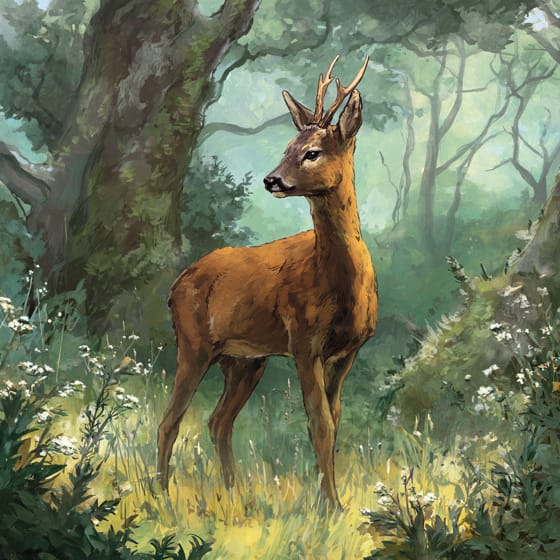
Capreolus capreolus
Primary prey for sustenance.

Lepus europaeus
Commonly hunted small prey.
Canis lupus
Kittens occasionally taken by larger predators.

Picea abies
Provides dense cover for hunting and dens.
Furry describes animals possessing a dense covering of soft hair or fur.
Possessing prominent sensory hairs or vibrissae, often around the snout.
Solitary animals live alone for most of their lives, only interacting with others for mating or parental care.
This habitat trait identifies species found in mountainous regions, characterized by high elevation, steep slopes, and varying climate zones.

An ambush predator hunts by patiently waiting and concealing itself, then launching a sudden attack when unsuspecting prey comes within range.

This trait signifies organisms belonging to a very old evolutionary group with ancestors dating back millions of years.

Forest habitats are terrestrial environments dominated by dense tree cover, supporting a high diversity of plant and animal life.

This trait identifies organisms whose diet consists entirely or primarily of animal tissue.

Describes a species whose presence and role have a disproportionately large effect on its environment.

Nocturnal animals are primarily active during the nighttime hours, typically resting or sleeping during the day.
Danger
2/5 · Low
The European Lynx is shy and usually keeps to itself. If you see one, it's best to admire it from a distance.
80-130 cm
18-30 kg
10-15 years
70 km/h
A powerful hunter that feasts mainly on deer, hares, and birds found in its forest home.
Forests and mountains
Ambush
1-4
Zoom in to split clusters and explore where this object has been snapped.
Recent snaps will appear here as new observations are added.

Tennessee, US
You might spot Parachromis Managuensis, Giraffes, and Common Ostrich.
View guide →

England, UK
You might spot Red Panda, European Lynx, and Emperor Tamarin.
View guide →

Virginia, US
You might spot Snow Leopard, Red Panda, and European Lynx.
View guide →

Alabama, US
You might spot Common Ostrich, Gray Wolf, and Yellow-Footed Tortoise.
View guide →

Zurich, CH
You might spot Gray Wolf, Equus Ferus Przewalskii, and European Lynx.
View guide →

Izmir, TR
You might spot African Lion, Camelus, and Psittacidae.
View guide →