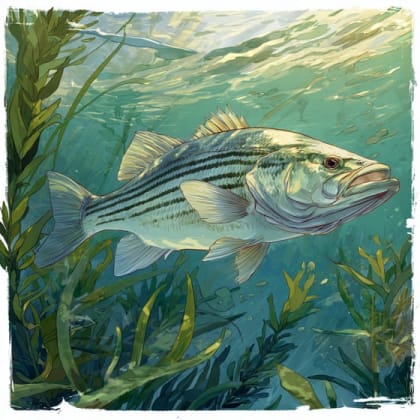
Muskellunge
Esox masquinongy
The Muskellunge, or musky, is a big fish known for being a fierce predator. It has a long body and is very powerful!
Habitat: Lakes and rivers
The Muskellunge has a long, slender body with a distinctive duck-bill shaped snout. Its flanks are typically light, ranging from silvery to greenish-brown, adorned with dark spots, bars, or blotches. Its dorsal and anal fins are set far back, near its powerful tail.
Category
FishRarity
Rare
Danger
2/5 · Low
Snaps
Be the first to snap!
Muskies are often called "water wolves" because they are fierce top predators.
The word "Muskellunge" comes from Indigenous Ojibwe words meaning "ugly pike."
Their powerful jaws contain hundreds of needle-sharp teeth for grabbing prey!
They can sometimes jump completely out of the water to escape or hunt!
Muskellunge can hide perfectly in dense vegetation, then explode with incredible speed to catch unsuspecting prey.
Muskellunge has hundreds of sharp, backward-pointing teeth and strong jaws that help them grip and swallow large fish.
Muskellunge has powerful, swept-back fins positioned to help them accelerate rapidly for an ambush attack.
Muskies are fierce predators, gobbling up almost any fish they can overpower!
Age differences: Young muskies eat insects and smaller fish, while adults target larger fish and even small animals.
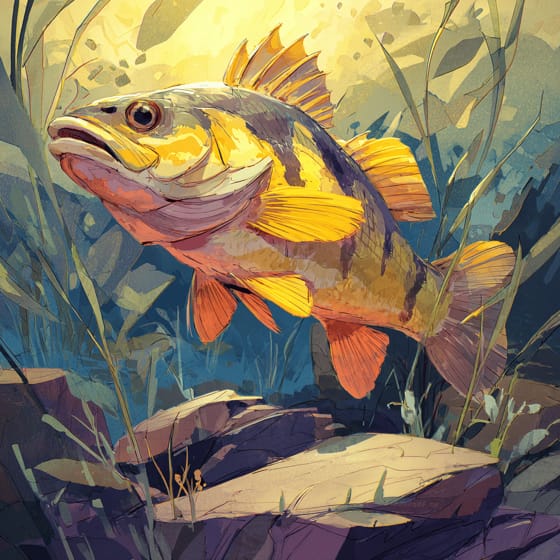
Perca flavescens
A common prey fish in their freshwater habitats.
Catostomus commersonii
An important food source for larger Muskellunge.
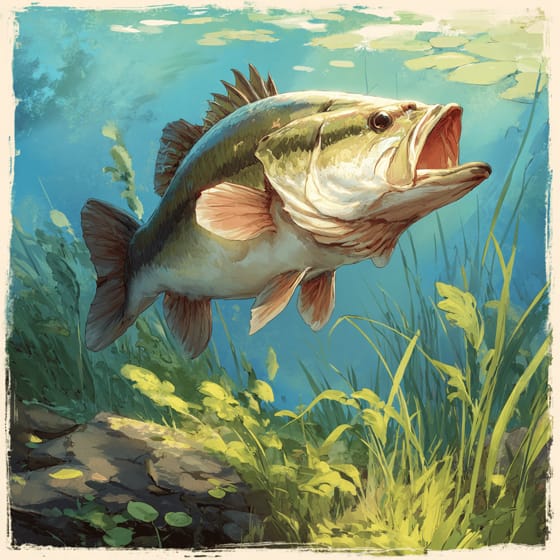
Micropterus salmoides
Often preyed upon by Muskellunge in shared waters.
Homo sapiens
Sought after by anglers for challenging sport fishing.
Wildlife encompasses all undomesticated animal and plant life existing in their natural habitats.
Piscivorous organisms are animals that primarily subsist on a diet of fish.
An ambush predator hunts by patiently waiting and concealing itself, then launching a sudden attack when unsuspecting prey comes within range.
This trait signifies organisms belonging to a very old evolutionary group with ancestors dating back millions of years.

This trait identifies organisms whose diet consists entirely or primarily of animal tissue.

Freshwater habitats include non-saline aquatic environments such as rivers, lakes, ponds, and wetlands, vital for numerous species.

Aquatic habitats encompass environments where organisms live predominantly in water, including oceans, rivers, lakes, and wetlands.
Danger
2/5 · Low
Watch quietly from a distance and never try to feed or chase wild animals.
70-130 cm
2-16 kg
10-18 years
Muskies are fierce predators, gobbling up almost any fish they can overpower!
45 km/h
Lakes and rivers
Ambush
15 m
Zoom in to split clusters and explore where this object has been snapped.
Recent snaps will appear here as new observations are added.