Ocelot
Leopardus pardalis
Ocelots are beautiful, spotted cats that live in forests and grasslands. They are playful and love to climb trees!
Habitat: Rainforests, savannas, and grasslands
The Ocelot has a beautiful coat of cream, yellow, or tawny fur marked with distinctive black spots and elongated rosettes that run in chains. Its sleek body is adorned with black stripes on its face, legs, and tail, giving it a unique and striking pattern. No two Ocelots have the exact same markings.
Category
MammalsRarity
Common
Danger
3/5 · Moderate
Snaps
Be the first to snap!
Baby ocelots are born blind and don't open their eyes for weeks!
Every Ocelot's fur pattern is completely unique, like a fingerprint!
Ocelots can purr just like a house cat, even though they are wild!
Ocelots clean up after themselves, burying their waste like a tidy pet!
Ocelots can see incredibly well in the dark because their large eyes have a special reflective layer, helping them hunt prey when the sun goes down.
The Ocelot moves with incredible quietness and agility, letting them sneak up on unsuspecting prey without being heard.
Ocelots have strong claws and flexible ankles, allowing them to climb trees silently, often resting high in branches to avoid danger.
These agile hunters feast mainly on small animals, catching their meals by stalking silently through the night.
Cuniculus paca
Ocelots actively hunt these large rodents at night.
Didelphis virginiana
An Ocelot commonly preys on this nocturnal marsupial.
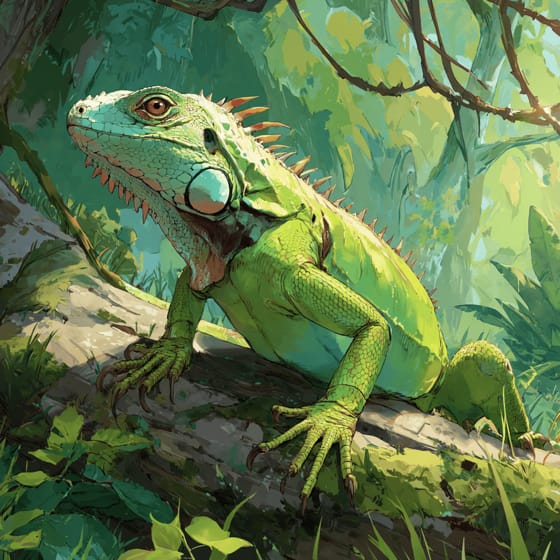
Iguana iguana
An Ocelot preys on this tree-dwelling reptile.
Puma concolor
Young Ocelots can be preyed upon by larger cats.
Furry describes animals possessing a dense covering of soft hair or fur.
Solitary animals live alone for most of their lives, only interacting with others for mating or parental care.
Arboreal animals live primarily in trees, utilizing them for shelter, food, and protection from predators.
Camouflaged describes organisms that possess coloring or patterns that allow them to blend into their environment.

An ambush predator hunts by patiently waiting and concealing itself, then launching a sudden attack when unsuspecting prey comes within range.

This habitat trait refers to species found in tropical rainforests, characterized by high annual rainfall, high biodiversity, and dense tree cover.

This trait identifies organisms whose diet consists entirely or primarily of animal tissue.

Describes a species whose presence and role have a disproportionately large effect on its environment.

Nocturnal animals are primarily active during the nighttime hours, typically resting or sleeping during the day.
Danger
3/5 · Moderate
Ocelots are wild animals and should be admired from a distance. It's best to observe them in nature or at a zoo!
85-145 cm
8-18 kg
10-15 years
60 km/h
These agile hunters feast mainly on small animals, catching their meals by stalking silently through the night.
Rainforests, savannas, and grasslands
Ambush
1-4
Zoom in to split clusters and explore where this object has been snapped.
Recent snaps will appear here as new observations are added.

Arkansas, US
You might spot African Lion, Red Fox, and Common Ostrich.
View guide →
North Carolina, US
You might spot African Lion, Giraffes, and Common Ostrich.
View guide →

Connecticut, US
You might spot Gray Wolf, Tiger, and Ocelot.
View guide →
Texas, US
You might spot African Lion, Red Fox, and Common Ostrich.
View guide →

Florida, US
You might spot Komodo Dragon, Ocelot, and Cougar.
View guide →
Ohio, US
You might spot African Lion, Gharial, and Gray Wolf.
View guide →