





Green Iguana
Iguana iguana
The Green Iguana is a large, green lizard that loves to climb trees. It has a long tail and sharp claws.
Habitat: Tropical rainforests.
The Green Iguana is a large lizard primarily vibrant green, with a distinctive dewlap under its chin and a row of spines along its back. It has dark banding on its tail and powerful claws, differing from many lizards by its prominent and serrated dorsal crest.
Category
ReptilesRarity
Common
Danger
2/5 · Low
Snaps
84
Green Iguanas often plunge from high trees into water to escape predators!
Male iguanas use their large throat dewlap to appear bigger and attract mates!
They possess tiny, serrated teeth perfect for snipping through tough leaves and plants!
Young iguanas sometimes eat adult droppings to get helpful gut bacteria!
Green Iguanas have sharp claws and strong limbs, allowing them to climb high into trees for food and safety.
Green Iguanas can detach their tail if grabbed by a predator; it wiggles to distract while the iguana escapes.
Green Iguanas have a light-sensing 'third eye' on their head, which detects shadows, warning them of predators from above.
Green Iguanas can sneeze out excess salt from their bodies through special glands, keeping them healthy on a plant diet.
Green iguanas munch on leaves, flowers, and fruits, sometimes even insects as juveniles.
Age differences: Juveniles are more omnivorous, eating insects and small invertebrates, gradually becoming entirely herbivorous as adults.
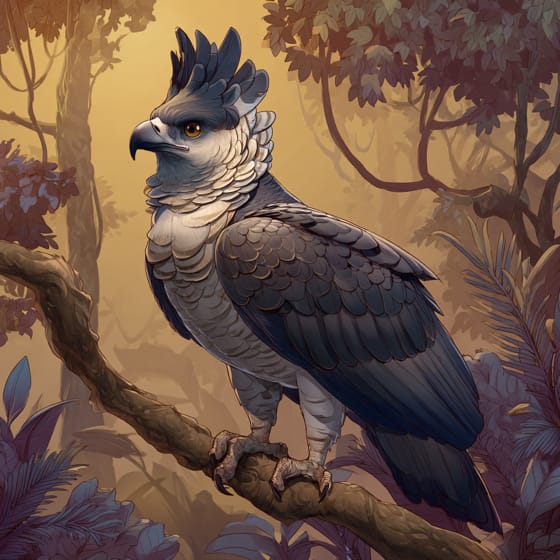
Harpia harpyja
Hunted by this powerful bird in its rainforest home.
Boa constrictor
Preyed upon by this large snake, especially juveniles.
Ficus insipida
Consumes the leaves and fruits of this common fig tree.
Ceiba pentandra
Relies on large canopy trees for shelter and sun basking.
Wildlife encompasses all undomesticated animal and plant life existing in their natural habitats.
Arboreal animals live primarily in trees, utilizing them for shelter, food, and protection from predators.
Colorful describes organisms or objects displaying a wide range of bright and distinct colors.
This trait characterizes organisms whose diet consists entirely or primarily of plant material.

This trait characterizes organisms with an exceptionally long lifespan compared to others of their kind.

This habitat trait refers to species found in tropical rainforests, characterized by high annual rainfall, high biodiversity, and dense tree cover.
Danger
2/5 · Low
Look but don’t touch. Keep a safe distance and wash hands after exploring.
The easiest way to identify Green Iguana is to use the Snappit nature identifier app.
150-180 cm
4-8 kg
10-20 years
10 km/h
Green iguanas munch on leaves, flowers, and fruits, sometimes even insects as juveniles.
8 km/h
Tropical rainforests.
Zoom in to split clusters and explore where this object has been snapped.

Florida, US
You might spot Crested Anole, Brown Anole, and Peters's Rock Agama.
View guide →

Florida, US
You might spot White Ibis, Green Iguana, and Black-Crowned Night Heron.
View guide →

US
You might spot Nurse Shark, Sea Turtle, and Cownose Ray.
View guide →
Nevada, US
You might spot African Lion, Tiger, and Zebra.
View guide →
Florida, US
You might spot African Lion, Reticulated Giraffe, and Florida Panther.
View guide →
Hawaii, US
You might spot Tiger, Giant Anteaters, and Spider Monkey.
View guide →
Take the discovery with you
Snap it with Snappit to identify it, learn what makes it special, and add the discovery to your collection.















