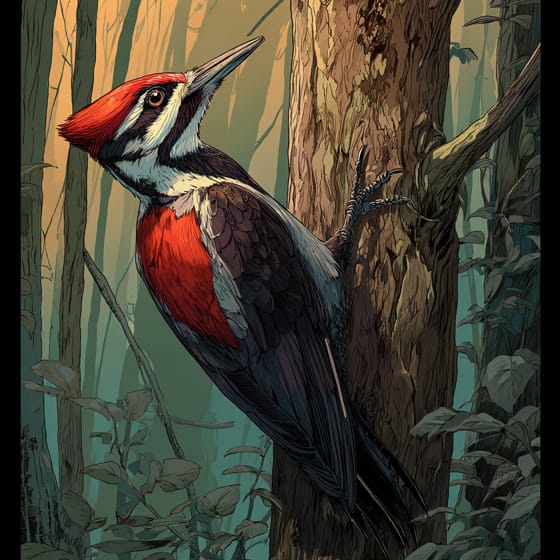





Woodpecker
Picidae
Woodpeckers are birds with strong beaks that they use to peck holes in trees. They have special shock-absorbing skulls to protect their brains while drumming. Woodpeckers are known for their rhythmic drumming sounds in the forest.
Habitat: Forests
The Woodpecker has striking plumage, often featuring bold black and white patterns with splashes of red or yellow on its head. It has a strong, chisel-like beak and stiff tail feathers that help it brace against tree trunks, distinguishing it from many other birds.
Category
BirdsRarity
Common
Danger
2/5 · Low
Snaps
Be the first to snap!
A woodpecker’s tongue can be so long it wraps around its skull!
Some woodpeckers drum on metal objects to find a mate!
Their old nesting holes provide homes for many other forest creatures!
Woodpeckers can 'hear' insects moving inside trees!
Woodpeckers have a specially designed skull that acts like a helmet, protecting their brain from powerful pecking impacts.
Woodpeckers can extend a long, barbed, sticky tongue to spear and pull insects from deep within tree crevices.
Woodpeckers have unique 'zygodactyl' feet with two toes facing forward and two backward, helping them grip tree bark firmly.
Woodpeckers use their stiff tail feathers like a tripod, bracing against trees for stability while pecking.
Woodpeckers mainly eat insects found in wood, but also enjoy seeds and fruits.
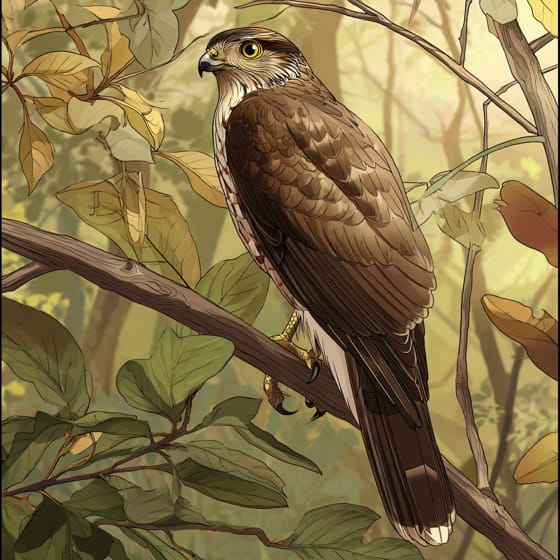
Accipiter cooperii
Preys on adult woodpeckers.
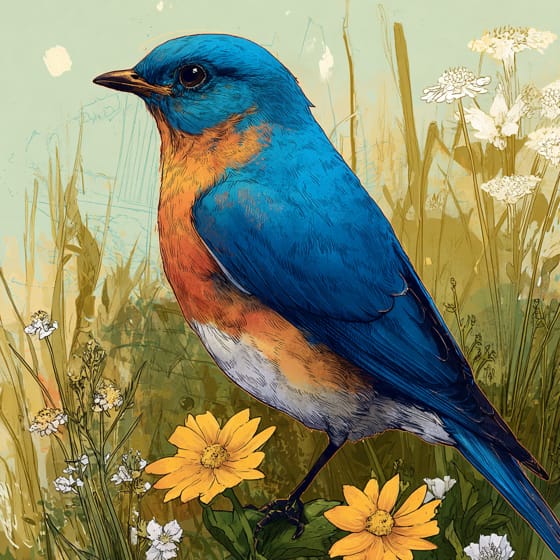
Sialia sialis
Uses abandoned woodpecker cavities for nesting.

Quercus rubra
Provides insects, sap, and acorns for food.
Formica rufa
A primary insect food source for many woodpeckers.
Feathered describes animals, primarily birds, possessing a covering of feathers.
Arboreal animals live primarily in trees, utilizing them for shelter, food, and protection from predators.
This trait identifies organisms whose diet primarily consists of insects and other small invertebrates.
This trait describes organisms that manipulate external objects to achieve a specific goal.

This trait signifies organisms belonging to a very old evolutionary group with ancestors dating back millions of years.

Forest habitats are terrestrial environments dominated by dense tree cover, supporting a high diversity of plant and animal life.

Diurnal animals are primarily active during daylight hours, typically resting or sleeping at night.

Describes a species whose presence and role have a disproportionately large effect on its environment.
No aliases listed yet.
Danger
2/5 · Low
Enjoy watching woodpeckers from a safe distance to avoid scaring them.
8-50 cm
15-80 cm
0.007-0.6 kg
4-12 years
35 km/h
Woodpeckers mainly eat insects found in wood, but also enjoy seeds and fruits.
Forests
Foraging
Zoom in to split clusters and explore where this object has been snapped.
Recent snaps will appear here as new observations are added.