
Northern Red Oak
Quercus rubra
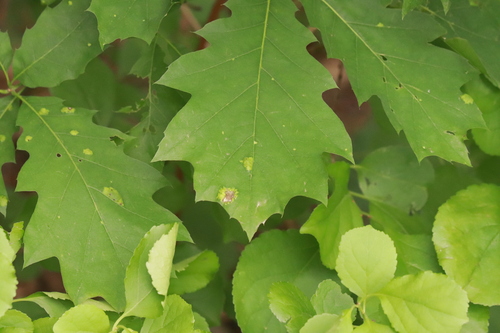
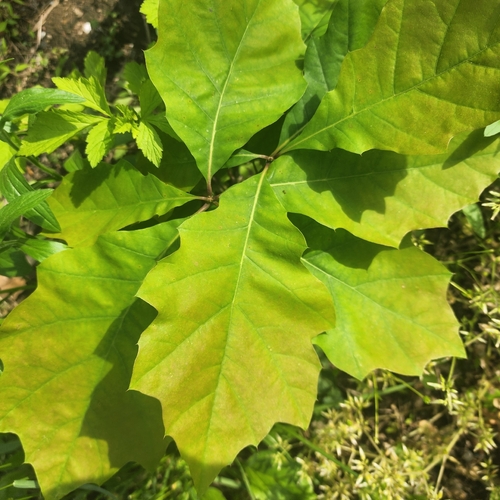
The Northern Red Oak is a big tree with pointy leaves that turn bright red in the fall. This tree is a great shade provider on sunny days!
Habitat: Deciduous forests
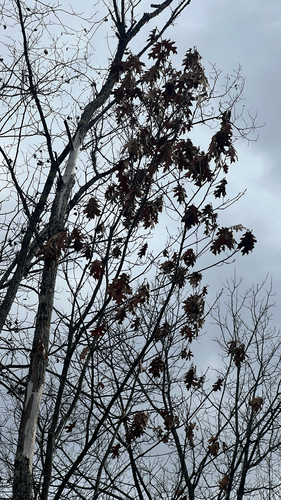
The Northern Red Oak has distinct dark, reddish-brown bark with shiny strips as it matures, earning it the 'red' in its name. Its large, lobed leaves turn a brilliant deep red or reddish-brown in autumn, making it stand out in the forest. It forms a broad, rounded canopy.
Category
TreesRarity
Common
Danger
1/5 · Very low
Snaps
26
Its acorns take two years to fully develop on the tree!
Its strong wood is famous for making beautiful floors and furniture.
Many animals, like deer and bears, love to munch on its acorns.
This oak can live longer than your great-great-grandparents combined!
Northern Red Oak can grow an extensive root system that helps it stand strong against winds and access deep water during dry spells.
Northern Red Oak produces abundant acorns, packed with energy, that provide vital food for countless forest creatures, aiding seed dispersal.
Northern Red Oak drops all its leaves in fall, reducing water loss and helping it conserve energy to survive freezing winter temperatures.
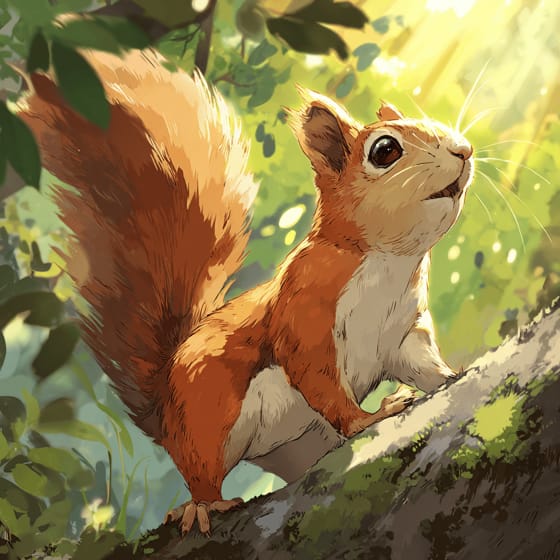
Sciurus carolinensis
Loves to bury and eat its acorns.

Odocoileus virginianus
Browses on young leaves and acorns.
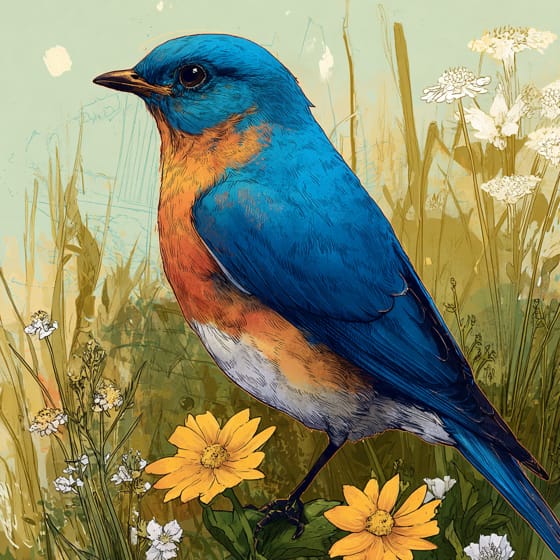
Sialia sialis
Nests in cavities of mature oaks.
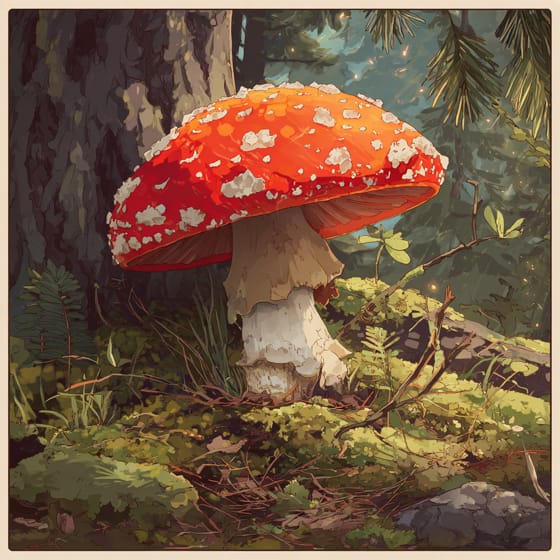
Amanita muscaria
Forms beneficial root connections.
Deciduous plants periodically shed all their leaves, typically during autumn or dry seasons.
Broadleaf trees are angiosperms characterized by flat, wide leaves that are typically shed annually in temperate climates.
Fall color refers to the seasonal change in foliage pigmentation, primarily in deciduous plants, displaying vibrant hues.
Timber refers to wood that has been prepared for use in building and carpentry.

Forest habitats are terrestrial environments dominated by dense tree cover, supporting a high diversity of plant and animal life.
Danger
1/5 · Very low
Do not pick or eat anything you find. Some plants and mushrooms can be harmful.
The easiest way to identify Northern Red Oak is to use the Snappit nature identifier app.
20-30 m
15-25 m
No
50-100 cm
150-500 years
Deciduous forests
Acorn
Zoom in to split clusters and explore where this object has been snapped.
Jun 6, 2026
East Windsor Hill Historic DistrictPhoto attribution
(c) Mark Apgar, some rights reserved (CC BY)
License: CC BY 4.0 ↗
Image may be shown cropped inside the card frame.
May 16, 2026
Haym Salomon Memorial ParkPhoto attribution
(c) i_da_naturalist, some rights reserved (CC BY)
License: CC BY 4.0 ↗
Image may be shown cropped inside the card frame.
Nov 14, 2025
Lower Village DistrictPhoto attribution
no rights reserved
License: CC0 1.0 ↗
Image may be shown cropped inside the card frame.

Pennsylvania, US
You might spot Mountain Laurel, Ghost Pipe, and Sweetfern.
View guide →

Ohio, US
You might spot Large White Trillium, Fire Pink, and Christmas Fern.
View guide →

Vermont, US
You might spot Asian Bittersweet, Alder Buckthorn, and Eastern Newt.
View guide →

Vermont, US
You might spot Japanese Knotweed and Red-Bellied Woodpecker.
View guide →

Vermont, US
You might spot Eastern White Pine, Staghorn Sumac, and Box Elder.
View guide →

Connecticut, US
You might spot Eastern Gray Squirrel, Dark-Eyed Junco, and House Sparrow.
View guide →
Take the discovery with you
Snap it with Snappit to identify it, learn what makes it special, and add the discovery to your collection.