






goldenrods
Solidago
Goldenrods are bright yellow flowers that bloom in late summer and fall. They grow in fields and along roadsides, making the world a little sunnier with their cheerful colors!
Habitat: Fields and roadsides
The goldenrods has tall, slender stems topped with vibrant yellow flower plumes that often form a pyramidal or wand-like shape. Its bright, clustered blooms make it stand out in late summer and fall fields, distinct from other green plants.
Category
PlantsRarity
Common
Danger
1/5 · Very low
Snaps
1
During colonial times, goldenrod leaves were brewed into a popular, golden-colored tea!
Goldenrods are often wrongly blamed for allergies; ragweed is the actual culprit!
Some towering goldenrod species can grow over 2 meters (7 feet) tall!
The brilliant yellow flowers can be used to create a natural, golden dye!
Goldenrods has strong rhizomes that help it spread quickly and form dense patches, surviving tough conditions.
Goldenrods' late-season blooms provide a vital nectar source for insects when other flowers are scarce.
Some goldenrod species release chemicals into the soil that help prevent other plants from growing nearby.
Apis mellifera
gathers nectar and pollen
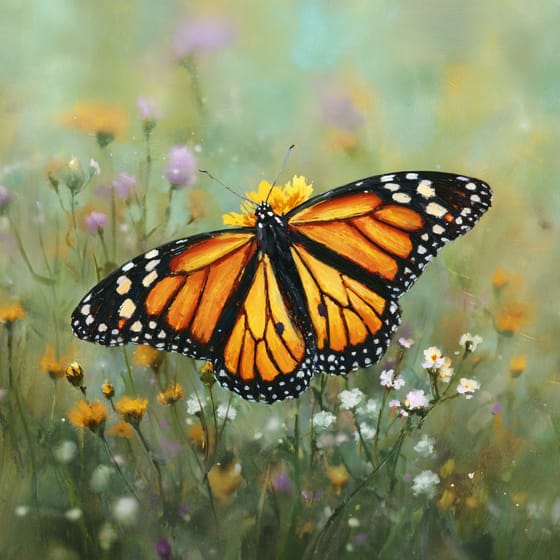
Danaus plexippus
fuels migration with nectar
Trirhabda virgata
larvae and adults feed on leaves
Eurosta solidaginis
larvae develop inside stem galls
Flowering plants are any plants that produce flowers as part of their reproductive cycle.
Summer blooming plants produce their flowers during the summer season, often providing vibrant color when many other plants have finished.
Medicinal plants possess chemical compounds that can be used for therapeutic purposes to treat illnesses or maintain health.
Colorful describes organisms or objects displaying a wide range of bright and distinct colors.

Grassland habitats are terrestrial biomes dominated by grasses and herbaceous plants, supporting a variety of grazing animals.

Describes plants that are particularly attractive and beneficial to a wide range of pollinating organisms.

Rapid growing plants exhibit accelerated growth rates, quickly increasing in size and biomass within a short period.

Describes a species whose presence and role have a disproportionately large effect on its environment.
Danger
1/5 · Very low
Always look but don't touch flowers without asking an adult first.
50-200 cm
30-90 cm
0.1-0.5 cm
Late summer to fall
Yes
None
Perennial
Insect
Zoom in to split clusters and explore where this object has been snapped.

Illinois, US
You might spot White Mulberry, House Finch, and Scissor Grinder.
View guide →

Illinois, US
You might spot Red Fox, Equus Africanus Asinus, and Western Barn Owl.
View guide →
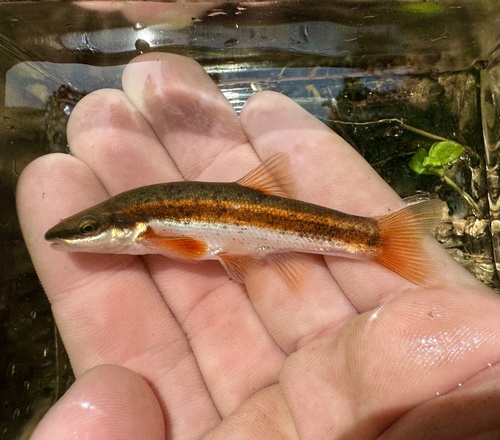
Virginia, US
You might spot Eastern Blacknose Dace and Common Jewelweed.
View guide →

Pennsylvania, US
You might spot Carolina Horsenettle, Common Soapwort, and Goldenrods.
View guide →
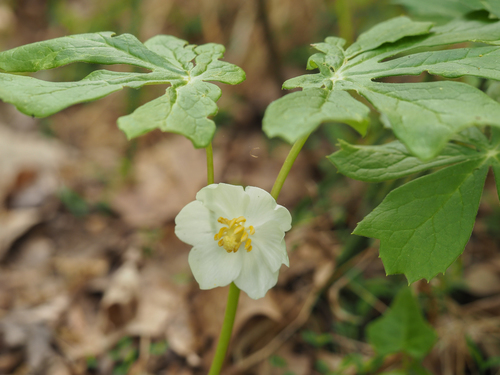
Virginia, US
You might spot Mayapple, White Ash, and Multiflora Rose.
View guide →
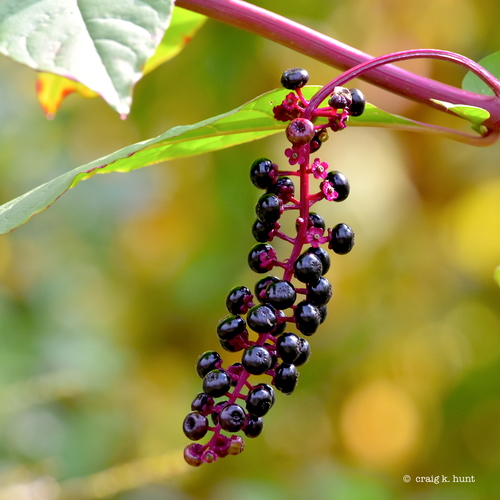
Maryland, US
You might spot American Pokeweed, Goldenrods, and Common Hackberry.
View guide →




















