




Hollyhock
Alcea rosea
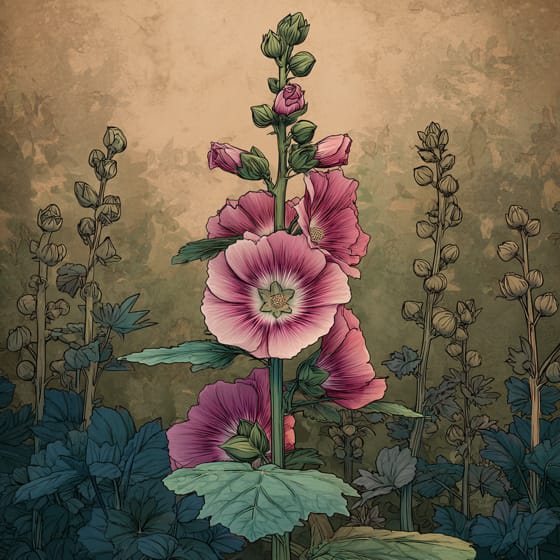
Hollyhocks are tall and have large, colorful flowers that bloom in a variety of shades. They bring a vintage charm to gardens!
Habitat: Gardens and along fences
The Hollyhock is a stately, towering plant known for its dramatic spikes of large, ruffled flowers. These cup-shaped blooms come in a dazzling array of colors including pink, red, white, yellow, and purple, often with contrasting centers. Its sturdy, hairy stems can reach impressive heights.
Category
PlantsRarity
Common
Danger
1/5 · Very low
Snaps
2
Did you know some Hollyhocks can grow taller than a basketball player?
In ancient times, people believed Hollyhock flowers could cure many ailments.
The name "Hollyhock" might come from "holy mallow," a plant for pilgrims.
Their beautiful petals can be used to make natural fabric dyes!
Hollyhock can produce abundant sweet nectar in its open flowers, acting like a beacon to attract hungry bees and butterflies.
Hollyhock has numerous disk-shaped seeds that readily fall to the ground, helping it spread and grow new plants nearby.
Hollyhock can grow incredibly tall with sturdy stems, allowing it to reach for sunlight above shorter garden plants.
Apis mellifera
collects nectar and pollen
Vanessa cardui
sips nectar from the flowers
Puccinia malvacearum
causes orange spots on leaves
Bombus impatiens
gathers nectar and pollen
Flowering plants are any plants that produce flowers as part of their reproductive cycle.
Fragrant flowers emit a pleasant aroma, often to attract pollinators or for defense.
Colorful describes organisms or objects displaying a wide range of bright and distinct colors.
This habitat trait indicates species that can coexist with humans in urban and suburban environments, utilizing man-made structures and green spaces.
Danger
1/5 · Very low
Explore with care and ask an adult if you’re unsure what to do.
150-270 cm
30-60 cm
5-15 cm
Summer
Yes
None
Biennial
Insect
Zoom in to split clusters and explore where this object has been snapped.