Kousa Dogwood
Cornus kousa
The Kousa Dogwood is a stunning tree with star-shaped flowers. It blooms later than many other trees, making it special!
Habitat: Gardens and parks
The Kousa Dogwood has striking white or pinkish petal-like bracts in late spring, creating a starry effect around its true flowers. Its red, bumpy, raspberry-like fruits appear in summer, followed by brilliant reddish-purple fall foliage. The exfoliating, mottled bark adds winter interest.
Category
TreesRarity
Common
Danger
1/5 · Very low
Snaps
Be the first to snap!
Its showy 'flowers' are actually special leaves called bracts!
Some people use its ripe fruits to make delicious jams or wine.
The bark peels off in cool, puzzle-piece patterns as it ages.
This beautiful tree originally comes from countries in East Asia.
Kousa Dogwood can produce large, white 'petals' (bracts) that attract pollinators to its tiny, true flowers.
Kousa Dogwood has leaves that transform from green to brilliant reddish-purple in fall, signaling autumn's arrival.
Kousa Dogwood grows unique, bumpy red fruits in summer that are tasty and safe for humans to eat when ripe.
Apis mellifera
Helps spread its pollen between blooms.

Turdus migratorius
Feasts on its ripe, red fruits.

Sciurus carolinensis
Enjoys its seeds found within the fruits.

Sialia sialis
Nests in its branches, seeking protection.
Deciduous plants periodically shed all their leaves, typically during autumn or dry seasons.
Flowering plants are any plants that produce flowers as part of their reproductive cycle.
Shade tolerant plants are adapted to grow and thrive in areas with low light levels, requiring less direct sunlight.
Spring blooming plants produce their flowers during the spring season, often signifying the end of winter and the start of new growth.

Broadleaf trees are angiosperms characterized by flat, wide leaves that are typically shed annually in temperate climates.

Fruit-bearing plants produce fruits, which are the mature ovaries of flowering plants containing seeds.

A fruit tree is a perennial tree that produces fruit, which is edible to humans or animals.

Edible plants are those parts of a plant that are considered safe for human consumption.

Rapid growing plants exhibit accelerated growth rates, quickly increasing in size and biomass within a short period.

This habitat trait indicates species that can coexist with humans in urban and suburban environments, utilizing man-made structures and green spaces.
Danger
1/5 · Very low
Do not pick or eat anything you find. Some plants and mushrooms can be harmful.
5-12 m
4-8 m
Yes
15-40 cm
50-150 years
Gardens and parks
Aggregate fruit (berry-like)
Medium
Zoom in to split clusters and explore where this object has been snapped.
Recent snaps will appear here as new observations are added.

Washington, US
You might spot Snowy Owl, Bee, and American Crow.
View guide →
Virginia, US
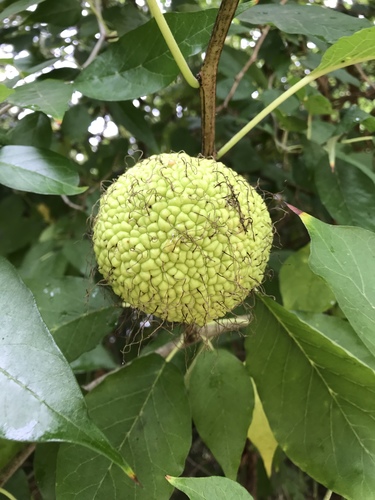
You might spot Osage-Orange, Willow Oak, and Kousa Dogwood.
View guide →

Pennsylvania, US
You might spot American Robin, Kentucky Yellowwood, and Kousa Dogwood.
View guide →
Massachusetts, US
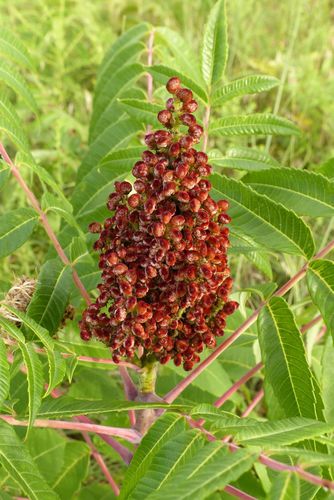
You might spot Smooth Sumac, Brambles, and Evening Primrose Family.
View guide →