





Aspen
Populus tremuloides
Aspen trees have beautiful white bark and their leaves shake in the wind, making a lovely sound! They're like nature's little dancers.
Habitat: Mountain forests and open areas
The Aspen has strikingly smooth, pale greenish-white bark, often marked with dark scars that resemble eyes. Its small, rounded leaves have flattened stems, making them tremble and shimmer in the slightest breeze, creating a distinctive rustling sound.
Category
TreesRarity
Common
Danger
1/5 · Very low
Snaps
110
Aspen bark contains a natural pain reliever, similar to aspirin, used by ancient peoples!
Aspen's leaves turn a brilliant gold or yellow in autumn, lighting up entire mountainsides!
Its light, strong wood is used to make safety matches because it doesn't leave an afterglow!
The world's largest living organism is an Aspen clone named Pando, in Utah!
Aspen has unique flattened leaf stems that make its leaves tremble and shimmer, which helps maximize sun exposure and allows light to reach lower branches.
Aspen can form vast underground root systems, allowing it to sprout many new trees that are genetically identical, creating entire forests from one organism.
Aspen has chlorophyll in its smooth, pale bark, which helps it continue to photosynthesize and produce energy even in winter when its leaves have fallen.

Castor canadensis
Beavers fell aspens for food and building materials.

Alces alces
Moose browse on aspen leaves, twigs, and bark, especially in winter.
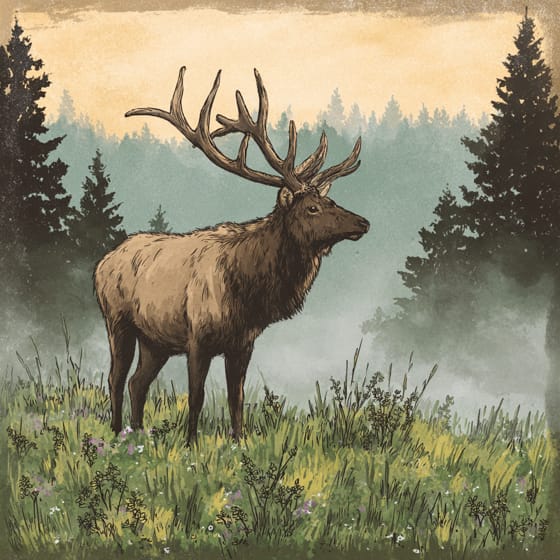
Cervus elaphus
Elk graze on young aspen shoots and strips bark during winter.
_female.JPG&width=800)
Sphyrapicus varius
Sapsuckers drill holes in aspen bark to drink sap and attract insects.
Deciduous plants periodically shed all their leaves, typically during autumn or dry seasons.
Broadleaf trees are angiosperms characterized by flat, wide leaves that are typically shed annually in temperate climates.
Fall color refers to the seasonal change in foliage pigmentation, primarily in deciduous plants, displaying vibrant hues.
Rapid growing plants exhibit accelerated growth rates, quickly increasing in size and biomass within a short period.

This habitat trait identifies species found in mountainous regions, characterized by high elevation, steep slopes, and varying climate zones.
Danger
1/5 · Very low
Do not pick or eat anything you find. Some plants and mushrooms can be harmful.
The easiest way to identify Aspen is to use the Snappit nature identifier app.
15-30 m
5-10 m
No
20-50 cm
60-150 years
Mountain forests and open areas
Capsule
Zoom in to split clusters and explore where this object has been snapped.

Maine, US
You might spot American Bullfrog and Three-Toothed Cinquefoil.
View guide →

Alaska, US
You might spot Sandhill Crane, Fireweed, and Prickly Wild Rose.
View guide →

Colorado, US
You might spot Rocky Mountain Marsh-Marigold and American Bistort.
View guide →

Wyoming, US
You might spot Elk, American White Pelican, and Arrowleaf Balsamroot.
View guide →

Michigan, US
You might spot Eastern Box Turtle, Autumn Olive, and Common Watersnake.
View guide →

Colorado, US
You might spot Fireweed, Scentless Mayweed, and Quaking Aspen.
View guide →
Take the discovery with you
Snap it with Snappit to identify it, learn what makes it special, and add the discovery to your collection.










