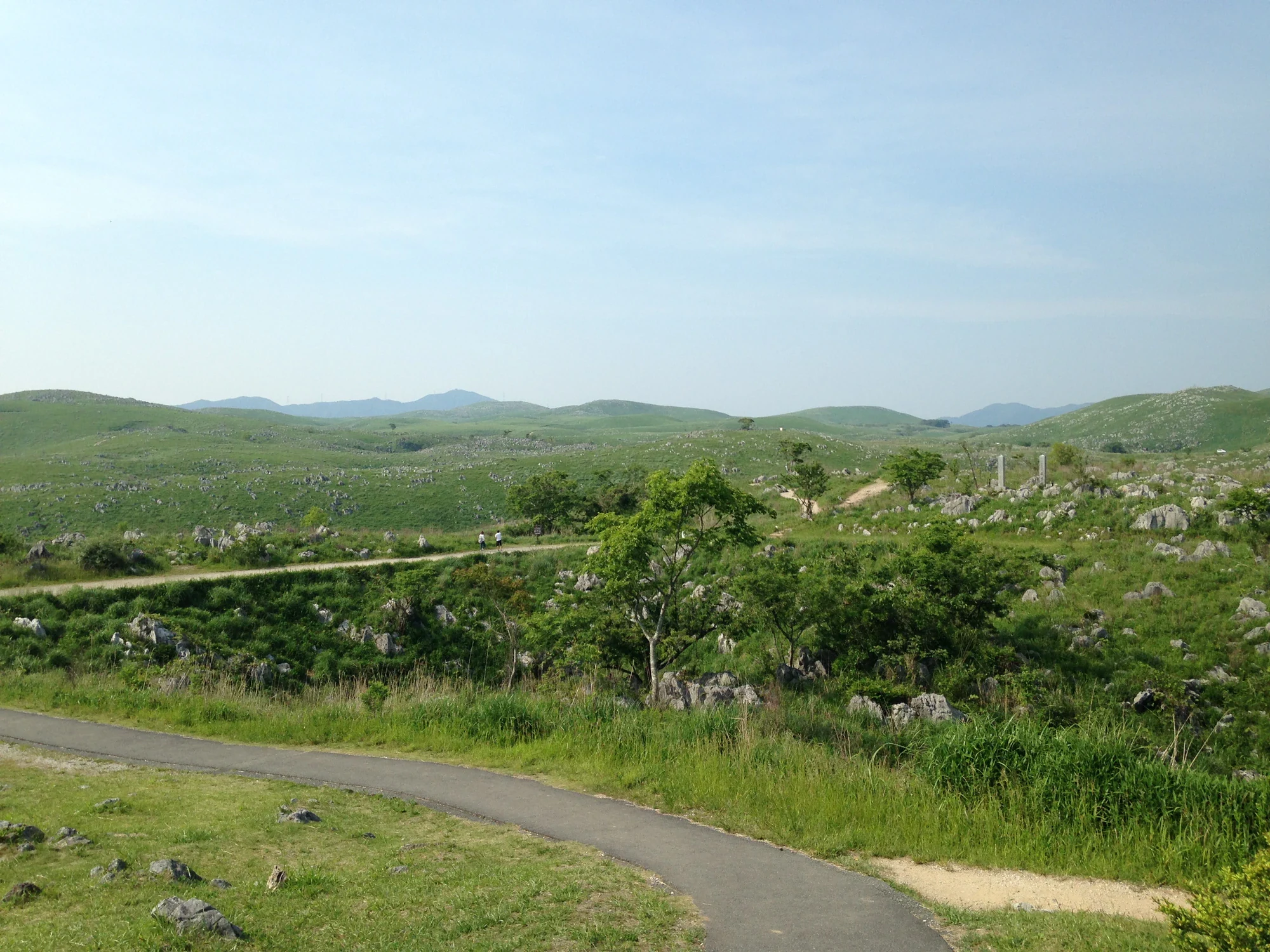
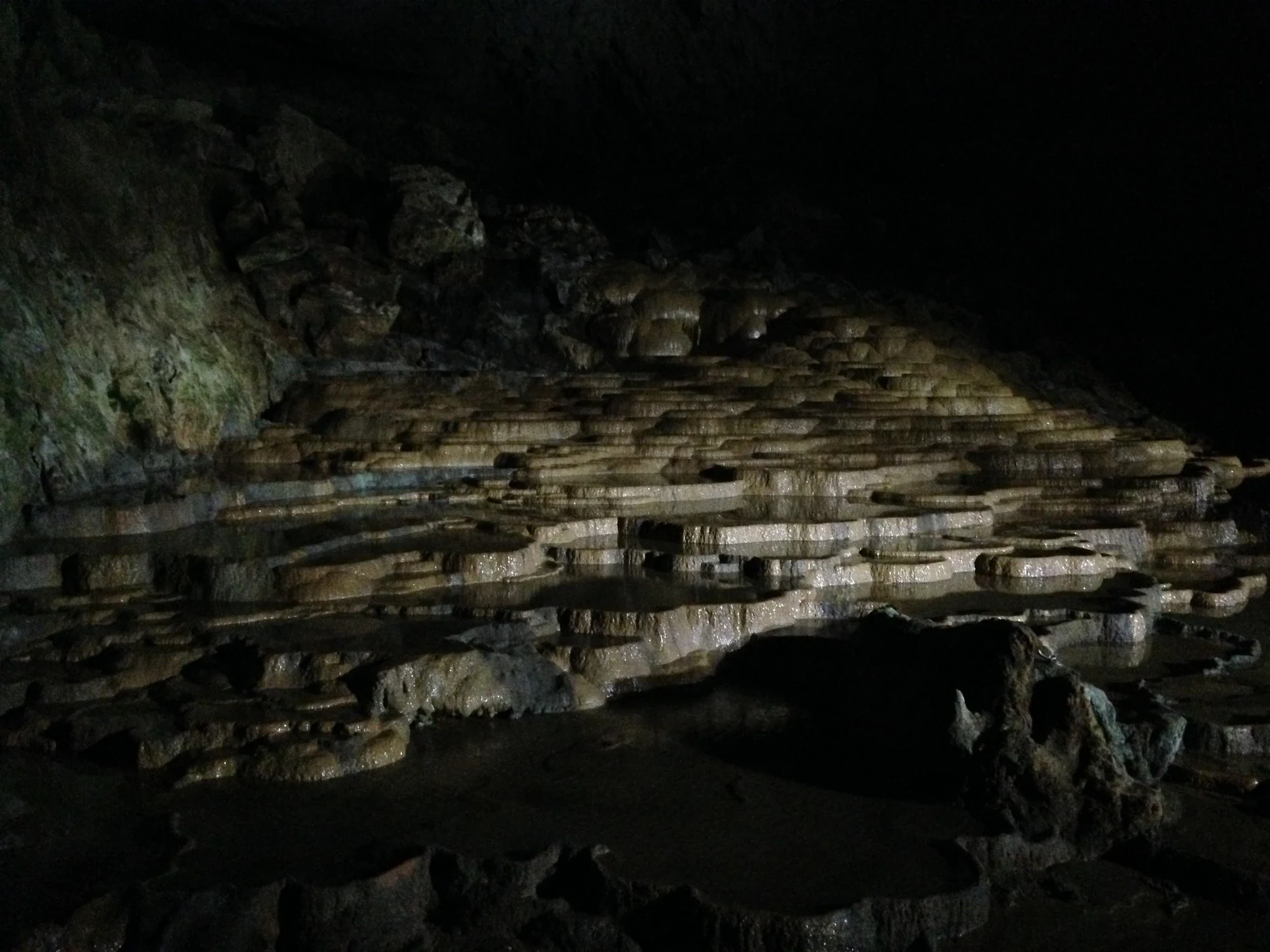
Akiyoshidai is a landscape with two very different faces. Above ground, white limestone stands through rolling grassland, and the sky feels unusually large. Below it, Akiyoshido opens into a cool, dim world of flowing water and stone formations. Seeing both makes the geology much easier to picture: water has shaped the rock at the surface and beneath your feet.
On the plateau, start at Karstar, the geopark information and rest center. Its windows look across the grassland, and staff can help you choose a walk that fits the weather and your group. The neighbouring Karst Observation Deck is closed for renovation from July 7, 2026 to March 26, 2027. Enjoy the view from Karstar and the permitted paths, and keep clear of the work area.
In Akiyoshido, the Hundred Saucers, or Hyakumaizara, are a lovely early stop: shallow, stepped pools spread across the cave floor like a miniature landscape. Farther along, the Golden Pillar and other formations reward a slower look. The public cave route is about 1 km one way, with stairs on the sections beyond the lower entrance area. It is a developed visitor route, but it is still a cave rather than a level indoor corridor.
For a straightforward first visit, enter and leave through the main cave entrance, then move to the plateau separately. That keeps your return to the bus terminal or parked car simple. The cave’s mid-route elevator gives walkers another way to combine the two, but it does not remove the steps on the approach inside the cave. A shorter visit to the Hundred Saucers can be just as satisfying if anyone is tiring. Don't forget to bring the Snappit nature identification app along to scan local species.
Akiyoshidai became a quasi-national park in 1955, and the plateau was designated a Special Natural Monument in 1964. The open grassland also tells a human story: local communities used cutting, grazing and controlled burning to maintain land that could otherwise become wooded. Today’s conservation work helps preserve both the familiar landscape and its grassland life.