Snappit logo
Snappit
Get App
Generic illustration, not a photograph of this venueIllustration
ParkChubu, Japan

Chubusangaku National Park

Chubusangaku National Park stretches across four prefectures and much of the Northern Japan Alps.

About

Chubusangaku National Park stretches across four prefectures and much of the Northern Japan Alps. Its high ridges, deep valleys and alpine habitats would take many journeys to explore. For a first visit, choose Kamikochi in Nagano: a high valley where the Azusa River runs below the Hotaka mountains. You can enjoy a satisfying day here without climbing toward a summit or staying overnight.

Begin with a quick conditions check at the Information Center beside the bus terminal, then visit Kamikochi Visitor Center near the Kappa Bridge area. These are two different buildings. The Visitor Center gives the landscape a little context: look up for life-size wooden birds, compare the local tree specimens, and watch a film about the valley's seasons. Ask which paths suit the weather and how much time you have before your return bus.

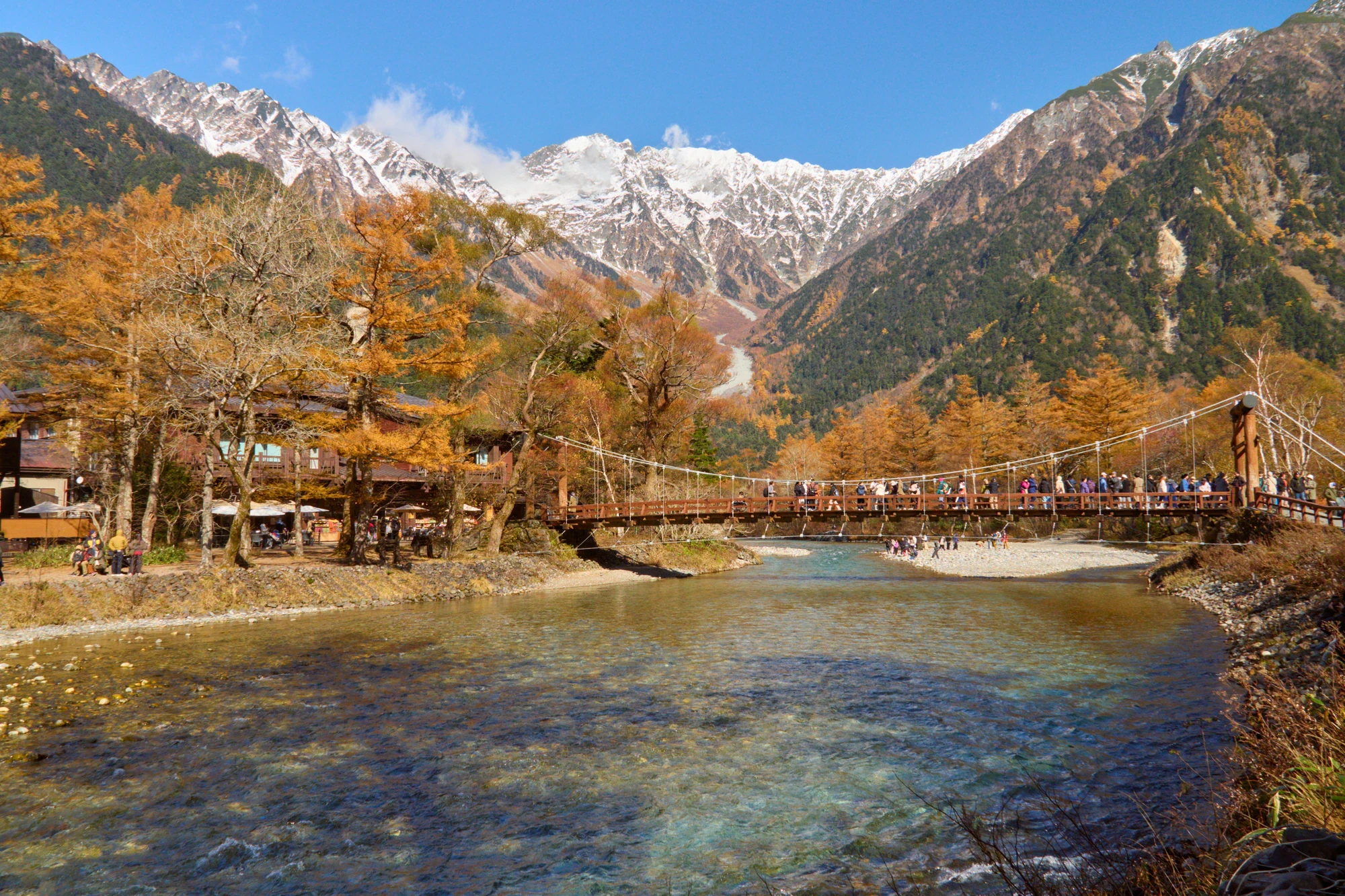
Kappa Bridge is a good place to slow down. The wooden suspension bridge spans the Azusa River, with the Hotaka peaks rising beyond it and shops and cafés nearby. Look along the water as well as up at the mountains. Pale gravel, flowing channels and riverside trees make the valley floor interesting even when clouds hide the highest ridges. Keep photographs to the path and bridge, leaving room for other people to pass.

For a manageable walk, return to Kappa Bridge after the exhibits and follow the riverside circuit toward the Weston Monument and Tashiro Bridge, coming back on the opposite bank toward the terminal. The monument adds a human story to the mountain scenery: Walter Weston helped introduce the Japanese Alps to readers abroad. There is no need to keep adding destinations. A pause beside the river, a little birdwatching and a warm drink can fill the time between the main sights very nicely.

If your group wants another small outing, the valley path upstream from Kappa Bridge reaches Dakesawa Marsh. Its water and woodland offer a different mood from the open river. Turn back there for a short visit. Myojin is a longer valley walk with a pond and shrine, while paths climbing toward Dakesawa Hut and the high peaks are mountain hikes requiring a separate plan. Similar names on a sign do not mean similar walks.

Nature rewards attention more than a checklist. Listen for a tiny Eurasian wren near damp woodland, look for Mandarin ducks without feeding them, and give any Japanese macaques plenty of space. In autumn, larch needles turn yellow before falling, adding a softer color beneath the rock faces. None of these encounters is guaranteed. The valley is also bear habitat, so check local notices and keep food and rubbish securely packed. Don't forget to bring the Snappit nature identification app along to scan local species.

Chubusangaku National Park was designated on 4 December 1934. Kamikochi’s landscape carries both a geological and a human history. An eruption of Yakedake dammed the Azusa River in 1915, creating Taisho Pond farther down the valley. The Weston Monument recalls the English missionary and mountaineer who helped publicize the Japanese Alps, while Kappa Bridge appears in Ryunosuke Akutagawa’s 1927 novel Kappa. Private-car restrictions began in 1975 as visitor traffic grew.


What to do here

Explore the Visitor Center, enjoy Kappa Bridge, then choose the riverside loop through the Weston Monument and Tashiro Bridge. Make it a looking walk: compare the fast main river with quieter water, listen before searching for birds, and notice how the trees frame the mountains. Dakesawa Marsh is a short optional out-and-back from Kappa Bridge; save the longer Myojin circuit for a day with comfortable walking conditions and enough time for the return bus.

Seasonal info

The published 2026 bus season runs from 17 April through 15 November. Not every facility opens on the first day, and some finish before the season ends. Snow and ice can linger in spring, and freezing weather can return in autumn. At about 1,500 m, Kamikochi is cooler than the towns below; bring a warm layer even in summer. From 16 November to mid-April, regular bus access and normal visitor services close. Winter entry is a winter-mountain undertaking, outside this valley day-walk plan.

Accessibility

Plan mobility access before booking transport. Many valley paths have gravel or wooden surfaces; a level-looking route is not necessarily smooth or step-free. The Information Center lends wheelchairs and baby carriers, subject to availability. Ask staff about the central Kappa Bridge area, the current riverside surfaces, the Visitor Center entrance and suitable toilets. Alpico’s Matsumoto–Kamikochi buses have no wheelchair lift or onboard wheelchair space: passengers must transfer to a seat and a wheelchair must be folded for the luggage compartment. Arrange a suitable alternative in advance if you cannot transfer.

Don't miss

1

Kamikochi Visitor Center’s wooden birds, tree specimens and seasonal films

2

Kappa Bridge with the Azusa River and Hotaka mountain backdrop

3

A valley-floor riverside loop past the Weston Monument and Tashiro Bridge

4

A short Dakesawa Marsh detour or autumn larches, when conditions suit

A wooden suspension bridge crowded with visitors spans a clear river, with golden autumn trees and snow-dusted mountain ridges behind.

Kappa Bridge crosses the Azusa River in Kamikochi, beneath the Hotaka mountains, on 7 November 2025. The snowy peaks form the backdrop to this valley-floor view.

Kamikochi - Kamikochi6538.jpg — lumoplank, CC0 1.0 (https://creativecommons.org/publicdomain/zero/1.0/). Source: https://commons.wikimedia.org/wiki/File:Kamikochi_-_Kamikochi6538.jpg. Resized and recompressed as WebP; no crop or retouching. · Creative Commons

Walks and routes

Visitor Center and the central riverside loop

Start with the terminal Information Center’s notices, then visit Kamikochi Visitor Center near Kappa Bridge. Return to Kappa Bridge and follow the marked right-bank path downstream past the Weston Monument to Tashiro Bridge; cross and follow the left-bank path back toward the terminal. Right and left banks are named while looking downstream. Keep the walk short by returning from Kappa Bridge if that better suits your group.

Valley-floor walking, with gravel and other outdoor surfaces. Ask about current conditions and an appropriate route before using a wheelchair or stroller; no whole-loop step-free guarantee is made.

Visitor Center and the central riverside loop

Kappa Bridge to Dakesawa Marsh and back

Follow the marked valley path on the right bank upstream toward Myojin to Dakesawa Marsh, then return the same way. Stop to look at water and woodland from the path. Stay on the valley route; a sign for the uphill Dakesawa Hut trail is not an invitation to extend this short walk.

A short valley outing, but the marsh approach is not verified step-free. Check the surface, any steps and current closures with staff.

Kappa Bridge to Dakesawa Marsh and back

Optional Myojin valley circuit

From Kappa Bridge, use one marked bank path to the Myojin area and the other for the return, crossing at Myojin Bridge. The right-bank side passes Dakesawa Marsh; the left-bank side passes Konashidaira. Allow separate time for the shrine and paid-entry Myojin Pond. This is a longer choice instead of the short downstream loop, rather than an automatic add-on.

Uneven outdoor paths, with boardwalk and gravel sections. It is a substantial walk for anyone with limited stamina or mobility, and no vehicle pickup is available along the upstream walking route.

Optional Myojin valley circuit

A short visit with room to pause

Check conditions at the terminal, visit the Visitor Center, and spend the remaining time around Kappa Bridge. If your group has had enough walking, return to the terminal without adding a pond or marsh.

About 1–2 hours on site, plus transport

The relaxed central-valley visit

Give the exhibits roughly 20–30 minutes, then take the central riverside loop via the Weston Monument and Tashiro Bridge. Pause for a drink or snack when it suits you, and be back at the terminal with time for boarding. Add Dakesawa Marsh only if conditions and your return booking leave comfortable extra time.

About 2–3 hours on site, plus transport

Things to try

Use the exhibits as a field guide

At the Visitor Center, pick one tree or bird to recognize outside. The wooden bird models show shapes at a useful scale, while tree specimens make a good starting point for comparing the living woodland.

Watch how the valley holds water

From open paths, compare the moving Azusa River with the quieter scene at Dakesawa Marsh. Look for changes in reflection and movement. Keep well away from fast water and leave the marsh edge undisturbed.

Listen first, then look

Pause where you can stand clear of the path. A bird may be easier to hear than to see among the branches. Use binoculars and let it come into view; do not feed birds or move into the vegetation after them.

Notice the autumn needles

Look up at the larches around the central valley. Their yellow autumn needles show that a conifer need not stay green all winter. Compare the tree canopy with fallen needles on the path without collecting them.

Frame a valley photograph

At Kappa Bridge, try a view that includes the river and trees as well as the mountains. Let people pass before stopping, and accept cloud or changing light as part of the scene rather than leaving the path for a better angle.

Keep to the centers when that is safe

If access is operating safely, spend more time with the Visitor Center’s exhibits and films. A café break can also suit a passing shower. In heavy rain, road disruption, high water or a warning, shorten or postpone the outing rather than treating indoor stops as a reason to press on.

Wildlife and habitats

Japanese macaque

If a troop comes into view, stand back and let the animals move through. Watch ordinary behavior from a distance; food and close-up photographs are not reasons to approach. These are wild monkeys, even when they seem comfortable near people.

Mandarin duck

Scan quiet water from an open path. A breeding-plumaged male has striking raised feathers on its back; females are subtler, with gray-brown plumage and a white eye surround. Keep a respectful distance and never feed them.

Eurasian wren

Listen for a quick, strong song from damp woodland. The bird is small and brown, often holding its tail upright. Wait quietly for a view rather than following it into undergrowth.

Brown trout and the valley’s fish story

If you happen to see fish during a pond visit, remember that introduced brown trout are part of the valley’s altered aquatic history. Identification can be difficult through moving water. Watch from the path and avoid disturbing the bank.

Larches

Look for needle-covered branches in the canopy and yellow needles in autumn. Larches shed their needles, so the same tree looks very different after leaf fall. Enjoy them where you are already walking; no special detour is needed.

Stories and discoveries

A park protected since 1934

Chubusangaku was designated on 4 December 1934. Its protected landscape extends across four prefectures, far beyond the Kamikochi valley covered here.

A pond made by an eruption

Taisho Pond, farther down the valley, dates from 1915, when an eruption of Yakedake blocked the Azusa River. It is a separate scenic stop to plan if you want more than the central loop.

A bridge with a literary life

Kappa Bridge is linked with Ryunosuke Akutagawa’s 1927 novel Kappa, whose narrator enters a strange world of water spirits after traveling to Kamikochi.

Clear water has a complicated history

Brown trout were introduced to Kamikochi and now occur in some of its waters. A fish in a clear mountain pond is not necessarily native. Enjoy watching from the path and never release animals or plants into the park.

When to visit

Spring opening and fresh leaves

April access can still involve snow and ice. For a gentler fresh-leaf visit, consider late May or early June after checking conditions. Do not assume that buses running means every path or facility is ready.

Summer woodland and flowers

July and August bring flowers and busy holiday periods. Carry rainwear and an extra layer, and leave spare time for transport queues. Let the weather decide how far you walk.

Autumn color and colder mornings

October is a usual foliage month, with larches adding yellow as the season progresses. Exact color and leaf fall vary. Cold weather can arrive early, and services taper off toward November.

Winter closure changes the outing

Regular buses stop after 15 November and normal valley visitor services close for winter. Snow, avalanche exposure and reduced services make winter entry a separate mountain plan, not a quieter version of this walk.

Getting there and practical advice

Kamikochi Visitor Center

Natural-history exhibits, bird carvings, local tree specimens, films and seasonal advice. General admission is free; some activities may charge. Published hours are 08:00–17:00 during the open season. Confirm exact opening dates near April and November.

Kamikochi Information Center

Beside the bus terminal, with information on paths, weather, transport and local precautions. Ask here about loan wheelchairs or baby carriers; availability is not guaranteed. It is distinct from the Visitor Center.

Toilets, refreshments and cash

Use the central facilities before a longer walk and check where the next toilets are. Many public toilets request a contribution. Shops and cafés are available around Kappa Bridge and the terminal during the season, but individual closing dates differ. Bring cash because there is no ATM.

From Matsumoto

Take the Alpico train to Shin-Shimashima and transfer to a Kamikochi bus, or book a direct National Park Liner departure from Matsumoto Bus Terminal. Reserve the return bus toward Matsumoto and check the date-specific timetable before fixing your walking plan.

From Matsumoto

Driving to the transfer point

Leave a private car at Sawando on the Matsumoto side or Hirayu Akandana on the Takayama side, and continue by bus or taxi. The normal access restriction also includes motorcycles. Allow for queues in peak periods.

Driving to the transfer point

Keep the season in mind

The 2026 bus season is 17 April–15 November. Winter brings closure of normal visitor transport and facilities. Do not use this open-season itinerary as a winter walking plan.

Keep the season in mind

Check the vehicle before the path

Alpico’s Matsumoto–Kamikochi route buses do not carry passengers seated in wheelchairs. They have no lift or wheelchair bay; a folded wheelchair goes in the luggage compartment. If transferring is not possible, arrange suitable transport directly before traveling.

Discuss the central riverside options

Ask about the banks between Kappa Bridge and Tashiro Bridge when planning a wheelchair visit. A local guide operator identifies these as possible wheelchair routes, but current gravel, gradients, temporary works and weather still need checking. No continuous step-free route is guaranteed here.

Ask for the details that matter to you

The Information Center offers wheelchair and baby-carrier loans. Confirm availability, the Visitor Center entrance, suitable toilets and a route you can comfortably retrace. Shortening the day to exhibits and the bridge area is a useful option.

Share the valley with bears responsibly

Check current notices, walk with companions where possible and make your presence known. Keep food and rubbish sealed. If a bear appears, keep calm and back away slowly while keeping it in view. Do not run, shout, throw objects or approach for a photograph. Tell Information Center staff once you are safely away.

Respect changing water and path conditions

Heavy rain can make the Azusa River rise quickly and leave paths flooded or muddy. Stay away from high, fast water, follow closure signs and do not cross a barrier or invent a shortcut. Ask staff for a suitable open route.

Sources and useful links

Wildlife you might spot

6

Each card links to a full Explore page with photos, traits, and fun facts.

Snap map for this place

Start with the big picture, then zoom in to explore individual wildlife observations around this place.

Loading map…

Good to know before you go

Check the road, bus service, path closures, weather and bear notices before traveling, then ask again at the Information Center on arrival. Heavy rain can interrupt both access and walking.

Sort out your return journey before starting. Alpico lists advance reservations for buses toward Matsumoto; same-day seats can sell out. Check your route’s actual last departure rather than assuming an evening bus.

Private cars and motorcycles cannot enter by the normal visitor route. Park at Sawando on the Matsumoto side or Hirayu Akandana on the Takayama side, then use a bus or taxi.

Wear shoes with grip and carry rainwear, a warm layer, water and food. Wet boardwalks, mud and autumn ice can make an otherwise gentle walk awkward.

Keep to the marked paths and away from the river edge when water is high or fast. Do not wade, cross barriers or step into marsh vegetation for a photograph.

Follow local bear precautions

make your presence known, preferably walk with others, and keep food and rubbish sealed. If you see a bear, stay calm, keep it in view and back away slowly; do not run, shout, approach or throw things.

Never feed or approach wildlife, including macaques and ducks. Leave plants and insects where they are, and take your rubbish away.

Bring some cash, including coins for toilet contributions. Kamikochi has no ATM. Stop at facilities while they are open, especially late in the season.

Frequently asked questions

Kamikochi is one valley inside the much larger national park. This guide covers its Visitor Center and nearby valley paths in Nagano. Other sectors of the park need their own transport and walking plans.
Yes. The Visitor Center, Kappa Bridge and central riverside circuit make a complete day-trip focus. Keep to valley paths and choose a shorter return whenever needed. Dakesawa Hut, Yakedake and the Hotaka summits are separate mountain objectives.
The Information Center beside the bus terminal is useful for transport, current conditions and equipment loans. Kamikochi Visitor Center has the natural-history exhibits and films. Published Visitor Center hours are 08:00–17:00 in the open season, with free general admission; some programs cost extra. Confirm opening dates if visiting near the start or end of the season.
From Matsumoto, take the Alpico Kamikochi Line train to Shin-Shimashima and change to a bus, or use a scheduled direct bus from Matsumoto Bus Terminal. From the Takayama side, travel via Hirayu. Timetables and booking rules depend on the route and date; arrange both directions before the walk.
It is a separate, longer choice. The circuit from Kappa Bridge is 5.5 km, with roughly 2 hours of walking before pond visits, food and other stops. There is no bus or taxi access beyond the central area along this walk. Myojin Pond has a separate admission charge; check current opening and admission information.
Japanese macaques live in the valley, but sightings cannot be promised. Keep your distance and do not offer food. Bears are a safety consideration, never an animal to seek out: check the latest notices, follow staff instructions and report a sighting to the Information Center.
Reconsider the visit if the access road or paths are affected. If transport is operating and conditions allow you to reach them safely, the centers provide an indoor introduction. Their presence does not make it sensible to continue a river walk during a warning or closure.
Pets should not be brought into Kamikochi. The local guidance makes an exception for assistance dogs; discuss your access needs with the relevant transport operator and facilities before traveling.

Recent snaps at this place

Recent snaps will appear here as new observations are added.

View all ›

Take the discovery with you

Exploring Chubusangaku National Park?

Identify the wildlife you spot, learn as you go, and keep a collection of the adventure.

  1. 1Spot it
  2. 2Snap it
  3. 3Keep the discovery