
Snappit logo
Snappit
Get App
Generic illustration, not a photograph of this venueIllustration
ParkGalicia, Spain

Corrubedo Dunes and Lagoons Natural Park

Start small at Corrubedo.

About

Start small at Corrubedo. From O Vilar, a visit to Casa da Costa and the nearby Camiño da Praia gives you a satisfying first look at the coast without turning the day into a march. Let the plants beside the boardwalk and the changing colours of sand, water and vegetation set the pace.

The famous mobile dune belongs to a larger coastal mosaic. Carregal is connected to the sea and follows the tides; Vixán is mainly freshwater, with a fringe of reeds. Fixed dunes, scrub, woods and small cultivated plots add more variety behind the beach. You can understand much of that story from the public paths, without stepping into the habitats you came to see.

Choose a second outing for what interests you most. The Olveira entrance is the place to ask about the mobile-dune boardwalk; the O Vilar routes offer other views of the coastal habitats and approaches towards the lagoons. Keep those choices separate when planning your time. The big dune is for looking at from permitted viewpoints, never for climbing. Explore the grounds like a pro—download the Snappit app to instantly identify animals and plants.

Corrubedo became a natural park in 1992. Its protection brings together a mobile dune, more stable vegetated dunes, beaches, wetlands and a landscape still shaped by local life. The modern management plan was approved in 2021. There are older human traces too. The Camiño da Praia interpretation includes the Pipín burial mound, while stone walls, raised granaries and mills form part of the wider walking landscape. Take these as reasons to look more closely at the paths’ surroundings, not invitations to enter private land or wander off the marked route.

What to do here

Begin with Casa da Costa and CIELGA when open, then follow Camiño da Praia. Pause at a permitted viewpoint and learn one dune plant. If birds are your priority, ask staff about the current approach to the Vixán observatory before choosing a longer walk.

Seasonal info

Autumn migration and wintering birds bring extra interest to the wetlands. By summer there are generally fewer kinds of waterbird to watch, while breeding birds still need space. Vixán’s water level also changes through the year. In stormy weather, postpone exposed coastal walking and follow any closure signs.

Accessibility

Camiño do Vento at Olveira is officially described as suitable for people with reduced mobility. That does not make every park route accessible: Camiño da Auga is only partly accessible, and a boardwalk alone does not establish a continuous step-free outing. Ask staff about the exact O Vilar circuit, boardwalk condition, suitable arrival arrangements and toilets before travelling with a wheelchair or pushchair.

Don't miss

1

Enjoy the coastal view from the Camiño da Praia public paths.

2

Compare a tidal lagoon with a mainly freshwater one.

3

Watch birds quietly from a designated observation point.

4

See how plants hold some dunes while other sand remains mobile.

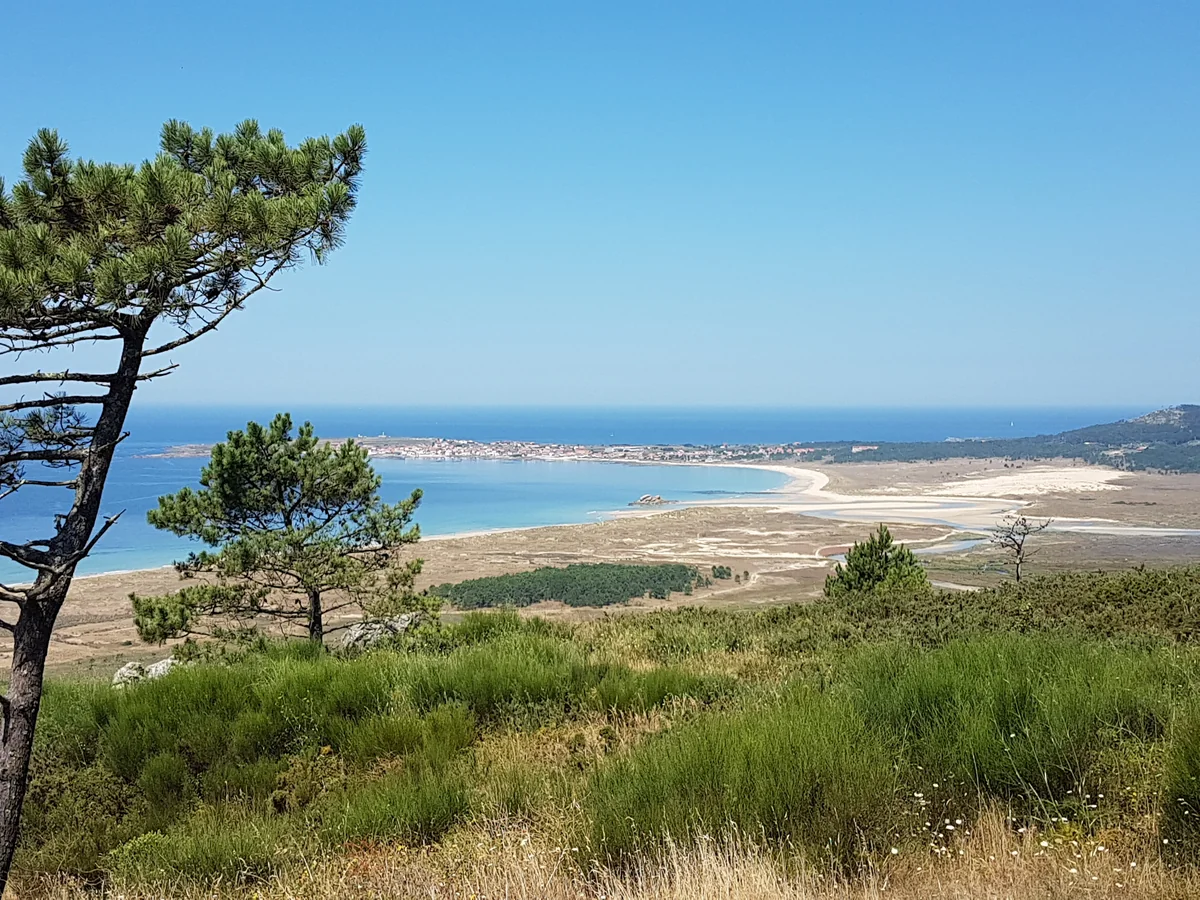
Pine trees frame a broad coastal view with pale dunes, a winding tidal channel, a curving beach and blue sea.

Dunes, beach and the Carregal outlet seen from Pedra da Rá in July 2020, showing the coastal mosaic of Corrubedo’s natural park.

Mitad norte del parque de Corrubedo.jpg — Sustiputo / Wikimedia Commons / CC BY-SA 4.0 · Creative Commons

Walks and routes

Camiño da Praia: the first-visit choice

This 1.5 km circular route starts at Casa da Costa and runs around the visitor-centre area, largely along nearby boardwalks. Official publications give 30–45 minutes; take longer for stops. Look across the vegetated dunes and use the interpretation to find out about Pipín’s burial mound. It is a modest walk to combine with the centres, rather than a way to reach every lagoon.

Ask staff which section provides the continuous surface and return you need. The route’s low difficulty rating and boardwalks do not by themselves establish wheelchair access to every viewpoint.


Camiño da Praia: the first-visit choice

Camiño da Auga: choose the freshwater story

Starting at O Vilar parking, this route approaches Vixán through Campo de Amendo, with rural features along the way. It is the choice for learning about the freshwater side of the park. Official publications give different distances, from 2.5 km to 4 km. Ask which signed itinerary is in use and whether it reaches the viewing point you want before committing to it.

The visitor brochure describes this route as only partly accessible for people with reduced mobility. Confirm the suitable section, turnaround and observatory approach separately.

Camiño da Auga: choose the freshwater story

Camiño da Gandarela: a longer habitat walk

From Casa da Costa, this itinerary introduces the Carregal marsh, vegetated dunes and the cultivated and wooded landscape behind them. Choose it as the main walk if that variety appeals. The official webpage lists 6 km and two hours, while the park map gives 3.5 km and 1.5 hours. Follow the current signed route and ask staff to resolve the distance before leaving.

Do not assume this mixed-landscape route has the same access as the nearby boardwalk. Ask about surfaces and a suitable shorter option for your group.

Camiño da Gandarela: a longer habitat walk

Camiño do Vento: a separate Olveira stop

Use the Olveira entrance for the boardwalk across Campos de Olveira towards the mobile dune. The official listing gives 1.5 km, 30 minutes and a linear route. Confirm the total out-and-back distance and allow time to return. Stay on the wooden walkway and admire the dune from the permitted viewing area.

The park describes this route as suitable for people with reduced mobility. Check the current boardwalk condition and the connection from parking for your wheelchair or pushchair.

Camiño do Vento: a separate Olveira stop

A gentle O Vilar morning

Park at the public O Vilar area, check in at the centres if open and choose Camiño da Praia. Give yourself time for a view, a plant and a quiet pause. Allow 2–3 hours overall and finish while everyone still wants to look around.

A wetland-focused half-day

Ask staff whether the Vixán observation approach or the Carregal-side route best suits conditions and your group. Choose one as the main outing, with a simple return plan and time to wait quietly. Save the other lagoon and the Olveira dune boardwalk for another visit if the day starts to feel rushed.

Things to try

Make a three-habitat sketch

From a public viewpoint, choose three textures: bare sand, low vegetation and water or wetland plants. Sketch their outlines or describe them in a few words. Then ask what wind, salt and freshwater might change in that scene.

Give the birds ten quiet minutes

At a designated observation point, settle in rather than moving immediately to the next stop. Compare feeding, resting and flying birds. Keep the path clear for others and let binoculars bring the view closer.

Look for flowers without a treasure hunt

In spring and early summer, ask staff what is flowering beside the open paths. The park has wild orchids, but their interest is a reason for care: never step into the vegetation, pick a flower or share a sensitive plant location.

Start indoors, or save the walk

If the centres are open, let CIELGA’s interpretation take more of your time. If strong wind, heavy rain or an official warning makes the coast unsafe, choose another day for the paths. Do not count on an observation hide as your emergency weather shelter.

Wildlife and habitats

Eurasian teal

Among the winter wetland birds, try comparing the smaller ducks with the birds around them. Use binoculars and a field guide, and note what the bird is doing before deciding on its name.

Eurasian coot

Include coots in a slow scan of the water rather than looking only for unusual ducks. Follow one bird for a while and note how it uses open water and the edge of the vegetation.

Western marsh harrier

Look above the wetland as well as across it. A passing raptor can be worth watching even before you identify it. Enjoy any marsh harrier from the public viewing area and leave nesting cover undisturbed.

Little egret

The park’s bird leaflet describes a white heron with a dark bill and legs and yellow feet. Check those details through binoculars if the bird is visible; do not move closer to make it pose.

Common reed

Notice how the reedbed forms a dense edge between open water and land. Watch it from the path or hide, without pushing into it to improve the view.

Sea holly

Give the dune plants a turn in the spotlight. Learn sea holly using the park interpretation or a field guide, and photograph a plant only when you can do so without leaving the path or trampling its neighbours.

Kentish plover

This small beach bird is one reason to take the dune barriers seriously. Learn about it in the park’s bird material, but do not search for nests or follow birds into the sand behind the public route.

Marram grass

Ask staff to point out this dune grass from the boardwalk. It gives you a useful starting point for thinking about vegetation and sand: some dunes are held by plants while the great mobile dune remains largely bare.

These plants and birds are documented for the park, but season, water and chance shape each visit. Stay on permitted paths, keep voices low, give animals room and avoid nests. A careful look at habitat is worthwhile even when the species you hoped for stays out of sight.

Stories and discoveries

A lagoon can have a connection to the sea

Carregal exchanges water with the Atlantic through its channels, so tides help shape the marsh. Vixán is mainly freshwater and much less exposed to that regular tidal exchange. Looking at their vegetation gives you a clue to the difference.

The wooded parts have a human story

The park’s pines include planted stands. Fields, stone boundaries and rural buildings also belong to the landscape. This is a useful place to notice how natural habitats and long-standing human uses meet.

When to visit

Spring and early summer

Look more closely at flowers beside the paths and ask for the park’s orchid information. Breeding birds need undisturbed space, so keep children close and leave nesting barriers a wide berth.

High summer

Keep the walk comfortable with water, a hat and breaks. The coastal scene and vegetation can carry the visit even when wetland bird variety is lower. Decide on any beach time separately according to that day’s sea conditions.

Autumn and winter

Bring binoculars and a warm waterproof layer for migration and wintering birds. A shorter walk with a patient watch may be more rewarding than covering every path. Give yourself enough daylight to return, and change plans if the weather turns rough.

Getting there and practical advice

Casa da Costa and CIELGA

Both are at O Vilar. Casa da Costa is the visitor reception centre; CIELGA, the Centro de Interpretación do Ecosistema Litoral de Galicia, explains the coastal ecosystem. The official page lists free entry and the same opening timetable for both. For current hours and guided visits, call +34 647 415 462 or email [email protected].

Parking and essential facilities

Public parking is listed at O Vilar and Olveira. The parking at Casa da Costa is reserved for authorized visits and park staff. Ask ahead about closer access, toilets and any facilities your group depends on; do not assume every trailhead has them.

Food and a break

O Vilar has a listed café-restaurant and recreation area, but check whether the café will be open before relying on it. Bring water and plan a meal in the designated recreation area or a nearby settlement. Keep food and rubbish away from wildlife.

Choose the correct entrance

For this guide’s first visit, follow signs to O Vilar in Carreira, Ribeira. Olveira is the separate access for the mobile-dune walks. Use the official park map to choose the appropriate public parking rather than navigating directly into the restricted Casa da Costa car park.

Arrange the return if you are without a car

Before travelling, ask the park or Ribeira visitor service about current local transport and agree your return arrangements. Do not base a short nature outing on an unconfirmed bus connection to the entrance.

Olveira boardwalk

Camiño do Vento has the clearest route-specific reduced-mobility statement in the park material. Contact staff about its present surface, any repairs and the access from parking. A published accessibility description cannot account for every mobility aid or changing coastal conditions.

O Vilar and the lagoons

Choose the section with staff rather than assuming a whole loop is suitable. Ask about the connection between parking, the centres and Camiño da Praia, and discuss the Vixán observatory separately. The Camiño da Auga brochure explicitly describes only partial accessibility.

Sources and useful links

Wildlife you might spot

6

Each card links to a full Explore page with photos, traits, and fun facts.

Snap map for this place

Start with the big picture, then zoom in to explore individual wildlife observations around this place.

Loading map…

Good to know before you go

Use the public O Vilar parking area for the suggested first visit. Parking at Casa da Costa itself requires prior authorization; ask about arrangements if you need closer access.

Stay on designated paths and boardwalks. Do not climb the mobile dune, enter roped-off areas or cross dunes to make a shortcut.

Bring binoculars, drinking water, sun protection and a windproof layer. Shoes with grip are useful on damp paths and boardwalks.

Check the weather and tides before setting off. Do not wade across the Río do Mar channel or enter lagoon margins to reach a viewpoint.

Leave pets at home for these walks. The five signed nature routes prohibit pets and bicycles; the park map makes an exception for guide dogs. Contact staff about other assistance-dog needs.

Keep plants, shells and sand where they are. Watch animals without feeding, chasing or playing calls, and respect nesting-area barriers.

Use designated recreation areas for a break, take litter away and respect private plots and access roads. Fires, free camping and overnight stays in the park’s public-use car parks are prohibited.

Confirm centre opening, your chosen route and any guided visit shortly before travelling. Organized group activities need prior authorization. In an emergency, call 112.

Frequently asked questions

No. Walking on the mobile dune is prohibited. View it from the designated route and viewpoints at the Olveira side, and respect barriers even if other footprints are visible.
O Vilar is a useful starting point for Casa da Costa, CIELGA and Camiño da Praia. Olveira is a different entrance for the mobile-dune routes. Set your navigation for the entrance you actually want, and remember that the Casa da Costa car park requires authorization.
The park’s official page says ordinary access does not require authorization and lists free entry to Casa da Costa and CIELGA. Guided visits are arranged in advance, and organized group activities require authorization. Centre parking has its own authorization rule.
Do not plan a shoreline circuit. Use the marked public routes and designated observation points, following current signs and staff advice. The lagoon edges and dune areas are sensitive habitats, not open space for finding your own way.
Ask first about Camiño do Vento at Olveira, which the park identifies as accessible for people with reduced mobility. Confirm the surface and access from parking for your needs. At O Vilar, ask staff to select a suitable section; Camiño da Auga is only partly accessible.
Summer usually offers less waterbird variety than autumn and winter. You can still enjoy the habitats and watch quietly for resident birds, but avoid making a family outing depend on a particular sighting.
It can be a separate addition via permitted access, if conditions suit. This coast faces the Atlantic. Check beach flags and current safety advice before swimming, and keep away from the tidal channel; the lagoon visit is for observation.
It shows the wider coastal landscape from Pedra da Rá in July 2020. It helps explain how dunes, beach and the tidal outlet fit together, but it does not show the O Vilar facilities or current path conditions.

Recent snaps at this place

Recent snaps will appear here as new observations are added.

View all ›

Take the discovery with you

Exploring Corrubedo Dunes and Lagoons Natural Park?

Identify the wildlife you spot, learn as you go, and keep a collection of the adventure.

  1. 1Spot it
  2. 2Snap it
  3. 3Keep the discovery




