Snappit logo
Snappit
Get App
Generic illustration, not a photograph of this venueIllustration
ParkYaeyama Islands, Okinawa, Japan

Iriomote-Ishigaki National Park

Start with the island’s best-known animal, then spend time in the habitat that supports so much of its life.

About

Start with the island’s best-known animal, then spend time in the habitat that supports so much of its life. At the Iriomote Wildlife Conservation Center in Komi, exhibits introduce the elusive Iriomote cat and the work that goes into keeping it safe. A short road journey takes you back to Ōhara, where a Nakama River cruise brings the mangroves into view without a jungle trek.

Iriomote-Ishigaki National Park extends across islands and coral-rich seas in Okinawa’s Yaeyama group. Ishigaki is the main travel hub, while Iriomote lies farther west. This day stays on eastern Iriomote. The center and river are separate stops connected by road; visits to Ishigaki’s reefs, bays or mountains need their own time.

The center makes a good first stop because it changes what you notice outdoors. Its exhibits, renewed in 2022, include a wildlife-friendly driving simulator and a large mural showing how the island’s habitats fit together. Look at the cat’s markings, then follow its connections with forest, wetlands and the road that people and animals have to share. Rescued cats are kept away from public view so they can return to the wild.

On the river, turn your attention from searching for a particular animal to the forest itself. Watch how the trees crowd the water’s edge and look for the different root shapes exposed beside the boat. Mangrove is a name for a group of plants adapted to tidal conditions, rather than one tree species. The changing water level helps explain why this landscape looks different from a freshwater woodland.

Choose the shorter, boat-only mangrove course for this visit. It takes about 50–60 minutes and returns to Ōhara. As checked on 16 October 2026, the operator has suspended its longer upstream giant-tree course because the boardwalk is damaged. Leave that walk out of your plans until the operator announces that it has reopened. Take the ultimate field guide with you: use the Snappit app to identify birds, plants, and animals on your trip.

The park became Iriomote National Park on 15 May 1972, when Okinawa reverted to Japan. Parts of Ishigaki were added on 1 August 2007, giving it today’s name. A 2016 expansion brought almost all of Iriomote within the park.


What to do here

Allow 45–60 minutes at the conservation center, then take the 50–60-minute Nakama River mangrove cruise. Choose the order around your booked boat departure and ferry home. At the center, try the driving exhibit; on the river, compare roots and the line where water meets forest.

Seasonal info

The rainy season usually falls around mid-May to late June. Summer is hot and humid, with sudden downpours and typhoon disruption possible. Autumn can also be wet. Winter brings northerly winds and cool, drizzly spells, so bring a light windproof layer for the boat.

Accessibility

The center lists a multipurpose toilet, but contact staff about step-free entry and the access you need. Its bus stop is about 700 m away, with a gentle uphill approach. The cruise operator accepts wheelchairs and assistance dogs; discuss boarding, chair dimensions and assistance before booking. There is no toilet aboard the river boat.

Don't miss

1

An engaging introduction to the Iriomote cat and island conservation

2

Mangroves viewed from the Nakama River rather than a demanding trail

3

A wildlife-friendly driving simulator at the center

4

A two-stop day that stays on eastern Iriomote

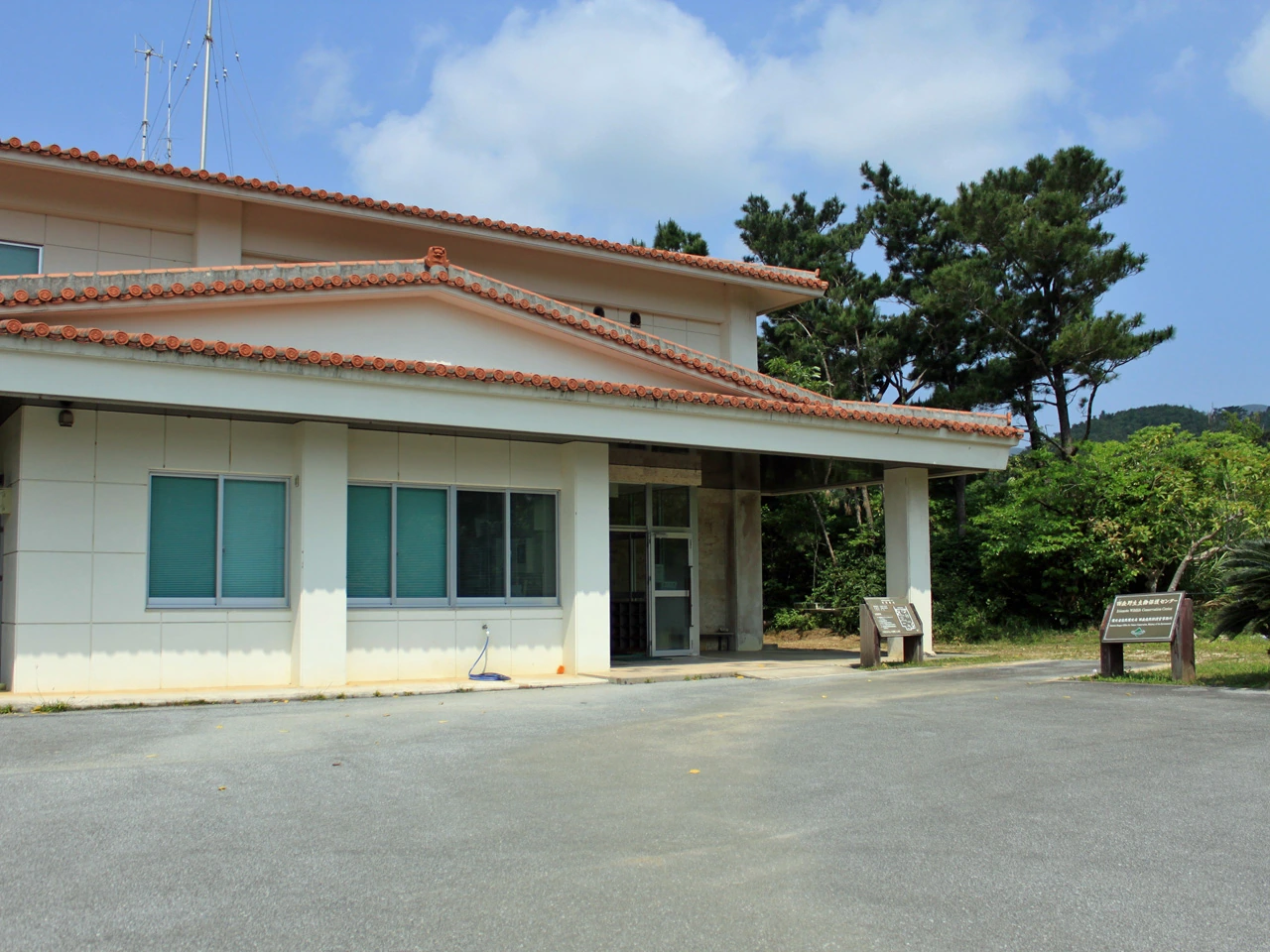
A low cream-coloured building with red roof tiles and a shaded entrance beside trees and a paved forecourt.

The exterior of Iriomote Wildlife Conservation Center in Komi, photographed on 15 April 2011.

Iriomote wildlife conservation centre.jpg — Koolah, CC BY-SA 3.0 (https://creativecommons.org/licenses/by-sa/3.0/). Source: https://commons.wikimedia.org/wiki/File:Iriomote_wildlife_conservation_centre.jpg. Recompressed as WebP quality 92, method 6; original dimensions retained without upscaling. No crop, retouching, added text or colour adjustment. EXIF omitted from derivative; original retained as evidence only. · Creative Commons

Walks and routes

Nakama River mangrove cruise from Ōhara

Take the short sightseeing-boat course from Ōhara and return to the same port. Settle in and watch the riverbank: exposed roots, reflections and the edge between water and forest give you plenty to notice without leaving the boat.

The operator accepts wheelchairs and assistance dogs. Explain your needs in advance so it can confirm boarding arrangements. Use the shore toilet first; there is none aboard.

Nakama River mangrove cruise from Ōhara

A relaxed day from Ishigaki

Choose an outward ferry to Ōhara and a return sailing before arranging the middle of the day. Reserve the cruise departure that fits, then place the center visit before or after it. A booked car or transfer gives more flexibility than the bus.

Arrive at Ōhara

Confirm the day’s ferry return and boat departure. Pick up your arranged transport or check the exact bus stop and return connection.

Explore the conservation center

Allow 45–60 minutes after its 10 a.m. opening. Start with the island mural and cat exhibits, then ask staff about seasonal wildlife and current conditions.

Return to the port for the river

Allow about 15 minutes for the road transfer from the center, plus time for parking or walking. Use the toilet and board the 50–60-minute mangrove cruise.

Leave space for lunch and the ferry

Keep a generous gap before your return sailing. Reorder the two visits if that suits the cruise timetable, and avoid adding a distant waterfall just to fill a spare hour.

Things to try

Try a family driving challenge

At the center, take turns with the driving simulator. Afterward, ask everyone to name one thing a driver can do differently for wildlife. Let children choose a creature in the large habitat mural and find out what it needs to survive.

Turn the cruise into a looking game

Without leaning out of the boat, compare a patch of exposed roots with a patch hidden by water. Notice reflections, leaf shapes and how close the trees grow together. A photograph or quick sketch makes a better souvenir than a leaf or shell.

Plan a separate guided forest day

Since 1 March 2025, the Hinai River/Pinaisara Falls, Nishida River/Sangara Falls, Mt Komidake, Mt Tedō and upper Urauchi River fields have required advance entry approval. Hinai and Nishida also require a registered escort guide. The other three have an approved training alternative, but they are demanding trips: a licensed operator is the practical place to start. Ask the operator to confirm your permit and guide arrangements before paying for travel.

Keep it indoors when the river is unsuitable

If you are already on Iriomote and roads are safe, spend longer with the center’s film, displays and books instead of forcing a river trip. Check that it is open first. During a typhoon or serious weather warning, follow local advice and stay at your accommodation rather than traveling to the center.

Wildlife and habitats

Mangroves: a forest at the tide line

On the Nakama cruise, look for roots that arch down toward the mud or rise above it. Ask the crew which trees you are passing. Several plants can form a mangrove forest, so one leaf or root shape should not stand in for every species.

Rice paper butterfly

This large black-and-white butterfly is part of Iriomote’s wildlife. If one passes while you are outside, watch its slow flight rather than chasing it into vegetation. Use the center’s wildlife information to compare it with other butterflies you notice.

Easter lily, or Teppō-yuri

Iriomote’s flora includes this lily with long white flowers held sideways. It grows in coastal settings, including cliffs. Ask staff whether flowers are out during your stay, and enjoy any you find from a safe path without picking them.

The Iriomote cat: learn its story indoors

The cat lives naturally only on Iriomote. Spend time with the center’s exhibits and learn why quiet observation and careful driving matter. A rare wild encounter is something to leave undisturbed; please do not seek out resting places or share a location publicly.

Enjoy the plants and the wider landscape first. Wildlife comes and goes, and the butterfly and lily notes below describe Iriomote more broadly rather than a checklist for this boat ride. Keep a respectful distance and leave everything where you find it.

Stories and discoveries

Why a road-safety exhibit belongs in a nature center

For Iriomote’s wildlife, a road is a real hazard. The center’s driving simulator connects an everyday travel choice with conservation, making it especially relevant before a rental-car outing.

Forest and sea belong to the same story

The park protects a connected landscape of evergreen forest, rivers, mangroves, coastal plants and coral reefs. The center’s mural is a useful way to put the small stretch you visit into that larger island setting.

When to visit

Spring and the rainy season

Spring can suit a gentler-paced visit before summer heat, but pack rain protection. The regional rainy season usually develops around mid-May and lasts into late June. Let forecasts and operating notices decide your boat day.

Summer and early autumn

Heat, humidity and sudden rain call for water, shade breaks and flexibility. Typhoons can upset island travel; allow a buffer before an onward flight rather than relying on a last-minute ferry connection.

Winter

The center remains a useful indoor stop, while the boat can feel cool in the northerly wind. Carry a windproof layer and check sailings even if the day looks fine on land.

Getting there and practical advice

Iriomote Wildlife Conservation Center

Admission is free. Usual hours are 10 a.m.–5 p.m.; it closes on Mondays, or Tuesday when Monday is a public holiday, plus 23 June and 29 December–3 January. Temporary closures are possible. There are toilets including a multipurpose toilet, a water dispenser and parking. Bring snacks for elsewhere: eating and drinking inside are prohibited, and there is no vending machine.

Nakama cruise check-in at Ōhara

The operator’s Shop Dugong ticket point is beside Ōhara Port, with a waiting area and toilet. As checked on 16 October 2026, the short course costs ¥3,500 for an adult and ¥1,750 for a child; check the booking page for the current price and the category that applies to your children. Book online, or ask about remaining seats on the day.

Ishigaki to Ōhara by ferry

Depart from Ishigaki’s Remote Island Terminal for Ōhara on Iriomote. Anei lists about 40–50 minutes for a direct crossing; routes via Taketomi take longer. Buy for the correct port, check the operator’s live status and keep the last suitable return sailing in mind.

Between Ōhara and the center

The center gives about 15 minutes by car from Ōhara. Arrange a rental car or a return transfer before arrival. It is about 45 minutes by car from Uehara, so the northern port is not an interchangeable arrival point for this plan.

Using the local bus

From Ōhara, use the bus toward Shirahama and get off at the Wildlife Conservation Center stop. The center is about 700 m away on a gently rising side road. The October 2026 timetable has four services in each direction, and services are not timed to connect with ferries. Check both legs before committing to a cruise. Regular buses do not enter Uehara Port; ferry-company replacement buses are a separate service.

At the center

Ask staff about the building entrance, wheelchair circulation and any assistance you need. A multipurpose toilet is listed, but the 700 m uphill approach from the bus stop may make a vehicle drop-off more practical.

For the cruise

Wheelchairs and assistance dogs are accepted by the river-cruise operator. Confirm the particular boat and boarding arrangement before you book, including whether you need someone to assist. Arrange ferry accessibility separately; a river-boat policy does not establish access on the inter-island ferry.

Sources and useful links

Wildlife you might spot

3

Each card links to a full Explore page with photos, traits, and fun facts.

We are still adding species preview cards for this place.

Snap map for this place

Start with the big picture, then zoom in to explore individual wildlife observations around this place.

Loading map…

Good to know before you go

Choose Ōhara Port for this eastern-Iriomote plan. Uehara is a different port, farther from the center; check the name on your ferry booking.

Check ferry status, the center’s opening calendar and your cruise departure before leaving Ishigaki. Keep room in the day for delays, especially before an onward flight.

Book island transport ahead. The center is about 15 minutes by car from Ōhara, and the public bus stops on the main road rather than at the building.

Bring water, a hat, rain protection and shoes with grip. Use the toilet before boarding the river boat.

Keep to 40 km/h or less, and obey any lower posted limit. Watch for animals crossing, particularly around dusk, and do not stop in a dangerous place for a photograph.

Keep to established paths, leave plants and animals untouched, and never feed wildlife. Give snakes space and do not reach into vegetation.

If you encounter an Iriomote cat, watch quietly from a distance and leave the location out of public posts. Report it privately to the center; call +81 980-85-5581 for an injured or dead cat.

Treat waterfall and interior-forest trips as separate outings. Some fields require advance entry approval and a registered guide, so arrange them before you travel.

Frequently asked questions

No live cats are displayed to visitors. The center cares for rescued animals, but keeps them out of public view to avoid habituating them to people. The exhibits are the reliable way to learn about the species.
Use Ōhara for this plan. Anei’s direct Ishigaki–Ōhara crossing is advertised as about 40–50 minutes; sailings via Taketomi take longer. The center is about 15 minutes from Ōhara by car, compared with about 45 minutes from Uehara.
The center is served by bus, but long gaps make pairing it with the cruise awkward. Take the Shirahama-bound bus from Ōhara to the Wildlife Conservation Center stop, then walk about 700 m uphill. Check both directions and your ferry before booking the cruise; arranged road transport is simpler for the two stops.
Use road transport. The center estimates roughly two hours on foot from Ōhara; that would turn a relaxed two-stop visit into a much longer day. The cruise leaves near the port, not from the center.
The center and this regular Nakama River sightseeing cruise are not among the five fields covered by the special entry-approval scheme. The cruise still needs a ticket. For Pinaisara Falls, Sangara Falls and certain interior areas, arrange the required approval and guiding separately.
The cruise can be canceled or shortened because of heavy rain, strong wind or low water. Ferries have their own operating decisions. Check both operators and avoid forest or river outings when warnings or rapid changes make conditions unsafe.

Recent snaps at this place

Recent snaps will appear here as new observations are added.

View all ›

Take the discovery with you

Exploring Iriomote-Ishigaki National Park?

Identify the wildlife you spot, learn as you go, and keep a collection of the adventure.

  1. 1Spot it
  2. 2Snap it
  3. 3Keep the discovery