Snappit logo
Snappit
Get App
Generic illustration, not a photograph of this venueIllustration
ParkKansai, Japan

Meiji no Mori Mino Quasi-National Park

Mino’s famous waterfall is only one part of a much larger wooded landscape.

About

Mino’s famous waterfall is only one part of a much larger wooded landscape. Meiji no Mori Mino Quasi-National Park takes in the valleys and low hills north of the city, with streams, leafy slopes and a long tradition of people coming up from Osaka for a day outdoors. The waterfall approach has its own appeal; the visitor centre offers a different kind of outing, built around noticing what lives in the forest.

Make Mino Visitor Center, in the Masanochaya grounds, your base. Start with the animal specimens, seasonal displays and explanations of the local landscape, then take that curiosity outside. Look at the wildflower garden, compare leaves along the nearby paths and settle down with a packed lunch in Momiji Plaza. A child who would tire of a long uphill walk can still have plenty to investigate here, provided you arrive by road and keep the day close to the centre.

Expo ’90 Mino Memorial Forest is another place to spend time in the park, with Flower Valley, a lawn and an observation tower refurbished in 2026. It has a separate entrance and parking area, farther into the hills. Choose it as an alternative stop or reach it by a separately planned road transfer. Trying to stitch it, the visitor centre and Minoh Falls into one easy family stroll would miss the scale of the landscape.

The best visit leaves room for small discoveries. A mixed flock moving through the branches, the shape of a maple leaf or a specimen that suddenly makes sense outdoors can be the memorable part. Come for the forest rather than a promised animal encounter, and ask about the day’s conditions before venturing onto the longer nature-study trails. Take the ultimate field guide with you: use the Snappit app to identify birds, plants, and animals on your trip.

The wider Mino mountain area became a quasi-national park in 1967 as part of the Meiji centennial commemorations, alongside Mount Takao near Tokyo. The waterfall-side prefectural park had been established much earlier, in 1898. Expo ’90 Mino Memorial Forest was later created to commemorate Osaka’s 1990 International Garden and Greenery Exposition, adding another chapter of outdoor learning to the hills.


What to do here

Browse the visitor centre, explore the garden and nearby grounds, and bring a picnic for Momiji Plaza. If you want a guided activity, look at the current nature-walk and craft calendar before choosing your date. Keep Expo ’90 forest as a separate choice unless you have transport arranged.

Seasonal info

Spring brings new leaves and woodland flowers; autumn shifts the attention to colour and moving bird flocks. Summer calls for water, sun protection and a shorter outing in the heat. Winter visits need warm layers, an early finish and a check for ice or weather closures.

Accessibility

The mountain setting has slopes, and the longer woodland paths are hiking routes. A wheelchair-accessible toilet is listed at the visitor-centre parking area, but that does not make every building or path step-free. Call 072-723-0649 to discuss your route, arrival and assistance needs.

Don't miss

1

Small natural-history displays that give the forest outside a name and a story

2

A picnic and unhurried leaf-watching in the Masanochaya grounds

3

Autumn and winter birdwatching around the visitor centre

4

A separate visit to Expo ’90 forest’s lawn and renewed observation tower

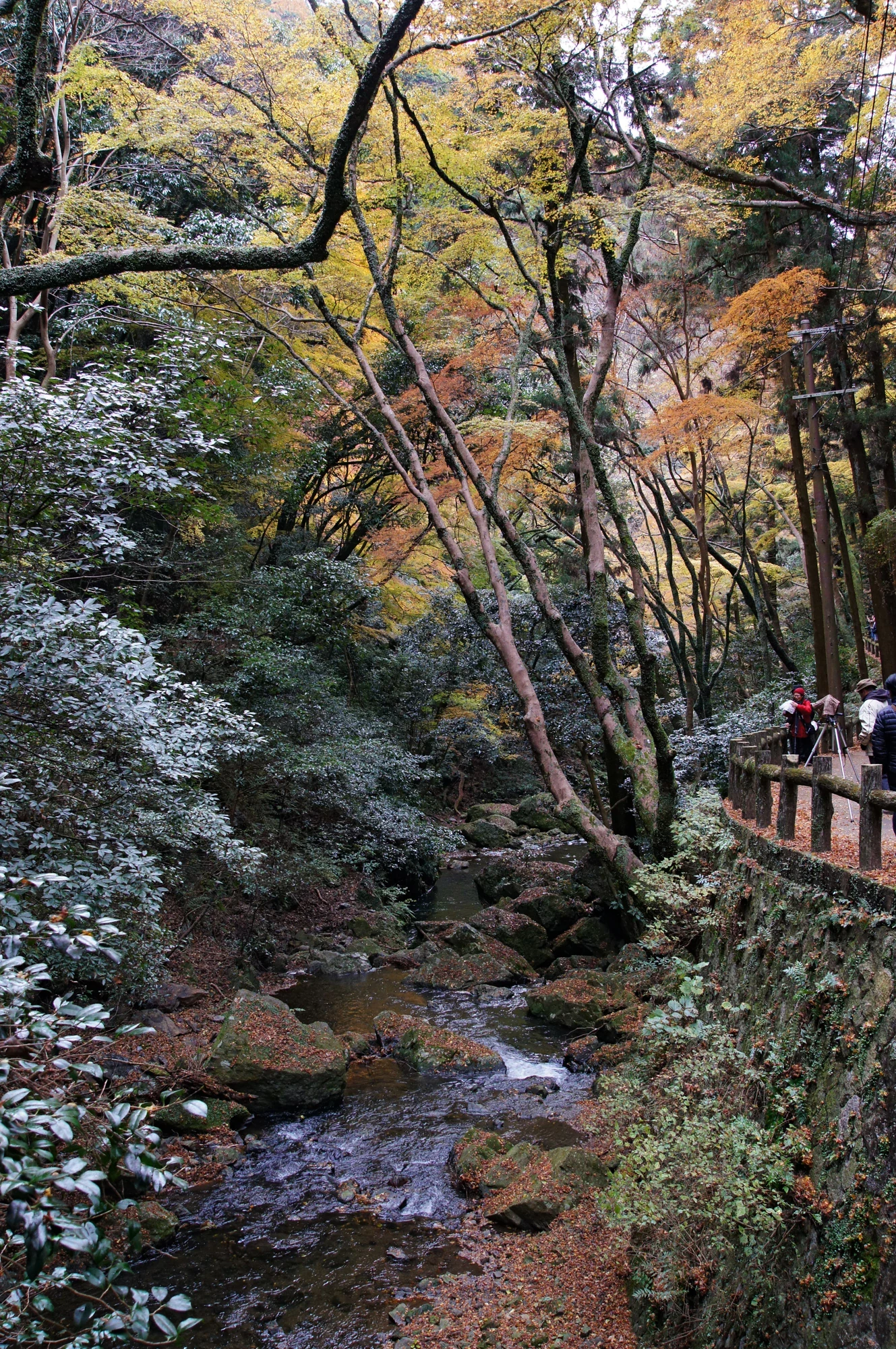
A small rocky stream runs beneath green and yellow trees beside a path with a few visitors.

A wooded stream in Meiji no Mori Minō Quasi-National Park, photographed in December 2012. This wider-park scene illustrates its forest setting.

Meiji no Mori Minoh Quasi-National Park Minoh Osaka pref Japan22s3.jpg — 663highland, CC BY 2.5 (https://creativecommons.org/licenses/by/2.5/). Source: https://commons.wikimedia.org/wiki/File:Meiji_no_Mori_Minoh_Quasi-National_Park_Minoh_Osaka_pref_Japan22s3.jpg. Proportionally resized to a maximum 2000-pixel long edge without upscaling; recompressed as WebP quality 92, method 6. No crop, added text, colour adjustment or retouching. Original retained only as evidence; EXIF omitted from derivative. · Creative Commons

Walks and routes

Visitor centre, garden and Momiji Plaza

Arrive at the Masanochaya parking area and check the signs for the centre. Browse the exhibits first, then visit the wildflower garden and take a short wander within the grounds before a picnic in Momiji Plaza. Return the same way whenever you have had enough. Save the numbered nature-study trails and dam circuit for a separately planned hike.

Expect slopes between parts of the precinct. Ask staff to show you the most suitable way between the parking area, toilet and exhibits; shorten the visit to the facilities you can reach comfortably.

Visitor centre, garden and Momiji Plaza

Expo ’90 forest as a separate outing

Start at Expo ’90 forest’s own entrance. Use the site plan to choose a walk through Flower Valley toward the lawn, turning back when the uphill walking feels enough. If the route and weather suit your group, include the refurbished observation tower. Return to the same parking area with time to spare before its gate closes.

Paths climb through the hillside; the tower involves a climb. Keep a shorter option near the entrance and ask the managing office about current access if steps or gradients are a concern.

Expo ’90 forest as a separate outing

Begin with the exhibits and one question for the interpreter, if someone is on duty.

Walk out to the garden and choose a small leaf or birdwatching activity. Keep to the grounds rather than setting off on a numbered mountain trail.

Have lunch or a snack at Momiji Plaza, then revisit anything that caught your attention before returning to your car or booked pickup.

Things to try

Start with one question

Choose one thing in the exhibition that interests you, such as a bird, a leaf or the shape of the valley. See whether you can recognise a clue outside. A short focused search is often more fun than trying to name everything.

Make a leaf-shape collection with your camera

Photograph a few different leaf outlines from the path, then compare lobes, edges and colour. Use the centre’s displays or ask an interpreter for help; leave the leaves attached and avoid stepping into planting beds.

Listen for a moving flock

Stand still near the woodland edge and listen before raising binoculars. The centre’s autumn newsletter describes mixed small-bird flocks here. Let them come into view rather than following them off the path.

Join a nature activity

The centre runs nature observations and craft activities. Check the event listing for dates, age guidance, fees and booking, rather than assuming a class will be available when you arrive.

If the weather turns

On a day with light rain and safe roads, make the centre’s displays the main event and keep the outdoor part brief. Heavy rain, strong wind, thunderstorms or official warnings are a reason to postpone the mountain outing; the centre is not a reason to drive into hazardous conditions. Check that it is open before leaving.

Wildlife and habitats

Japanese maple

Look for the hand-like leaf outline, then compare the fine spring green with the warmer colours later in the year. The park’s seasonal gallery identifies iroha-momiji; not every red leaf around you will belong to this species.

Long-tailed tit

Watch for a tiny round body with a tail that seems almost too long for it. These birds are documented among the mixed autumn and winter flocks around the visitor centre. Stay still and let the flock work its way through the branches.

Brambling

The operator’s winter gallery shows bramblings feeding among trees. Look for a finch with orange on the breast and shoulders, using binoculars to check details rather than guessing from a distant silhouette.

Japanese macaque

Macaques belong to the wider Mino forest’s natural history. If you happen to see one, watch from where you are and put food away; following a group or offering a snack changes the encounter for both people and animals.

These are a few things documented in the park or around the centre. Wildlife moves with season and conditions; enjoy whatever is there and observe from the paths.

Stories and discoveries

A small start to a very long walk

Masanochaya is the western starting point of the Tōkai Nature Trail, which links the Mino hills with the Mount Takao area near Tokyo. Looking at the trail information here can be its own little geography lesson, without committing you to a long hike.

One landscape, different histories

The older waterfall-side prefectural park and the surrounding forest sit within the larger quasi-national park. Their facilities have different managers and rules, so an opening notice for one should not be treated as an announcement for every part of Mino.

When to visit

Spring: look at the new growth

Fresh maple leaves and the centre’s seasonal flower displays reward a slow visit. Ask which plants are flowering in the garden, then use the path to look closely without entering the beds.

Summer: shorten the walking

Trade a long midday hike for exhibits and a short shaded wander. Carry drinking water and avoid streams and wooded slopes during heavy rain or thunderstorms. Let the forecast decide whether the trip belongs on another day.

Autumn: colour and busy roads

Make time for leaf colour and bird flocks, but plan transport before the busiest weekends. The 2026 one-way restrictions run on weekends and public holidays between 14 November and 6 December. Check current colour reports rather than expecting a fixed peak date.

Winter: watch the branches

With fewer leaves, it can be easier to follow small birds through the trees. Bring warm layers, check for icy paths and finish well within the shorter parking hours.

Getting there and practical advice

Opening and admission

Visitor-centre admission is free. Opening is normally 10:00–16:00, with 09:30–17:00 hours on weekends and public holidays from April through November. Buildings and parking close on Tuesdays, the following weekday when Tuesday is a holiday, and 29 December–4 January. Arrive with enough time to return before the parking gate closes.

Nature interpreters

Interpreters are generally present on weekends and public holidays, with extra weekdays in the seasonal roster. Their usual hours are 10:00–15:45. Check the current calendar if speaking with one is the main reason for your visit.

Toilets and a useful change to know

The visitor-centre parking area has a wheelchair-accessible toilet. Grounds toilets are normally available on regular closure days, although parking is shut. At Expo forest, well-water shortages can put toilets out of use. The separate Dainichibashi toilet beside Otakiue parking closed on 31 March 2026, so do not plan a stop there.

Lunch and breaks

Bring a packed lunch and water for Momiji Plaza or Expo forest’s lawn. Pack food away if wildlife approaches and take every scrap home. Cooking at the centre is restricted to its designated facility and requires advance booking; a picnic does not include permission to light a stove elsewhere.

Expo forest parking

The separate Expo car park has about 30 spaces. Hours are 09:30–17:00 from April to November and 10:00–16:00 from December to March. It closes Tuesdays, the next day when Tuesday is a holiday, and 29 December–4 January, with possible extra weather closures.

A place to check information

Free Wi-Fi is offered around the visitor-centre office. Download the map before leaving town anyway, and check the noticeboard before a longer walk.

By car or a pre-arranged taxi

Use Mino Visitor Center, 箕面ビジターセンター, at 箕面市箕面1576 as your destination. The operator’s road approach goes via Hakushima and the Toyonaka–Kameoka prefectural road; look for the small entrance sign and bridge into the grounds. There are about 20 free parking spaces. If taking a taxi, confirm the drop-off and return pickup with the operator before travelling; do not count on finding a waiting car in the forest.

By train and bus

From Minoh-kayano Station, check Hankyu Bus services to Katsuo-ji. The bus stops at the temple, not at the visitor centre. The official facility listing quotes a further 30–40 minutes on foot, but Nature Study Trail 4 currently has closed sections. Ask the centre about a safe, open approach before using this option; a bus ticket alone does not solve the last part of the journey.

Walking from Hankyu Minoh Station

The established approach goes via Minoh Falls and takes about 90 minutes one way to the centre. Allow more for stops and the return, and carry a current map. This turns a short centre visit into a much longer walking day.

Reaching Expo ’90 forest

Use the forest’s own entrance and car park as a separate destination. The prefectural road description continues beyond the Mino River dam onto the Minoh–Satsukiyama city road. Confirm current road controls and return arrangements before setting off; the visitor-centre parking area is not the Expo entrance.

Autumn 2026 road changes

On Saturdays, Sundays and public holidays from 14 November to 6 December 2026, 09:00–18:00, the Minoh Driveway between Sansō Kaze no Mori and the junction below the dam is northbound only. This also applies to bicycles. Congestion is expected. Motorcycles are prohibited on the driveway, and most vehicles are barred from 22:00 to 05:00; taxis are excepted from that night restriction.

Plan around your own access needs

Call the visitor centre on 072-723-0649 before travelling if you use a wheelchair, have limited walking stamina or need a particular toilet layout. Explain whether you want the displays, picnic grounds or a longer path, and ask about the complete route from your vehicle. The hillside setting makes an all-purpose “accessible park” description unhelpful.

Keep Expo forest flexible

There are slopes within Expo forest and a climb to the tower. A toilet symbol on an older map does not guarantee that the well-fed toilets are working. Confirm access and water status with Osaka Prefecture’s northern office, 072-627-1121, before making this your main stop.

Visitor information

Before a longer walk

As checked on 16 October 2026, Nature Study Trail 2 between markers E8 and B6 is closed by fallen trees. Trail 4 between F14, F7 and F15 is closed for forestry work from late August 2026 until a planned 26 February 2027; its branch from F7 to the Tōkai Nature Trail was already closed. Do not use these sections as shortcuts or assume the planned end date means reopening. Check the latest closure notice and ask at the centre.

Give wildlife space

Keep food concealed and never feed or approach monkeys. For the quieter mountain paths, check Minoh City’s bear advisory, avoid dawn and dusk, and use a bell or your voice to make your presence known. If you meet a bear, stay calm and back away slowly without turning your back; never approach a cub.

Sources and useful links

Wildlife you might spot

4

Each card links to a full Explore page with photos, traits, and fun facts.

Snap map for this place

Start with the big picture, then zoom in to explore individual wildlife observations around this place.

Loading map…

Good to know before you go

Plan a road arrival for the short outing. The railway station and Katsuo-ji bus stop both leave a substantial walk.

The centre usually opens 10

00–16:00, extended to 09:30–17:00 on April–November weekends and public holidays. It closes Tuesdays, the next weekday if Tuesday is a holiday, and 29 December–4 January.

Pack lunch and drinking water before heading uphill. Don’t make the day depend on finding a cafe at either forest stop.

Use the latest trail-closure map. Sections of Nature Study Trails 2 and 4 are closed as of 16 October 2026.

For autumn 2026, check the 14 November–6 December weekend/holiday road controls before setting out. They change the direction of travel on part of the Minoh Driveway.

Keep food out of sight if monkeys appear. Never feed them or move closer for a photo.

Check Minoh City’s bear advice before walking in the hills; favour daylight and make your presence known on quieter paths.

Take all litter home, keep to open paths and leave flowers and other living things where they are. Follow the site’s fire and drone rules.

Frequently asked questions

No. This outing centres on Mino Visitor Center farther into the hills. The official estimate from Hankyu Minoh Station via the falls to the centre is about 90 minutes one way, before sightseeing stops.
Yes, but it takes more planning. Hankyu buses reach Katsuo-ji from Minoh-kayano Station. The normally quoted onward walk to the centre is 30–40 minutes, and current mountain-trail closures mean you should ask the centre which approach is usable before relying on it. For a short family visit, ask a taxi operator about an outward journey and a booked return pickup.
Treat them as separate outings. Both are in the park, but they have different entrances and parking areas. Visit one thoroughly, or arrange a road transfer and enough time for the second stop.
The prefecture says the grounds’ toilets can normally be used on regular facility-closure days, although the car parks are closed. Expo forest’s toilets can fail when the well runs dry, so use a toilet before going there and check the latest notice.
They are wild animals living in the wider forest, so a short visit may not include any. Enjoy them only from a distance if they appear, with food packed away.

Recent snaps at this place

Recent snaps will appear here as new observations are added.

View all ›

Take the discovery with you

Exploring Meiji no Mori Mino Quasi-National Park?

Identify the wildlife you spot, learn as you go, and keep a collection of the adventure.

  1. 1Spot it
  2. 2Snap it
  3. 3Keep the discovery