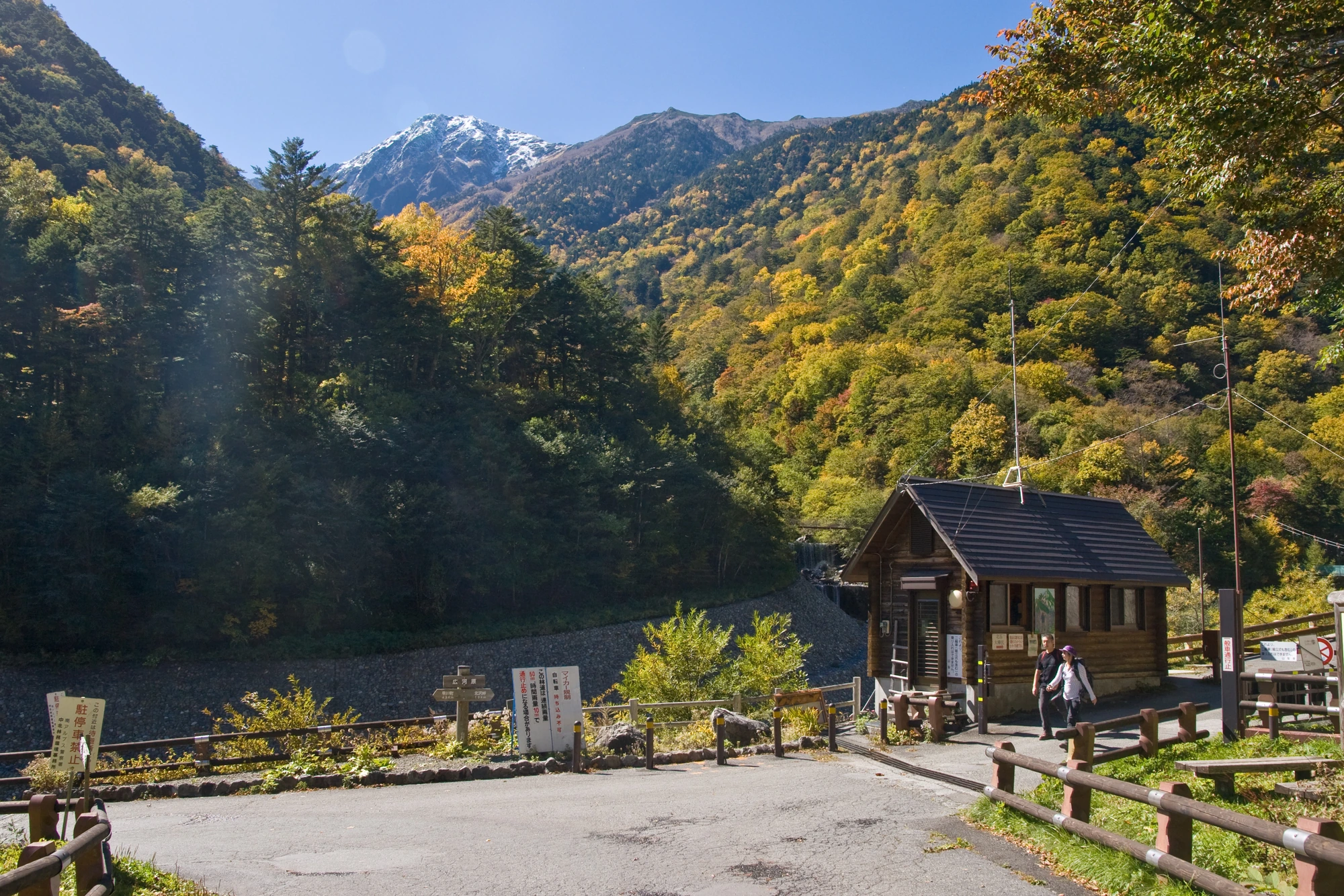
At Hirogawara, the Southern Alps begin with a river, a forest and a very big skyline. This mountain gateway sits at about 1,500 meters beside the Norogawa River, with Kitadake rising to 3,193 meters beyond it. You can enjoy the view without climbing Japan’s second-highest mountain. A satisfying visit stays close to the Norogawa-Hirogawara Information Center, takes in the mountain outlook near the suspension bridge, and adds a gentle-paced look around Hirogawara’s wooded garden when conditions allow.
Start inside the information center beside the bus terminal. Ask about the return service and the day’s path, weather and wildlife conditions before choosing your walk. The upstairs information area and lounge were renewed in 2025, making this a useful place to get your bearings as well as wait for transport. The park’s conservation story is worth a little time: sika deer can change a forest by browsing its plants, and protecting the Southern Alps’ flowers involves active work rather than simply leaving everything alone.
For the outdoor part, head toward the Kitadake trailhead suspension bridge. On a clear day, the view here gives a strong sense of how far above the valley the peaks stand. Across the river, Hirogawara Enchi, the wooded garden area, offers a closer look at the forest. Katsura trees are a highlight, alongside maples and other broadleaved trees. Take your time with the trunks, canopy and forest floor instead of treating this as the first stretch of a summit hike. Stay on the open paths and boardwalk sections, and turn back wherever staff advice, a barrier or your group’s comfort calls for it.
The wider national park reaches across Yamanashi, Nagano and Shizuoka. Its high mountains were raised by tectonic forces, and glaciers shaped parts of the upper landscape. Rock ptarmigan and rare summit flowers belong to that higher world; neither is a reason to keep following a mountain trail on this short visit. The valley’s trees, changing light and river are enough for a rewarding outing, including when the summit disappears into cloud.
The commitment here is often the journey. Hirogawara has seasonal bus and taxi access, private-car restrictions and a long winter shutdown. Heavy rain can close the approach roads even during the operating season. Bring food, warm layers and rain protection, choose your ride home before you start walking, and leave room in the day to change plans. This is a manageable mountain-gateway visit for prepared walkers, with a remote setting that deserves respect. Enhance your adventure: download the Snappit app to identify the local species you encounter.
Hirogawara was once a timber-working gateway. In the Edo period, logs were carried downstream through the Norogawa, Hayakawa and Fujikawa river system; local timber was used in repairs to Edo Castle in 1834. Mountain recreation later became central to the area. Minami Alps National Park was established on June 1, 1964. The present Hirogawara Sanso opened in June 2022 beside the bus-terminal area, replacing the older hut across the river.