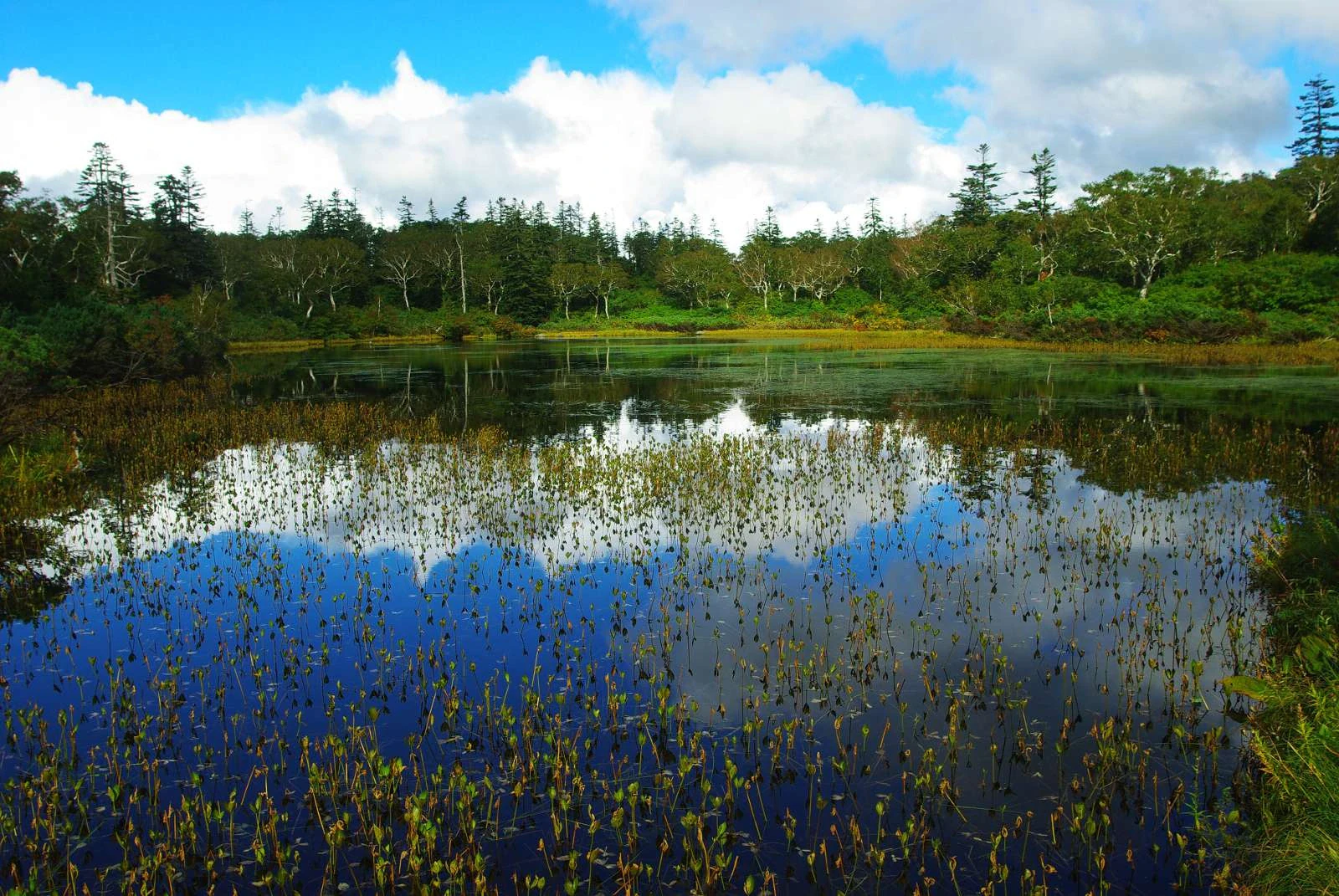
The name on the map covers a lot of Hokkaido: the Niseko mountains, the Raiden coast and the cliffs and headlands around Shakotan and Otaru. For a first visit, choose one small piece of it. Shinsennuma, in Kyowa Town, offers a satisfying walk from sheltered woodland to an open wetland and a forest-fringed pond, without committing to a mountain summit or a day of coastal driving.
Begin at the Shinsennuma Rest House parking area on Route 66, the Niseko Panorama Line. The signed wetland entrance is across the road, so keep children close while crossing. A wooden path threads through the trees before the landscape opens out. Small pools sit among the wetland plants, and the larger pond reflects the surrounding forest when the wind drops. That transition from enclosed woodland to open sky is worth enjoying slowly.
Shinsennuma sits more than 750 metres above sea level. Its small scale is part of the appeal: you can notice a patch of flowers, watch ripples alter a reflection and still have time to look again on the way back. The main pond is roughly a kilometre from the rest house. Return along the same approach for a walk of about two kilometres, or spend a little longer on the signed wetland loop. Allow 60–90 minutes for the basic return walk with stops.
The plants give the walk a different character as the season moves on. Around late June and early July, bogbean puts white flowers along the water; July brings purple Arctic irises and yellow daylilies. Later, the wetland vegetation changes towards autumn colours. Carry the town’s flower-trail leaflet and compare shapes from the boards. There is no need to reach a particular plant or step onto the soft ground for a better photograph.
A separate, short path near the parking area leads to the Shinsennuma Observatory. On a clear day, it adds a view over Kyowa’s farmland towards the Sea of Japan and the Shakotan Peninsula. Save the actual coast for another outing. This guide stays with Shinsennuma; the longer trails towards Naganuma and the surrounding peaks need their own route, weather and bear checks. Planning to visit? Download the Snappit app to identify the wildlife you spot in real-time.
The park was designated on 24 July 1963, following earlier prefectural protection of the Niseko area. Shinsennuma’s name is associated with a 1928 visit by Toyomatsu Shimoda’s scouting party, who likened the setting to a place inhabited by gods and mountain hermits. The wooden paths protect the wetland from trampling while allowing visitors to see it at close quarters.