
Snappit logo
Snappit
Get App
Generic illustration, not a photograph of this venueIllustration
ParkKR

Semiwon

Semiwon rewards a little selectiveness.

About

Semiwon rewards a little selectiveness. A flower-focused visit belongs around the lotus and waterlily ponds; a culture-focused one works through the shaped pond at Guksawon, the earthenware-jar fountain and Sehanjeong. You do not need to cross the river connection to make a satisfying garden visit. The name comes from an old idea of cleansing the mind by looking at water and making it more beautiful through flowers. That gives the small water features a purpose beyond decoration. [Explore the garden’s own visitor overview](https://semiwon.or.kr/content.htm?page_id=view) before choosing your stops. Enhance your adventure: download the Snappit app to identify the local species you encounter.

Semiwon opened in May 2004, initially with lotus fields and a waterlily greenhouse. The garden then grew feature by feature: the Perry Memorial Pond in 2007, Guksawon in 2008, the Lotus Museum in January 2009 and Sehanjeong in 2013. It became Gyeonggi-do’s first provincial garden in 2019. The boat-bridge connection first opened in 2012 and reopened after works in April 2024. These are modern garden projects that interpret older Korean stories and forms, rather than a surviving Joseon royal garden.

What to do here

Start with the pond or cultural feature that matters most to you, then leave time for the Lotus Museum. Read the plant labels as you go: lotus and waterlily displays have different habits, and not every pond peaks together. For photographs, include the setting as well as individual flowers. Keep your feet on the paths and your camera clear of other visitors; a better angle is not a reason to lean across a pond edge.

Seasonal info

For autumn, think waterlilies and garden design rather than summer lotus fields. The announced 2026 Waterlily Culture Festival runs 1 September–31 October; festival dates do not guarantee flowers. Check the [current notices](https://semiwon.or.kr/bbs/board.php?bo_table=notice) for your own visit date.

Accessibility

The operator lists wheelchair hire, accessible toilets, ramps on principal routes and a lift serving the museum floors. Ask staff to identify a suitable garden route before setting off, especially if you want to use the boat bridge. These facilities do not establish that every pond-side path is step-free.

Don't miss

1

Lotus and waterlily ponds with distinct planting themes

2

Guksawon’s peninsula-shaped pond and surrounding stream

3

Sehanjeong’s garden interpretation of a painting and friendship

4

The Lotus Museum’s everyday objects and cultural history

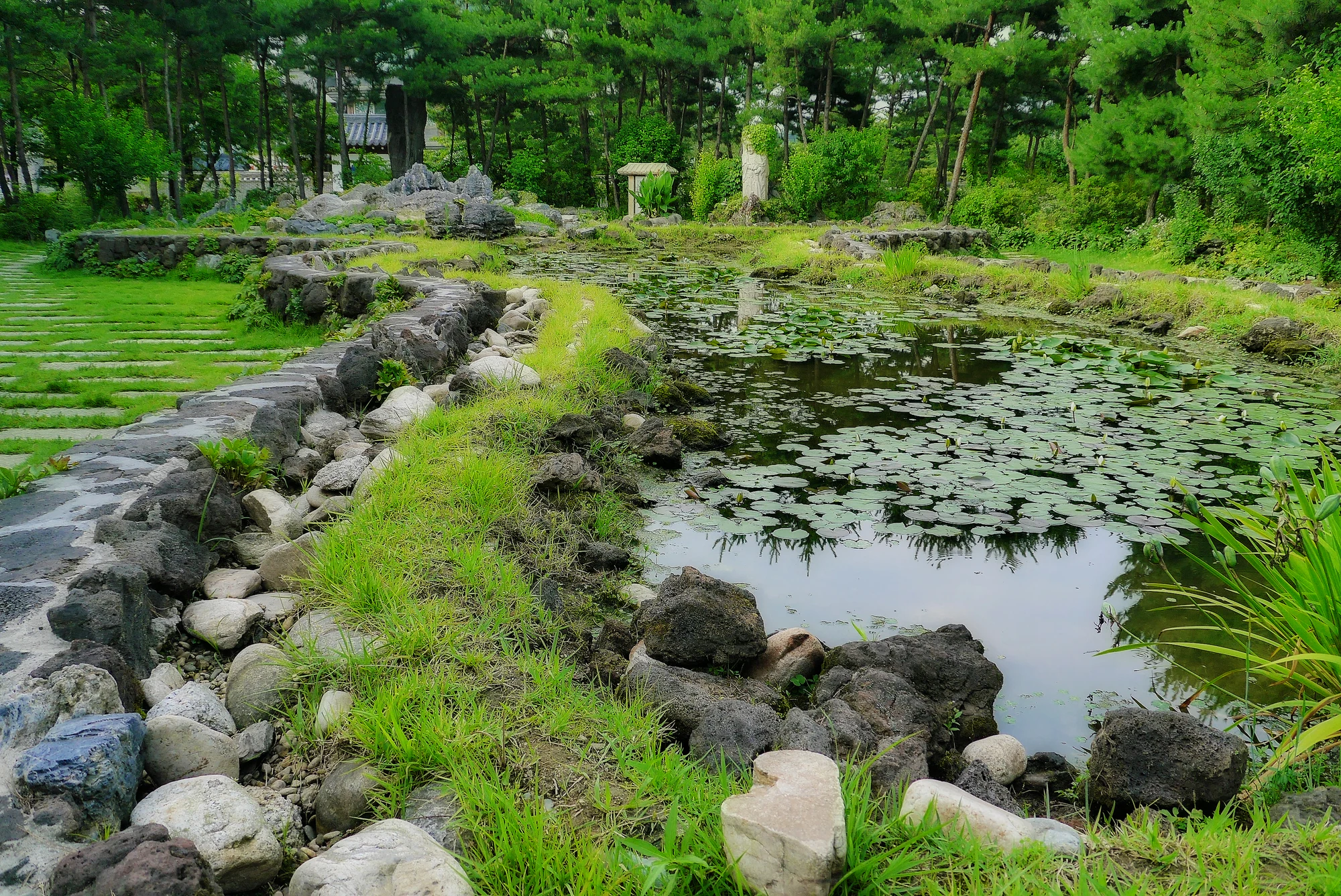
A rock-edged pond filled with floating leaves, with grasses along the water, a stone path to the left, trees, and a distant tiled roof and upright carved stones.

A historical pond view at Semiwon, photographed on 28 June 2014. The photographer’s title names Guksawon; the exact viewpoint has not been confirmed.

[Semiwon | 국사원](https://www.flickr.com/photos/traveloriented/14352036438/) by [travel oriented](https://www.flickr.com/photos/traveloriented/), [CC BY-SA 2.0](https://creativecommons.org/licenses/by-sa/2.0/deed.en). Unmodified. · Creative Commons 1 · Creative Commons 2

Walks and routes

Garden-only visit: about 60–90 minutes

Use the main Burimun entrance as your starting point and choose Guksawon, the jar fountain, the Perry and lotus ponds, then the cultural gardens and waterlily displays. This is a suggested selection from the operator’s sightseeing list, not a signed measured circuit. Follow the visitor map and open paths on the day; skip the off-site Dumulmeori portion and return within the managed garden. Add museum time separately if you want to read the displays.

For a shorter or wheeled visit, ask staff which of these features can be joined by the main ramped paths. Stepping stones are optional.

Garden-only visit: about 60–90 minutes

Boat bridge: an optional addition

Baedari, also called Yeolsu Jugyo, recalls the boat bridges used for King Jeongjo’s visits to his father’s tomb. The operator says the connection to Dumulmeori reopened in April 2024. Decide at the garden-side approach whether you want to extend the outing; enjoying the garden does not require a crossing. Allow roughly 20–30 extra minutes for an unhurried bridge look or crossing and return, subject to staff instructions. A walk around Dumulmeori needs its own additional allowance.

The operator’s general accessibility facilities do not certify this floating-bridge crossing. Ask about the current approach, surface and suitability for your mobility needs.

Boat bridge: an optional addition

Things to try

Guksawon and the jar fountain: water with meaning

Guksawon turns the outline of the Korean Peninsula into a pond, with white waterlilies and a small stream called Urinae running around it. The stepping stones belong to that design; use the ordinary paths instead if balancing over water is uncomfortable. Continue to the Jangdokdae fountain to see household storage jars recast as a water feature. Its story links the Han River with wishes for a cleaner environment and a family’s well-being. Looking at these two together gives a much richer introduction than simply moving from one flower bed to the next.

Choose your lotus ponds

The Perry Memorial Pond remembers lotus breeder Perry D. Slocum through donated cultivars. Alongside the planting, look for the stone turtles and small stone pagoda described in the garden’s interpretation. The white-lotus and pink-lotus ponds offer a different comparison: concentrate on the balance of flowers, seed heads and large leaves rather than expecting every plant to flower at once. If blossom photography is the priority, spend your unhurried time here and shorten the rest of the visit. Labels are the best way to distinguish named varieties; colour alone is not enough.

A painting made into a garden

Sehanjeong interprets Sehando, the painting Kim Jeong-hui made for his student Yi Sang-jeok during exile. The garden presents it as a story of loyalty and lasting friendship. Songbaekheon adds images and interpretation of their lives. Elsewhere in the garden, Yusanggoksu recalls the practice of sending cups along a winding watercourse while composing poetry. Enjoy the curved channel as a designed feature, and leave cups and other objects out of the water unless staff are leading an authorized activity.

Waterlilies and inventive fountains

The tropical-waterlily pond pairs tropical and Australian waterlilies with fountains modeled on historical objects, including water vessels and weather instruments. It is a good stop if you enjoy how a garden combines planting with crafted forms. The Victoria pond introduces the much larger leaf form associated with giant waterlilies, but the display depends on the year’s planting and conditions. A 2026 notice also refers to planting outside the garden at Dumulmeori; ask which display is currently available rather than assuming every photograph is of the same pond.

Give the Lotus Museum a proper stop

The museum follows the lotus beyond the pond through household objects, food-related material and old documents. Opened in 2009, it adds context to the flower motif that keeps appearing around the garden. It is worth saving some attention for this visit instead of treating it only as an escape from rain. After seeing the real plants, choose a few objects and consider how their makers turned a familiar leaf or flower into a useful form. Check the current exhibition arrangement on arrival.

Crafts and learning visits

The published craft menu includes lotus-themed fans, natural handkerchief dyeing, pressed-flower work and other making activities. Ask about dates, age suitability, prices and individual versus group participation before travelling for a session; an online menu is not a walk-in timetable. The separate aquatic-plant education page was marked currently not operating on 18 October 2026. Families can still make a self-guided comparison of pond plants from the paths, without cutting, collecting or handling them.

When the weather turns

The Lotus Museum offers a useful indoor part of the same visit if it is open; the book café may provide a break too. Wet stepping stones and waterside surfaces call for a simpler route. In heavy rain, strong wind or a closure, follow staff directions and postpone the bridge addition rather than trying to complete a planned circuit. A museum stop should not be used as a reason to enter an outdoor area that staff have closed.

Wildlife and habitats

Sacred lotus

Lotus grows up from the pond bed, with leaves and flowers rising above the water. The pink-lotus pond is the clearest named place to begin, with the white-lotus display offering a nearby contrast in the garden’s planting themes. Both are cultivated displays. Look at leaves and seed heads as well as blooms, and leave exact variety names to the labels.

Waterlilies

The tropical-waterlily pond and Guksawon’s white-waterlily planting give you two different settings for these aquatic plants. This is a broad display group with several cultivated forms, so a flower colour or a distant photograph cannot identify a species. Use the labels for anything more specific. Keeping waterlilies separate from lotus makes the different pond designs easier to understand.

Victoria waterlilies

The giant-leaved Victoria waterlilies are a distinctive part of Semiwon’s published collection. Treat them as a display to enquire about, rather than a guaranteed sighting or flower. The operator directs visitors to recent garden photographs for bloom status, with development depending on weather and growth. Do not touch or try to test the strength of a leaf.

When to visit

Make the season work for you

For a summer visit, put the lotus ponds first and leave a quieter indoor stop for later. For autumn, check the tropical-waterlily displays and the latest festival notice, but keep the museum and cultural gardens in the plan. Outside the main flowering period, come for the permanent garden forms and history if those appeal to you. In winter, remember the Monday closing pattern and ask which outdoor displays are operating before making a special journey.

Getting there and practical advice

Hours and tickets

Checked 18 October 2026: regular opening is 09:00–18:00, with last admission at 17:30. April–October is daily; November–March closes Mondays, with a following-day substitute closure when Monday is a public holiday. The regular adult ticket is ₩7,000, with a ₩2,000 Yangpyeong local voucher; the concession ticket is ₩4,000, with a ₩1,000 voucher. Children aged 6–18 and adults 65+ are among the concession groups; children aged five and under enter free. Bring proof for any discount and check the full eligibility list. Current admission information.

Temporary free admission

Entry is announced free for the Gyeonggi Garden Culture Expo on 16–19 October 2026 only. This is a temporary exception to the regular tariff. Check the dated announcement if your trip falls during those dates.

A break before you leave

The operator lists a book café with garden views and a small reading collection, plus a souvenir shop beside the main ticket office. Treat these as optional stops and check their operation locally. Lotus-themed bread and ice cream are seasonal according to the FAQ, so do not plan lunch around them.

Arrive through Yangsu Station

The operator places the garden about 700 m on foot from Yangsu Station on the Gyeongui–Jungang Line. Follow current pedestrian directions to 93 Yangsu-ro, Yangseo-myeon. Allow your own margin for crossings, luggage or slower walking; the published distance is not a promised journey time. The official directions page also lists buses, but warns that routes 2000-1 and 2000-2 have limited weekday operation. Check live timetables before relying on a bus connection.

If you drive

The operator’s directions currently say the Yangseo Culture and Sports Park car park is unavailable because of works and direct drivers to surrounding public parking. The expo has a separate public-parking notice, with a warning about congestion. Choose a current listed lot before leaving, allow a walk to the entrance and avoid assuming an old parking recommendation still applies.

Choose the path, not just the attraction

Accessible toilets, wheelchair hire, tactile information, resting places and museum lift access are listed in the operator’s visitor overview. Confirm equipment availability and the easiest connection between your chosen stops by calling 031-775-1835. Guksawon’s stepping stones and the boat-bridge addition deserve separate questions; neither is necessary for a shorter visit. For children, a slower garden-only outing gives you room to pause without committing to the bridge and a further riverfront walk.

Sources and useful links

Wildlife you might spot

3

Each card links to a full Explore page with photos, traits, and fun facts.

We are still adding species preview cards for this place.

Snap map for this place

Start with the big picture, then zoom in to explore individual wildlife observations around this place.

Loading map…

Good to know before you go

Bring water and sun protection for a summer pond walk; allow more breaks than a quick sightseeing circuit suggests.

Wear shoes with reliable grip. Wet stones and narrow water-edge choices deserve extra care.

Keep children within reach beside ponds and on the boat bridge.

Food is prohibited inside; drinks are allowed. Plan your meal separately.

Pets are not admitted; qualifying assistance dogs are excepted. Bicycles, scooters and drones are among the prohibited items.

If you leave toward Dumulmeori, confirm the return arrangements with staff before crossing.

Frequently asked questions

No. Semiwon is the managed garden; Dumulmeori is a separate riverfront destination. The boat bridge connects them when access is available, but visiting one does not make the other part of the same garden.
Use the current opening notice, not an older festival description. The regular hours checked on 18 October 2026 end at 18:00; special evening access would need a separate current announcement.
The operator says Yangpyeong’s cultural-tourism guides require advance reservation. Follow the garden’s guide-booking link and check the available language and time before making it central to your plans.
Yes, if the shaped gardens, water features and museum are what you want. If your main aim is a pond full of lotus flowers, choose the date from recent garden reports and be prepared to change it.

Recent snaps at this place

Recent snaps will appear here as new observations are added.

View all ›

Take the discovery with you

Exploring Semiwon?

Identify the wildlife you spot, learn as you go, and keep a collection of the adventure.

  1. 1Spot it
  2. 2Snap it
  3. 3Keep the discovery
