Snappit logo
Snappit
Get App
Generic illustration, not a photograph of this venueIllustration
ParkKansai / Chugoku / Shikoku / Kyushu, Japan

Setonaikai National Park: a Goshikidai nature day

At Goshikidai, a nature walk can begin with a stone that rings.

About

At Goshikidai, a nature walk can begin with a stone that rings. Inside the visitor center, the displays introduce sanukite, the unusual local volcanic rock, alongside a model of the surrounding hills. Outside, woodland paths, ponds and open spaces give you something different to notice at every scale, from a leaf divided into five leaflets to islands stretching across the Seto Inland Sea.

This is a focused day in Kagawa, on Shikoku. Setonaikai National Park extends across eleven prefectures and includes widely separated islands, shores and viewpoints. Goshikidai is the plateau-like hill country between Takamatsu and Sakaide. Its visitor-center area makes a manageable introduction; Miyajima, Naoshima and the Shimanami Kaido belong to other travel days, with their own transport and access arrangements.

Start indoors and ask which path suits the weather and your group. Then choose a walk rather than trying to complete the whole network. For a view-led outing, the center’s Walking Route 02 leads to Kyukamura Sanuki-Goshikidai Hotel. The nearby viewing area looks toward the Seto Ohashi Bridge, the Sanuki Plain and the Shiwaku Islands. Allow time to stop, then return while there is plenty of daylight. The hotel and campsite are working facilities, so follow public-path signs and ask before using their indoor spaces.

For a more close-up day, stay with the woodland and pond-side paths. Spring brings flowers; autumn adds fruit, acorns and passing butterflies. The center has documented chestnut tiger butterflies visiting flowers in October, part of a much wider seasonal migration. In winter, a small bird turning in the understory may reveal the blue tail and orange flanks of a red-flanked bluetail. Birds move freely, and a quiet minute watching from the path is often more rewarding than chasing a glimpse.

There is a human story in this landscape too. Goshikidai combines nature learning, managed recreation grounds and older pilgrimage places. Farther down the hills, coastal woods help frame the bays; beyond them, villages, fields, boats and bridges share the sea view. The mix of woods, farms and settlements gives the panorama its character. A short walk, one good viewpoint and time to ask questions make a satisfying visit. Eager to name that creature? Identify any animal you find during your visit using the Snappit app.

Setonaikai was designated on 16 March 1934, one of Japan’s first three national parks alongside Unzen and Kirishima. Its identity rests on island-dotted seascapes and the long relationship between nature and everyday life. Goshikidai Visitor Center opened in 2002 as a Ministry of the Environment facility for learning about the area. The wider hills also contain Shikoku pilgrimage temples; those are separate destinations, not stops automatically included in this short outing.


What to do here

Begin with the geology displays and today’s nature information. Choose the view-led walk to the Kyukamura area, or the Insect Observation Route for a slower look at woodland and pond life. A reserved staff-led forest walk is a good choice for children and first-time nature watchers. Finish by checking a leaf or bird photograph against the center’s reference books, or ask about an available craft session.

Seasonal info

Spring: flowers and fresh leaves. Summer: lush woodland and insects, with heat, humidity and rain to plan around. Autumn: ripening fruits, acorns and changing foliage, with some migratory butterflies. Winter: seasonal woodland birds and quieter views, but possible snow or ice on approach roads. Flowering, color and wildlife activity vary each year.

Accessibility

The visitor center has a multipurpose toilet, a nursing room and loan wheelchairs. Outdoor paths vary in surface and slope. Before taking a wheelchair or stroller onto Walking Route 02, ask about the full approach, any barriers and wet-weather conditions. An indoor visit is a worthwhile option on its own.

Don't miss

1

Sanukite and a landscape model that make the hills easier to understand

2

A short walking choice toward the Kyukamura sea-view area

3

Flowers, fruit and woodland birds changing through the seasons

4

Staff-led forest discovery and nature-inspired crafts

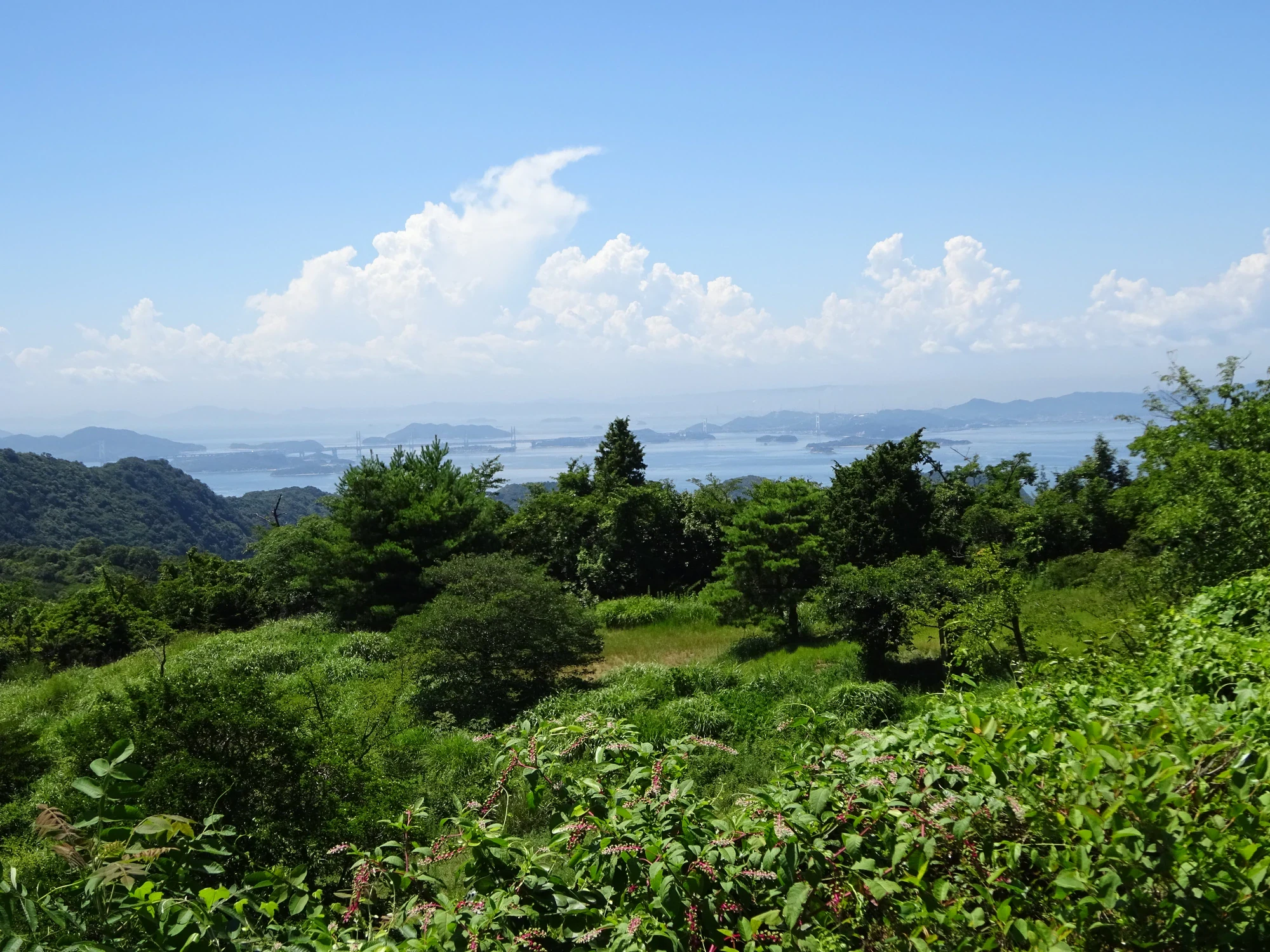
Green hillside vegetation frames hazy islands and distant bridge spans across the blue Seto Inland Sea.

The Seto Inland Sea and Seto Ohashi bridges beyond the greenery at Kyukamura Sanuki Goshikidai, photographed on 23 July 2018.

Japan Goshikidai 休暇村・海(2).jpg — やしまのお城, CC BY-SA 4.0 (https://creativecommons.org/licenses/by-sa/4.0/). Source: https://commons.wikimedia.org/wiki/File:Japan_Goshikidai_%E4%BC%91%E6%9A%87%E6%9D%91%E3%83%BB%E6%B5%B7%EF%BC%88%EF%BC%92%EF%BC%89.jpg. Resized and recompressed as WebP; no crop or retouching. · Creative Commons

Walks and routes

Walking Route 02 toward the Kyukamura viewpoint

Follow the current map’s Walking Route 02 from the visitor center to Kyukamura Sanuki-Goshikidai, enjoy the designated viewing area, and return the same way. Keep time for the return leg.

The map describes a gentle gradient. Ask staff about kerbs, surfaces and the full approach before taking a wheelchair or stroller.

Walking Route 02 toward the Kyukamura viewpoint

Insect Observation Route

Follow the current map for this woodland-and-pond option instead of the walk for sea views. Watch from the path without catching insects or stepping into water.

Expect a woodland outing and ask staff about slopes, surfaces and any steps before choosing it for limited mobility.

Insect Observation Route

Reserved staff-led forest walk

Let a local interpreter choose the season’s most interesting discoveries. Usual starts are 10:00 and 14:00 on weekends and holidays, with exceptions. Weekday requests need discussion.

Describe mobility needs, children’s ages and language needs when booking so staff can advise on a suitable session.

Reserved staff-led forest walk

Spend roughly 20–40 minutes in the visitor center, check conditions and choose your walk.

Take one of the walking options above. Leave room for pauses and a return journey rather than treating the published walking time as the whole outing.

Finish with a snack you brought, an identification question or an available craft, and leave before daylight or transport becomes a concern.

Enjoy the indoor geology and wildlife interpretation. Ask about a very short outdoor look suitable for the day, or stay indoors.

If you want a separate drive to the Kyukamura-area view, check parking and the exact accessible approach first. Hotel indoor amenities have their own use conditions.

Things to try

Listen to the landscape

Use the sanukite display and terrain model to connect rock, hill shape and the scene outdoors. Ask which hands-on exhibits can be tried; leave outdoor rocks untouched.

Compare a vine and a shrub

Ask staff to point out five-leaf akebia and linden viburnum. Count akebia’s leaflets without plucking them, then look for the opposite leaf pairs and veins of the viburnum. Photograph a whole leaf and the way it joins the stem, not only a fruit.

Take a quiet bird minute

Stop where others can still pass, lower your voice and watch branches before moving on. A group flicking through fine twigs and a solitary bird low in the undergrowth offer different clues. Use binoculars rather than moving closer.

Make something with nature in mind

Ask which craft is available that day and whether it needs booking or payment. Use the supplied materials; collecting your own plants or insects is not part of this suggestion.

Read the sea view

At the viewing area, pick out a bridge, an island, a settlement and a patch of fields. Talk about how people travel and work around this island-filled sea. Haze may soften the farthest outlines.

If conditions are simply wet, use the center’s displays and books and ask about crafts. If severe weather is forecast, postpone the hill outing. Indoor opening does not establish that the approach road is safe.

Wildlife and habitats

Five-leaf akebia: count the leaflets

Look for a climbing stem with five smooth-edged leaflets. The area also has three-leaf akebia, so do not identify every akebia vine from fruit alone. Enjoy spring flowers and autumn fruit without collecting.

Linden viburnum: paired leaves and fruit

Notice the opposite leaves, their strong veins and fine teeth. White flower heads are followed by clusters of fruit; red fruits are a familiar autumn feature. Leave them for wildlife and do not taste unknown berries.

Long-tailed tit: follow the small flock

A long tail attached to a tiny body is a useful clue. In Shikoku, long-tailed tits pick small invertebrates from twigs and often join mixed bird flocks outside the breeding season. Look for dark markings on the heads of the local birds.

Red-flanked bluetail: watch low cover in winter

A mature male can show blue upperparts, orange flanks and a pale belly; females and young males are browner. Look patiently from the path as a bird searches near the ground. Do not use calls or food to draw it out.

Wild boar: give it room

Treat a boar encounter as a reason to create space, not a photo opportunity. Stay quiet and retreat slowly. Never feed or follow the animal.

Stories and discoveries

Goshikidai’s name refers to five color-named peaks: blue, white, red, black and yellow.

Sanukite is a type of andesite that gives a clear ringing sound. Goshikidai is one of the places associated with this distinctive rock.

A butterfly pausing at an autumn flower may be on a long journey: chestnut tigers migrate south from mainland Japan toward the southwestern islands and Taiwan.

The sea view includes a lived-in landscape. Settlements, cultivated land and transport links are part of the national park’s character.

When to visit

spring

Look at opening flowers and fresh foliage. Ask staff which plants are in flower now rather than planning around a fixed blossom date.

summer

Watch insects from the path, with shade breaks and enough drinking water. Check heat alerts; shorten or postpone the walk when conditions are unsafe.

autumn

Compare fruit and acorns left in place, and watch flowers for visiting butterflies. Clear air may improve the wider sea view.

winter

Watch the woodland understory for seasonal birds. Confirm safe road and path conditions before setting off, and leave extra daylight for the return.

Getting there and practical advice

Goshikidai Visitor Center

Information, changing nature displays, reference books, crafts and staff advice. Free admission; usual opening 09:00–17:00. Closed Mondays, the next weekday when Monday is a holiday, and 29 December–3 January.

Parking and family facilities

Official local listings give 56 free parking spaces. The center provides a nursing room, multipurpose toilet and wheelchair loans; check availability and details if essential to your visit.

Food and other facilities

Bring water and a snack rather than depending on an unconfirmed café or meal service. Kyukamura is a separate hotel, and the campsite has its own reservations and rules.

Allow roughly 40 minutes from Sakaide Station as a planning guide, with more time for traffic or weather. Tell a driver you want Goshikidai Visitor Center, not the separate youth nature center or the hotel. Arrange the pickup before walking.

The visitor center has no public bus or train service. The hotel’s reservation-only station shuttle is a separate service: ask the hotel about eligibility, exact times and whether it works with your plans.

Mountain approaches can be snowy or icy in winter. Check current access before departure and follow the operator’s recommended approach rather than improvising a shortcut.

The center provides a multipurpose toilet, nursing room and wheelchair loans. Phone about your particular chair, transfer needs or assistance.

Ask staff to check the whole approach for steps, barriers, surfaces and wet-weather problems. A short section may suit your group better than the full walk.

Sources and useful links

Wildlife you might spot

5

Each card links to a full Explore page with photos, traits, and fun facts.

Snap map for this place

Start with the big picture, then zoom in to explore individual wildlife observations around this place.

Loading map…

Good to know before you go

Arrange the return journey before you go. No public bus or train serves the visitor center; a car or prearranged taxi is the practical day-trip option.

Check the center’s calendar

usual hours are 09:00–17:00, with Monday closures, the next weekday instead when Monday is a holiday, and 29 December–3 January closed.

Book a guided forest walk ahead. Ask whether your chosen session is running, whether English guidance is available, and what children should bring.

Call 0877-47-2479 before driving up if road access is uncertain, especially after severe weather. Pick up the latest area map and obey closures on arrival.

Bring drinking water, sun protection and shoes with grip. Take frequent breaks in heat; postpone woodland walking during dangerous weather.

Wear clothing that reduces exposed skin in vegetation, use a suitable repellent according to its label, and check for ticks afterward. Stay out of long grass.

If a wild boar appears, stay calm and quietly back away. Do not approach, feed wildlife or leave food scraps; keep pets under control.

Leave plants, fruit, insects and rocks where they are. Use designated paths, take litter home and keep children back from pond edges.

Frequently asked questions

No. It covers the Goshikidai Visitor Center area in Kagawa. The wider park crosses eleven prefectures; islands, distant viewpoints and pilgrimage circuits need separate plans.
Visitor-center entry and ordinary outdoor-path walking are free. The center currently lists its guided forest walk at ¥100 per person of elementary-school age or older. Craft activities may cost extra; confirm the session and fee when booking.
There is no public bus or train to the center. Arrange a taxi or drive. Kyukamura advertises its own reservation-only station shuttle; confirm eligibility and timings with the hotel rather than treating it as a visitor-center bus.
Independent walking does not require the center’s guided-tour reservation. For a staff-led forest walk, reserve in advance; the Kagawa tourism listing asks for at least three days’ notice. The operator may be unable to accept a session because of other events.
The center has accessible facilities and loan wheelchairs. Outdoor suitability needs a route-specific check with staff; ask about any steps, barriers or difficult surfaces on the full loop or viewpoint approach.
Use the indoor displays, books and any available crafts during ordinary wet weather. Heavy rain, strong wind or thunderstorms can make the hill roads and woodland unsuitable, so check conditions before traveling rather than assuming the center is a safe fallback in every storm.
You can plan another stop separately, but do not assume it fits this walk. Goshikidai’s pilgrimage temples have their own approaches and rules, while island trips need ferry or other transport planning.
There are no guaranteed sightings. Winter birds, summer insects and migrating butterflies have different seasons. Ask what has been seen recently, watch quietly and let wildlife keep its distance.

Recent snaps at this place

Recent snaps will appear here as new observations are added.

View all ›

Take the discovery with you

Exploring Setonaikai National Park: a Goshikidai nature day?

Identify the wildlife you spot, learn as you go, and keep a collection of the adventure.

  1. 1Spot it
  2. 2Snap it
  3. 3Keep the discovery