Kyoto Botanical Garden rewards a little selectiveness. Across its roughly 24 hectares, you can move between formal flower beds, a remnant woodland and a conservatory without leaving the city. For a first visit, choose one outdoor area that suits the season, spend time under glass, and leave room for a sit-down. Trying to see every collection can turn a lovely walk into a list of labels.
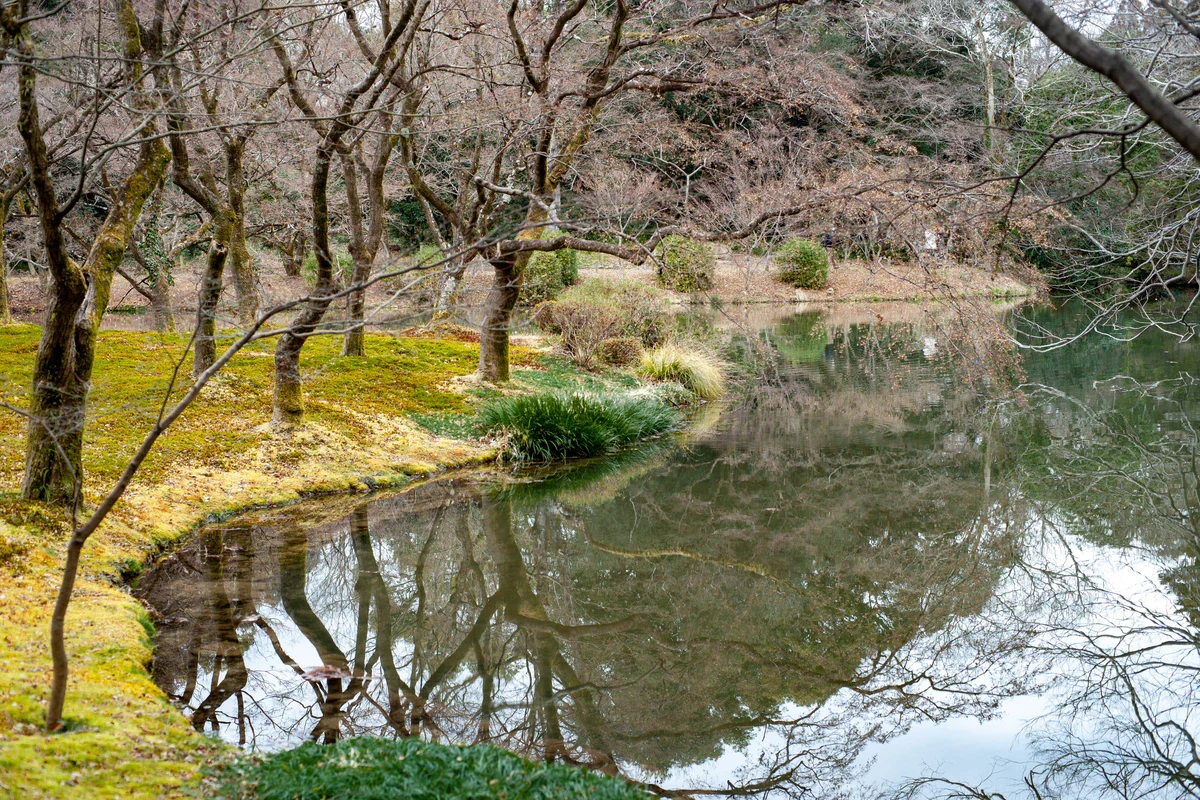
Nakaragi Forest offers the strongest change of mood. This is a surviving piece of the Shimogamo area’s older vegetation, enclosed by four ponds, with both evergreen and deciduous trees. Look across the water at the shapes of branches and their reflections, then pause at the small Nakaragi Shrine. In autumn, the pond-side maples give this part of the garden a particularly good reason to linger. Stay on the paths rather than stepping onto the planted banks for a photograph.
The Western-style garden is a useful counterpoint: deliberate symmetry, roses and a sunken flower garden around a fountain. When roses are flowering, read a few cultivar names as well as looking at colour. Kinkaku and Daimonji connect the collection with familiar Kyoto names. You do not need to recognise every plant to enjoy the contrast between a carefully arranged bed and the looser outline of the woodland.
Inside the conservatory, let the changing rooms set the pace. Compare the broad leaves of the jungle display with the shapes in the desert-and-savanna room, then see what is on show in the alpine room. The building opened in 1992, and its roofline draws on Kyoto imagery, including the northern mountains. It is a good anchor for a chilly or wet day, although you still have an outdoor walk between the entrance and the glasshouse.
Children can make the day their own by choosing a favourite leaf shape, finding the date on a heritage-tree sign, or sketching a plant without picking anything. Finish with a break on the Great Lawn if conditions suit. This is a living collection, so even fallen leaves, acorns and insects must stay in the garden. Photographs, drawings and a newly learned name make better souvenirs. Wondering what that bird or insect is? Find out on your visit using the Snappit nature app.
The garden opened on January 1, 1924, after construction began in 1917. During the Second World War, some land was used to grow food. Allied occupation from 1946 brought a long interruption and the loss of many trees; the garden reopened to the public in April 1961. The present conservatory followed in 1992, and the garden marked its centenary in 2024. Its history is visible in old planted trees as well as in newer displays.