Snappit logo
Snappit
Get App
Generic illustration, not a photograph of this venueIllustration
ParkChūgoku, Japan

Okayama Korakuen Garden

Okayama Korakuen rewards a slow circuit rather than a dash between famous views.

About

Okayama Korakuen rewards a slow circuit rather than a dash between famous views. The garden opens out into lawns and Sawa-no-ike Pond, then draws you closer to a stream, a little bridge or a shaded grove. Look across the water first, then walk a little farther and see how the arrangement changes. Okayama Castle sometimes enters the view across the river, but it is a separate attraction with its own admission arrangements.

Start at the Main Gate if you want advice, a loan stroller or wheelchair, or a straightforward return to the same entrance. Choose a few anchors: the pond, Ryūten Rest House with water running through it, the seasonal planting, and a tea break. Yuishinzan Hill adds a raised viewpoint, but the garden still makes a satisfying outing if you stay on the lower paths. Follow the barrier-free map rather than treating every small bridge or shortcut as interchangeable.

The planted landscape is part of the story. Tea bushes and the Seiden fields recall a garden that once contained substantial farmland; flower beds and groves give a different reason to return through the year. Families can make the visit a gentle looking game: find a reflection, follow the direction of a stream, and compare two leaf shapes. Keep children close at the water and save running games for another stop.

The red-crowned cranes belong to a managed captive population, usually kept in their aviary. Occasional supervised walks bring them onto the lawns, subject to the birds’ condition and the day’s arrangements. Plan the garden as the main pleasure, with flowers, birds and special events as welcome additions rather than a checklist you must complete. Enhance your adventure: download the Snappit app to identify the local species you encounter.

Lord Ikeda Tsunamasa ordered work to begin in 1687 under Tsuda Nagatada, and the garden reached an initial completion in 1700. Later lords reshaped it, including the addition of Yuishinzan Hill. Okayama Prefecture took ownership in 1884. Flooding in 1934 and the air raid of 1945 caused severe damage, followed by restoration using historical records. Designated a Special Place of Scenic Beauty in 1952, Korakuen is a preserved and repaired cultural landscape whose history is still visible in its water, buildings and planting.


What to do here

Walk beside Sawa-no-ike, pause at Ryūten to watch the stream pass through the building, and choose the grove or flower bed that suits the season. Add the tea plantation and Seiden fields to see the productive side of this ornamental garden. Finish with matcha or another refreshment at an open tea shop; leave time simply to sit and look.

Seasonal info

Ume plum blossom usually starts the display in February to early March, followed by cherries in late March and early April. Early June is a good target for the iris beds; lotus is generally highlighted from late June through July. Summer calls for water, shade breaks and a shorter circuit. Autumn colour usually comes from mid-November into early December. These are typical windows, so use the current flower report to choose your day.

Accessibility

The operator publishes a wheelchair-and-stroller map with recommended paths, toilets and obstacles. Yuishinzan has stone steps, and certain bridges and paths are marked impassable for wheelchairs and strollers. Free wheelchairs are available at the Main Gate and parking entrance; free strollers are available at the Main Gate. Return each loan to its pickup point and ask staff which circuit suits your needs.

Don't miss

1

Sawa-no-ike

pause on different sides of the central pond to compare islands, reflections and changing views.

2

Ryūten Rest House

a stream runs through the building around six contrasting stones.

3

Chishio-no-mori and the seasonal plantings

choose fresh leaves, blossom, irises or autumn colour to suit your visit.

4

Tea plantation and Seiden fields

a reminder that crops helped shape this lord’s retreat.

Walks and routes

A relaxed pond-and-water circuit

From the Main Gate, orient yourself beside Sawa-no-ike, then use the garden paths to visit Ryūten and the seasonal iris area. Continue toward Seiden and the tea plantation before returning around the pond. Treat Yuishinzan as an optional detour: choose the hill only if its steps suit you. Stop often enough to compare the same water and islands from a new angle.

Choose a seasonal grove

Use the map to head for the plum or cherry grove in spring, or Chishio-no-mori for autumn leaves. Take one of the marked paths back via the tea plantation or central pond rather than trying every branch of the route. For wheelchairs or strollers, follow the pink dotted circuit on the operator’s map and bypass the paths it marks unsuitable.

With children: roughly 90 minutes

Allow about 15 minutes for tickets, toilets and choosing a path; spend 35 minutes with the pond and water features, then take a 20-minute refreshment break. Use the remaining time for one seasonal planting or the crane viewing area. Shorten the circuit if attention or energy fades. This is a quiet garden outing: games work best when they involve looking, drawing or listening.

Garden first, castle afterwards

Give the garden 90 minutes to two hours, then decide whether everyone has energy for the separate castle visit. The South Gate is the convenient garden exit for the river crossing shown on the official map. If you borrowed equipment at the Main Gate, return it there first. Check both attractions’ hours and combined-ticket availability before committing to the longer outing.

Things to try

Follow the water

At Ryūten, look for the six stones in the stream and compare their colours and shapes. Elsewhere, watch how water changes from a narrow moving channel to a broad reflective pond. A child can sketch one of each without needing to complete the whole garden.

Make a tea stop part of the visit

Fukuda Chaya and Sazanami Chaya are useful places to look for refreshments. Sazanami is beside Renchi-ken and has an air-conditioned interior. Check what is open when you arrive; its Wednesday closures are irregular. Do not build a tight onward connection around a particular menu or service time.

Hear the stories behind the views

An English audio guide costs ¥500 per QR-code sheet at the information office inside the Main Gate. It uses your own device and requires an app/content download, so bring charged headphones and a phone. For an English-speaking volunteer guide, contact the garden well ahead; the operator asks for requests a month in advance and availability varies.

Feed koi only when offered

For 2026, the operator announced koi-food sales from 20 March until around December at Fukuda Chaya and Sazanami Chaya. Ask the shop whether feeding is available that day and use the food it supplies. Do not bring your own food. Keep a close watch on children at the water’s edge.

Watch the resident cranes quietly

Look for the garden’s captive red-crowned cranes from the public viewing area. Keep voices low and do not feed them. A supervised walk is a special occasion: stand where staff direct you and allow the birds space instead of trying to get closer.

When the weather turns

For light rain, shorten the circuit to a few pond views and a tea stop, and use the marked paths instead of small bridges or hill steps. In heavy rain or strong wind, put the outdoor visit off and check current notices. The garden’s historic buildings are not all open as indoor refuges; a separately planned museum or castle visit needs its own hours and ticket check.

Wildlife and habitats

These highlights are planted garden specimens and resident captive cranes. Flowering and animal-viewing arrangements change with the season; enjoy whatever is visible without touching plants or feeding birds.

Red-crowned crane

Watch the aviary birds quietly from the public viewing area. If a supervised walk is scheduled, follow the keepers’ directions and leave the birds space.

Japanese iris

In the iris season, compare the cultivated flowers’ colours and forms from the path. Hanashobu is distinct from the kakitsubata iris described beside Yatsuhashi Bridge.

Sacred lotus

Look for the cultivated white Ittenshikai lotus at Kayō-no-ike and pink Ōga lotus at Seiden in the usual summer season. Compare the flowers from the path without reaching over the pond.

Japanese maple

At Chishio-no-mori, compare leaf colour across the grove and the way light passes through the foliage. Fresh spring leaves are worth a stop as well as the autumn display.

Crape-myrtle

In summer, look for the garden’s white or pink crape-myrtle flowers near Eishō-no-ma. Let the current planting labels and flower report guide your search.

Stories and discoveries

A garden that grew food

The Seiden fields and tea plantation make more sense when you know that much of early Korakuen was farmland. They give you a useful question to carry around: which parts of the scene are productive as well as beautiful?

Leaves as layers of dye

Chishio-no-mori’s name evokes repeatedly dipping cloth into dye. Watching different leaves turn at different rates is a good way to understand that image without waiting for the whole grove to reach one perfect colour.

When to visit

Late winter into spring

Choose the plum grove for the usual February to early March bloom, or the cherry grove in late March to early April. A blossom trip works best with a flexible day and a look at the latest flower report. Keep warm layers handy for the slower stops.

Early and high summer

Early June is the usual focus for hanashobu irises; late June through July brings the lotus display. Keep the visit shorter in hot weather and build in a shaded or indoor tea break. The different flower beds need not be at their best on the same day.

Autumn colour

Plan for mid-November to early December as the usual foliage window, especially around Chishio-no-mori. Look for a mix of green, yellow and red rather than treating one forecast peak day as the only worthwhile visit.

A dated evening option for 2026

The autumn Fantasy Garden illumination is announced for 20–29 November 2026, with the garden open until 20:30 and last entry at 20:00. The 15 October announcement lists ¥500 adult admission, ¥200 for visitors 65 and over, and free entry for high-school students and younger. Check the event notice again before travelling; these dates do not apply to future years.

A dated chance to enter En’yō-tei

Special interior visits are announced for 19–25 October 2026. The guided visit takes about 20 minutes and costs ¥600 in addition to garden admission. Each session is limited to ten people, with telephone reservations given priority; book by the previous day if possible. Wear socks. Ordinary garden admission alone does not reserve a place.

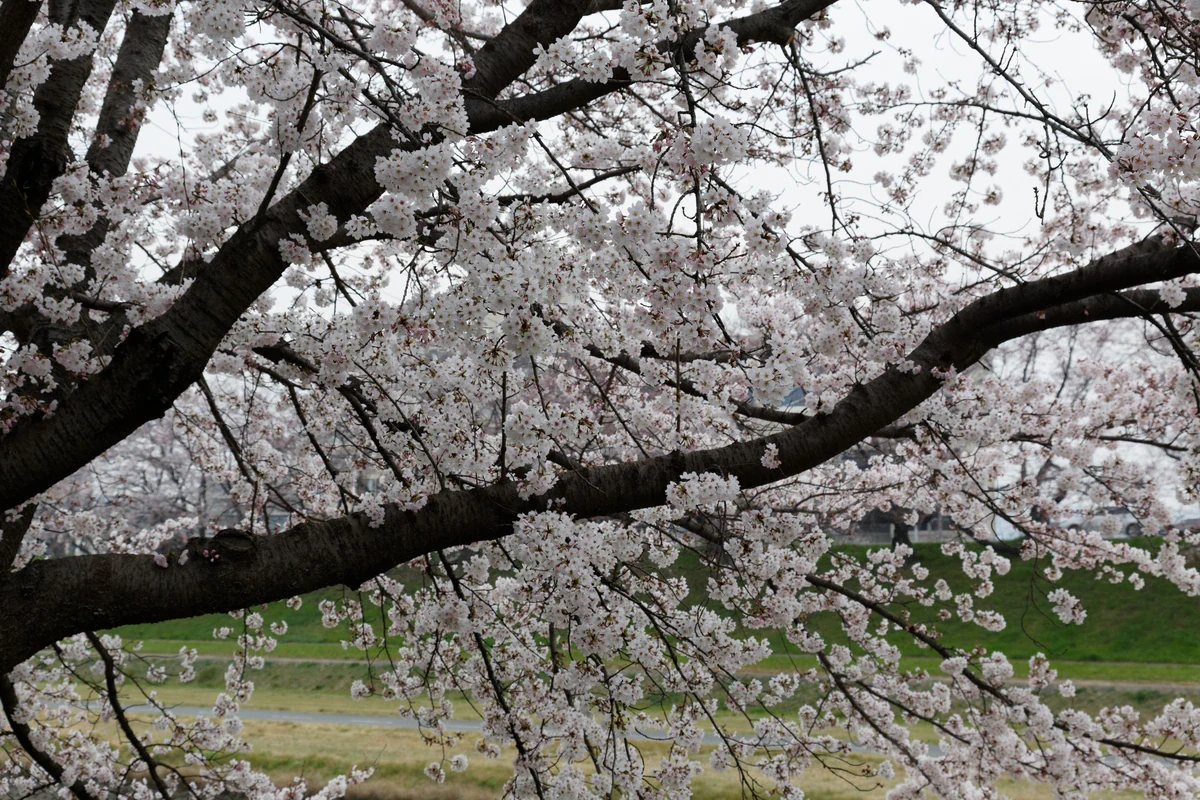
Pale cherry blossoms cluster along dark branches, with lawn and a stone-edged water channel visible behind them.

Cherry blossoms fill the view at Okayama Korakuen in this photograph from 31 March 2016.

© KimonBerlin / Wikimedia Commons / CC BY-SA 2.0. Korakuen_garden_(26736820021).jpg. Source: https://commons.wikimedia.org/wiki/File:Korakuen_garden_(26736820021).jpg. License: https://creativecommons.org/licenses/by-sa/2.0/. Proportional downsampling to fit 1200 × 1200 pixels without enlargement; WebP quality 92, method 6. No crop, retouch, recoloring or added text. EXIF omitted. Adobe Photoshop Lightroom 5.7.1 (Windows); modification date 2016-05-03. Source processing retained; no specific retouch is declared. · Creative Commons

Getting there and practical advice

Opening hours

Checked on 16 October 2026: 07:30–18:00 from 20 March to 30 September, with last entry at 17:45; 08:00–17:00 from 1 October to 19 March, with last entry at 16:45. There is no regular closing day, but special events can alter hours. Check the day’s notices before leaving.

Tickets and payment

Buy at the Main Gate or South Gate. The operator accepts cash and listed card/electronic payments and says online garden tickets are unavailable. The ¥800 adult combined ticket with Okayama Castle is a separate choice; combined tickets can be suspended for the partner’s closure or special exhibitions, and there is no senior combined ticket.

Toilets and help with a baby

The barrier-free map marks multipurpose toilets near the Main Gate, South Gate and other points on the circuit. For nursing or a rest because someone feels unwell, speak to Main Gate staff: they can check whether a suitable room is available. This help depends on how the rooms are being used.

Lighten your load

Coin lockers are just north of the Main Gate ticket office. The operator also offers storage at the ticket counter for luggage too large for a locker; ask about space when you arrive. Keeping bags small makes it easier to enjoy a slow walk.

By bus from JR Okayama Station

From the east exit’s Korakuen side, the operator lists bus stand 1 for an Okaden bus toward Fujiwara Danchi: allow about 10–15 minutes to Korakuen-mae. It also lists the Uno direct Korakuen bus, around 10 minutes to Okayama Korakuen. Check the current service and platform before boarding; these are journey estimates rather than a timetable.

By tram or on foot

The operator lists the Higashiyama-bound tram to Shiroshita (城下), followed by about a 10-minute walk. Walking all the way from JR Okayama Station takes about 25 minutes. Allow longer with children, luggage or photo stops, and use current station signs for the tram boarding point.

By car

Allow roughly 20 minutes from Okayama Interchange in normal traffic. The current operator parking rate is ¥100 per 40 minutes for ordinary cars, checked on 16 October 2026. Parking is not reservable and is intended for garden or prefectural-museum visitors; busy periods can change the permitted approach.

West outer-garden approach

On 5 July 2026, the prefecture announced a fallen-tree closure and diversion on the west outer garden’s main path. Before choosing that approach, ask the garden which way is currently open and follow local signs. The notice concerned the outer path rather than a closure of the whole paid garden.

Choose the path before the viewpoint

Use the official barrier-free map at the gate. Its recommended network reaches the main garden areas, while warning symbols identify stone steps and unsuitable bridges or paths. Bypass Yuishinzan’s steps rather than treating the hill as essential. Ask staff about current conditions and the easiest route for your chair or stroller.

Borrowing equipment

Wheelchair loans are free at the Main Gate and the parking entrance; stroller loans are free at the Main Gate. Each must go back to the same place. Ask about availability before planning a one-way visit through the South Gate. Assistance dogs are permitted under the garden’s rules.

Disability admission arrangements

The operator lists admission exemptions for specified disability or medical-entitlement documents issued in Japan, plus one accompanying carer. Bring the qualifying document or accepted digital equivalent and ask the ticket staff; overseas documents are not included in the stated scheme.

Sources and useful links

Wildlife you might spot

5

Each card links to a full Explore page with photos, traits, and fun facts.

Snap map for this place

Start with the big picture, then zoom in to explore individual wildlife observations around this place.

Loading map…

Good to know before you go

Buy your garden ticket at the gate. As checked on 16 October 2026, the operator does not sell online admission tickets.

Use the Main Gate for loan equipment and plan to return there if you borrow a stroller or wheelchair.

Bring water and sun protection; the open views also mean stretches with little shade.

Keep children beside you near ponds and channels. Do not run, throw stones into the water, or lean on bridge rails and fences.

Use only the garden’s own koi food when staff say feeding is available. Do not bring feed or feed the cranes.

Leave balls, badminton equipment and balloons behind. Pets are not admitted, including in carriers; assistance dogs are excepted.

Check special-opening dates before counting on an evening visit or access inside En’yō-tei.

For an approach through the west outer garden, ask about current diversions: a fallen-tree restriction was announced on 5 July 2026.

Frequently asked questions

The castle is a separate attraction across the river. A combined adult garden-and-castle ticket is listed at ¥800 as of 16 October 2026; check availability and each attraction’s opening hours before buying.
Checked on 16 October 2026: ordinary adult admission is ¥500 for ages 15–64, excluding junior-high and high-school students, and ¥200 for ages 65 and over. High-school students and younger enter free through 31 March 2027; high-school students must show proof of student status. Recheck the scheme for later visits.
Yes, the official map identifies suitable paths and obstacles, and free loan strollers are offered at the Main Gate. Use the marked alternative paths rather than the hill steps or unsuitable bridges. Loan availability is not guaranteed.
They normally live in an aviary. Supervised garden walks take place on selected dates and may change because of weather, avian influenza precautions or the birds’ health. Check the event notice and follow staff instructions.
A garden ticket does not mean every building is open inside. En’yō-tei and the Noh-stage buildings are normally closed to casual interior visits; special openings, performances and booked experiences have their own arrangements.
No. This guide is for Okayama Korakuen, beside the Asahi River in Okayama City. Koishikawa Korakuen in Tokyo is a different garden.

Recent snaps at this place

Recent snaps will appear here as new observations are added.

View all ›

Take the discovery with you

Exploring Okayama Korakuen Garden?

Identify the wildlife you spot, learn as you go, and keep a collection of the adventure.

  1. 1Spot it
  2. 2Snap it
  3. 3Keep the discovery