
Snappit logo
Snappit
Get App
Generic illustration, not a photograph of this venueIllustration
ParkKyushu, Japan

Ōmura Park

Ōmura Park is a place to slow down and look closely.

About

Ōmura Park is a place to slow down and look closely. Around the remains of Kushima Castle, flower gardens sit beside old stonework and the water of Sakurada moat. You can make a satisfying visit from a few small discoveries: a reflection broken by a breeze, an unusually full cherry blossom, or the way a castle wall curves above the planting. Bring a sketchbook or a camera, and leave room for a stop whenever something catches a child's eye.

Spring has two different attractions. The familiar Somei-yoshino cherries usually flower first, followed by later, fuller-flowered cherries including Ōmura-zakura. The protected trees at Ōmura Shrine are part of that story, but the park contains other planted examples too. Look at the tree labels rather than assuming that every pink, double flower is the locally famous cherry.

Late spring brings a change of scale. The Nagahori and Minamibori moats become cultivated Japanese iris gardens, with flowers set against the castle's stone walls. This is a good place to compare the shape of individual flowers before stepping back to enjoy the planting as a whole. Away from the main bloom periods, make the water, trees and castle remains the focus of your walk.

Treat the visit as two optional parts: the lower garden and moat paths, followed by the raised castle and shrine area if its steps suit your group. Ōmura Shrine is an active place of worship within the former main bailey. Give worshippers space and follow its signs. The park is a municipal historic landscape; the shrine and the castle ruins have their own roles within it. Explore the grounds like a pro—download the Snappit app to instantly identify animals and plants.

Kushima Castle was completed in 1599 for Ōmura Yoshiaki and served the Ōmura family for more than 270 years. Its defences relied on the bay, moats and stone walls; it had no central castle keep. The castle's administrative role ended in 1871. Ōmura Shrine moved to the former main bailey in 1884 to honour successive generations of the Ōmura family. It is therefore a later shrine on the castle site, rather than a surviving castle residence. The white turret seen today is a reconstruction. The iris gardens are a later layer too: Higo irises were planted in the moats in 1961, with Edo and Ise groups added subsequently. The pleasure of the park is seeing those different periods together.

What to do here

Start near the park tourist information office, choose the flower area that is in season, and spend time beside Sakurada moat. Add a look at the castle stonework and the exterior of Itajiki Yagura, the reconstructed turret. If everyone is comfortable with steps, continue to Ōmura Shrine and its labelled cherries. A short lower-garden visit is a worthwhile outing on its own.

Seasonal info

Cherry varieties flower in succession, so one peak date does not describe the whole park. June also brings hydrangeas. Flower festivals and illumination have their own annual programmes; check the current notice before planning an evening visit. In summer, choose a cooler part of the day and bring water. Autumn and winter suit a shorter walk focused on the historic landscape.

Accessibility

The lower garden offers more flexible choices than the shrine approach, but surfaces include paving and gravel, and some paths narrow. The prefectural access guide says the approach to Ōmura Shrine becomes stairs-only. Ask the tourist information office which paths suit your wheelchair or pushchair, and use the lower gardens if the climb is unsuitable.

Don't miss

1

Compare the layered flowers of Ōmura-zakura with other labelled cherries in spring.

2

See cultivated Japanese irises filling former defensive moats in late spring.

3

Pause at Sakurada moat for reflections, tree shapes and a quiet sketching stop.

4

Read the castle landscape through its stone walls, reconstructed turret and later shrine.

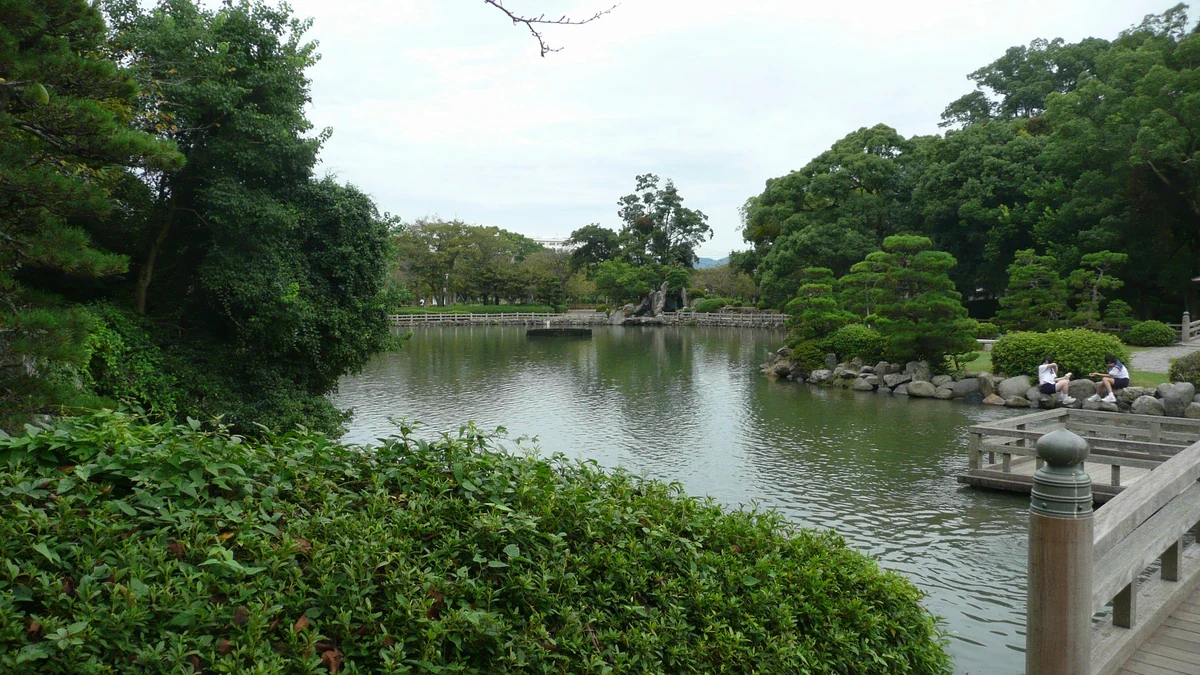
A tree-lined pond with rocks and shaped trees along its far bank; wooden railings frame the right foreground.

The Sakurada moat at Ōmura Park, surrounded by trees and waterside planting, photographed in September 2008.

Sanjo / Wikimedia Commons / Public domain (PD-self). Omura_Park_(Nagasaki)_01.jpg. Source: https://commons.wikimedia.org/wiki/File:Omura_Park_(Nagasaki)_01.jpg. License: https://commons.wikimedia.org/wiki/File:Omura_Park_(Nagasaki)_01.jpg#Licensing. Proportional downsampling to fit 1200 × 1200 pixels without enlargement; WebP quality 92, method 6. No crop, retouch, recoloring or added text. EXIF omitted. · commons.wikimedia.org

Walks and routes

Lower gardens and Sakurada moat

Begin by the information office, then choose either the seasonal flower beds or Sakurada moat as your main stop. Walk only as far as is comfortable, pause to compare tree shapes or flowers, and return by a suitable path. You do not need to complete a circuit to enjoy this visit.

Ask about the easiest paved option before leaving the office. Keep the route on paths that suit your mobility, and turn back rather than tackle an awkward bridge or narrow stretch.

Flowers, castle walls and the shrine

Combine the lower garden walk with a look at the curved stonework and reconstructed Itajiki Yagura from outside. If steps are manageable, add the former main bailey and Ōmura Shrine. In cherry season, use the labels to compare the shrine’s special cherries with trees seen lower down. Finish with a rest rather than adding every outlying feature.

The shrine addition is for visitors comfortable with steps. Keep it optional for a mixed-ability group, and arrange a clear meeting point if only part of the group continues.

A small-child visit

About one hour

Start with a toilet stop and choose one nearby flower area.

Spend ten unhurried minutes on a colour or shape game.

Add a short look at the moat if everyone still has energy, then return for a rest.

A two-hour visit for curious walkers

About two hours

Begin with the seasonal display and photograph a few plant labels.

Look at the castle stonework and turret exterior; add the shrine only if the steps suit everyone.

Finish beside Sakurada moat, leaving time for a quiet pause and the journey back.

Things to try

Make a tiny colour notebook

Give each person three spaces on a page. Fill them with colours noticed along the walk, using drawings or words rather than collecting flowers. Compare choices at your next rest stop.

Watch a reflection change

From a safe place beside Sakurada moat, choose one reflected tree or rock. Watch what happens when the water ripples, then draw the scene using only a few lines. Stay back from the edge rather than leaning over for a photograph.

Read the castle without a keep

Look at the stone walls from the path and ask why a builder might use height, curves and water for protection. Then spot a later feature, such as a flower bed or the reconstructed turret, to see how the same ground has changed.

A short walk in light rain

Choose a brief look at the nearest flower area rather than a full circuit, and skip wet steps. In heavy rain, thunderstorms or strong winds, leave the outdoor visit for another time.

Ōmura City History Museum at Mirai on

For a separate indoor stop, visit the history museum at 481 Higashi-honmachi. Its permanent exhibition is free and introduces the city’s past through objects, models and displays. Normal hours are 10:00–18:00; it closes Mondays, or the next weekday after a Monday public holiday, with additional month-end, year-end and special closures. Check the museum’s current calendar before going; special exhibitions may have a charge.

Wildlife and habitats

Usually late May to early June

Look for long, blade-shaped leaves and the large flowers rising above them. Compare broad, drooping flower segments, ruffled edges and colour patterns in the Edo, Higo and Ise groups. Read a plant label before assigning a cultivar name.

Choose two flowers without entering the bed. Can you describe three differences using shape and pattern as well as colour?

Usually early to mid-April

Its densely layered pink flowers can look like a flower opening inside another flower. The nationally designated trees stand at Ōmura Shrine; there are also planted examples elsewhere in the park. Look for the name label rather than judging by fullness alone.

Sketch the outline of a blossom from the path. Is its centre easy to see, or hidden by layers?

This separately named cherry at the shrine is a prefecturally designated natural monument. Its unusual flowers are related in appearance to Ōmura-zakura, but it has its own identity. Compare the labelled trees rather than treating the two names as interchangeable.

Take a photograph of each label, then match it to your flower photo when you are back at a comfortable stopping place.

Usually late March to early April

These pale-pink, single flowers usually arrive before the park’s later double-flowered cherries. Their simpler shape makes a useful comparison with photographs of Ōmura-zakura, even when the two are not flowering together.

Look from a little distance as well as close up. How does a branch full of simple flowers change the whole shape of the tree?

The main flower displays here are cultivated collections. Use the labels to help with names, enjoy the plants from the paths, and expect the display to change with the weather and gardening cycle.

Stories and discoveries

A national natural monument is a specific designation

The name “Ōmura Shrine’s Ōmura-zakura” refers to the protected cherry trees. It does not turn the surrounding municipal park into a national park.

Defensive space became a flower garden

The iris display began with plantings in the castle moats in 1961. Today, the old defensive layout gives the flowers their distinctive setting beneath the stonework.

When to visit

Choose cherries as the main event. Earlier and later varieties overlap differently each year; use the current flower report to decide whether to focus on the wider park or the shrine’s special cherries.

Make the iris gardens the first stop. Late May to early June is the usual peak window; later flowers and hydrangeas may extend the visit’s interest. Bring rain protection and change plans if paths become slippery.

Take a shorter morning walk, carry water and plan a cool break afterwards. Look at leaf shapes and reflections rather than expecting the spring flower displays.

Use the park as a history-and-garden stroll, with time to look at stonework and the shape of trees. Check holiday access and individual facility hours before a year-end outing.

Getting there and practical advice

Toilets and family care

The toilet building next to the tourist information office was refurbished in 2023. Its documented facilities include family cubicles, baby-changing provision and a wheelchair-accessible toilet with ostomate equipment and a large changing bed. If a particular facility is essential, check that it is available before travelling.

Food and a break

The city lists places to eat in the park area, but individual opening days vary. Bring drinking water and a small snack so the visit does not depend on a shop being open; take your rubbish away.

Help at the information office

Ask for a current park map, flowering advice and the easiest paths for your group. The prefectural guide lists free wheelchair loans at the office; call ahead about availability rather than relying on a chair being ready when you arrive.

By train and local bus

From JR Ōmura Station, the city gives roughly ten minutes by bus to the park area. In the current bus timetable, look for Ōmura Kōen (大村公園) or Ōmura Shiyakusho (大村市役所); older visitor pages call these Kōen-iriguchi and Shiyakusho-mae. Check the operator’s boarding guide and timetable for your specific journey and return. Ōmura Station and Shin-Ōmura Station are different stations, so check the transfer if arriving by shinkansen.

By car

The city gives about 15 minutes from Ōmura Interchange or ten minutes from Koba Smart Interchange, which requires ETC. It lists 134 free parking spaces and temporary flower-season parking. Follow the current parking signs and leave extra time when flowers or events draw crowds.

Lower paths

Paved routes run beside the iris garden, but the wider grounds also have gravel and uneven surfaces. Allow time to choose a comfortable return route.

Moat and shrine barriers

The access guide describes narrow sections beside the moat and says assistance is needed for wheelchair users crossing its bridge. The shrine approach eventually has steps only. Ask locally before committing to either section.

Before arrival

For a wheelchair visit, discuss your needs with the tourist office on 0957-52-3605. Ask about accessible parking, a suitable path and the toilet you will use, especially on a busy event day.

Admission and opening

Park admission is free. The local tourist association lists year-round access to the grounds; check ahead for 30–31 December because the prefectural English listing gives a closure. For a first visit, choose daylight and check any temporary signs on arrival.

A useful starting point

Use the park tourist information office as your meeting point and ask what is flowering. Its published hours are 09:00–17:00, closed Wednesdays. Call 0957-52-3605 before relying on assistance, equipment or holiday opening.

Address

Ōmura Park, 1-43 Kushima, Ōmura City, Nagasaki. The tourist information office is listed separately at 1-45-3 Kushima.

Sources and useful links

Wildlife you might spot

1

Each card links to a full Explore page with photos, traits, and fun facts.

We are still adding species preview cards for this place.

Snap map for this place

Start with the big picture, then zoom in to explore individual wildlife observations around this place.

Loading map…

Good to know before you go

Check the latest flower report before making a special trip for blossoms; a festival date does not guarantee peak bloom.

Keep children close beside the moat and iris beds. Stay on the paths and off the stone walls.

Wear shoes with a good grip, especially after rain, and shorten the route when surfaces are slippery.

Photograph tree labels as well as flowers. Leave blossoms on the tree and keep out of planted beds.

If you need step-free access, plan the lower gardens first and ask about a suitable return route before setting off.

Confirm your return bus and allow extra time on busy flower weekends; free parking can still fill up.

Keep a shrine visit quiet and brief if children need a break; use the park paths for games and discovery activities.

Check with the city before an organised or commercial photo shoot, event or other activity needing park permission.

Frequently asked questions

Ordinary park admission is free. Food, guided activities and any separately ticketed events may cost extra. The city lists 134 free parking spaces, with temporary parking during the flower-festival period.
The local tourism association lists the grounds as open year-round. For 30–31 December, call 0957-52-3605 to confirm access: the prefectural English listing gives those dates as closed. Shops, the information office and shrine services follow separate schedules.
Their main seasons are different. Plan a spring visit for cherries and a late-May or early-June visit for irises. Check current flowering reports rather than expecting both displays together.
Plan around the lower gardens and ask about the easiest paths. The shrine approach includes a stairs-only section, so do not assume a ramp gives access all the way up.
Kushima Castle had no central keep. The interest is in its surviving landscape and stonework, the reconstructed turret exterior, and the shrine that later occupied the main bailey. This visit does not depend on access inside the turret.

Recent snaps at this place

Recent snaps will appear here as new observations are added.

View all ›

Take the discovery with you

Exploring Ōmura Park?

Identify the wildlife you spot, learn as you go, and keep a collection of the adventure.

  1. 1Spot it
  2. 2Snap it
  3. 3Keep the discovery
