
Snappit logo
Snappit
Get App
Generic illustration, not a photograph of this venueIllustration
ParkChugoku, Japan

Shimane Hana-no-Sato Flower Park

Shimane Hana-no-Sato makes an easy change of pace during an Izumo visit.

About

Shimane Hana-no-Sato makes an easy change of pace during an Izumo visit. You can spend the morning looking closely at flowers, let children have time to play, and leave without turning the outing into a long expedition. Give yourselves one or two seasonal priorities rather than trying to catch every bed at its best. The glasshouse is a useful first stop: its changing displays introduce flowers grown in Shimane, while the lawns make a good place to slow down afterwards.

The local horticultural story is part of the appeal. The garden celebrates Shimane-bred hydrangeas, including “Mangekyō” (万華鏡), whose layered flowers inspired its kaleidoscope name. A cultivar is a named garden selection, so read the labels before deciding that a particular flower is one of these local introductions. The glasshouse hydrangea season comes earlier than the outdoor hydrangea path; a spring exhibition and a rainy-season walk offer different experiences.

Outdoors, follow your curiosity between sunny planting and woodland shade. Make a brief stop at the patterned flowerbed, then choose either the rose-and-herb corner or the planting around the pond. In spring, tree peonies and herbaceous peonies have different flowering windows. Later, water lilies give you a reason to linger beside the water. A small sketchbook can be more useful than a checklist: invite everyone to choose one flower shape or leaf they want to remember.

Keep the neighboring Izumo crested-ibis facility as an optional extra. It is a separate captive-breeding and viewing facility reached through the garden, with its own opening calendar. Plan a satisfying flower-and-play visit first, then add the birds only after checking that viewing is available. Unlock an interactive field guide for this spot: get the Snappit app to identify nature on the go.

The prefectural flower park opened on 24 April 2004 and marked its twentieth anniversary in 2024. Its continuing focus is on connecting visitors with flowers bred or grown in Shimane and with the people who cultivate them.

What to do here

Start with the glasshouse, pick the outdoor area with the best flowers that day, and finish with a picnic or the children’s play area. For a simple plant-learning game, compare one sunny bed with one shaded bed and ask what looks different.

Seasonal info

Flowering changes with weather. The glasshouse hydrangea display is listed for late April to mid-June; outdoor hydrangeas are later. Winter visits have shorter hours and Tuesday closures, as well as the New Year closure.

Accessibility

An entrance ramp, wheelchair-accessible toilet, nursing space and baby-changing space are listed by the prefectural tourism site. The garden loans wheelchairs and strollers without reservations, subject to availability. Some planting lies on slopes; ask reception which paths best suit your chair, stroller and energy level.

Don't miss

1

Seasonal glasshouse displays that introduce Shimane’s flowers

2

The hydrangea path beneath a leafy canopy

3

Peonies, roses and pond-side planting to revisit through the seasons

4

Picnic lawns and a children’s play area for an unhurried family visit

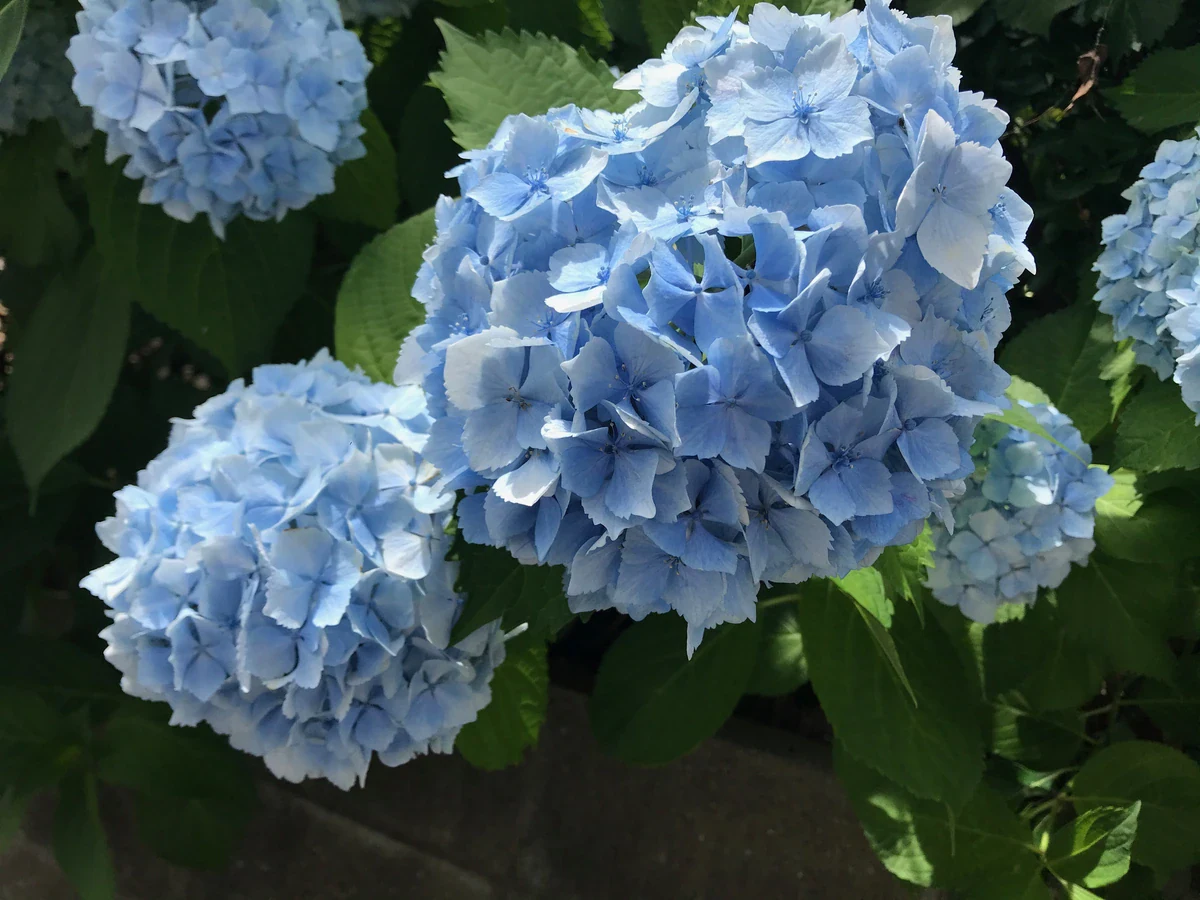
Rounded clusters of pale blue hydrangea flowers among broad, toothed green leaves.

Hydrangea flower heads, photographed away from Shimane Hana-no-Sato in June 2020. This comparison image introduces the hydrangeas celebrated by the garden; it does not show its displays or a named Shimane cultivar.

© そらみみ / Wikimedia Commons / CC BY-SA 4.0. Flowers_of_Hydrangea_macrophylla_20200612.jpg. Source: https://commons.wikimedia.org/wiki/File:Flowers_of_Hydrangea_macrophylla_20200612.jpg. License: https://creativecommons.org/licenses/by-sa/4.0/. Proportional downsampling to fit 1200 × 1200 pixels without enlargement; WebP quality 92, method 6. No crop, retouch, recoloring or added text. EXIF omitted. No software field displayed on the individual file page. Source rendering retained; no assertion of unprocessed capture. · Creative Commons

Walks and routes

A flexible flower walk

Begin in the main building and glasshouse. Outside, pause at the patterned bed, then choose the rose-and-herb corner or the pond-side flowers according to the season. Add the hydrangea path when it is in bloom and everyone still feels like walking. Finish at the lawn. Use the entrance map and current signs to choose your way between these areas.

For a shorter visit, concentrate on the indoor displays and ask staff to suggest one suitable outdoor area. The hillside planting is optional.

A flexible flower walk

Get oriented at reception and enjoy the glasshouse before deciding which outdoor flowers to seek.

Visit one or two seasonal garden areas, with time for the flower-shape game or a short sketch.

Have lunch and leave a generous block for the lawn or play area.

Revisit a favorite display, use the facilities and leave time to reach your train or bus.

Things to try

Try a three-shape flower hunt

Let each person choose a round flower head, a star-like shape and a flower they cannot quite describe. Draw or photograph them from the path, then compare choices over lunch. Names can come afterwards.

Compare sun and shade

Visit the sunny path and the woodland-shade path. Notice where the light falls and compare leaf sizes, shapes and textures without picking anything. Ask children which setting they would choose on a hot day.

Look for a class or exhibition

Check the event list before visiting if a hands-on activity matters to your family. Programme dates, age suitability, fees and booking requirements vary, so choose a specific event rather than assuming a workshop will be running.

A shorter indoor visit

Use the main building, connecting corridor and glasshouse for a compact flower-focused stop. Outdoor play and a lawn picnic depend on the weather; do not feel you need to complete the full garden walk.

Check before travelling in severe weather

Snow, storms or other severe weather can change opening arrangements. Check the garden’s latest notice before setting out rather than relying only on its regular hours.

Wildlife and habitats

Hydrangeas

Compare the overall flower-head shapes and read the labels. The park celebrates several Shimane-bred cultivars, but shape or colour alone is not enough to name one.

Japanese iris

At the water garden, compare the upright leaves with the broad flowers. Read the plant label to distinguish hanashōbu from other irises rather than identifying it just by being beside water.

Water lilies

Watch from the path and compare the floating leaves with the plants along the bank. There is no need to lean out over the pond for a closer look.

Hellebores

Look along the partly shaded path in late winter or early spring. Try sketching one flower from your own viewing height without stepping into the planting.

These are cultivated garden plants, and displays change with the season. Use plant labels for names and enjoy the planting from paths; the flower calendar is a guide to timing rather than a promise that every plant will be in bloom.

Stories and discoveries

The garden is a showcase for local growers

Shimane’s flower-growing traditions extend beyond the garden gates. The park brings together locally bred hydrangeas and other flowers produced in the prefecture, making plant labels a small introduction to that wider story.

Two peony moments

The garden distinguishes botan, or tree peonies, from shakuyaku, or herbaceous peonies. Its usual calendar places the tree peonies in late April and the herbaceous peonies in early to mid-May, so there is a good reason to return.

When to visit

Late winter and early spring

Hellebores are listed from early February to late March. Look for them on the partially shaded path; choose the glasshouse and a shorter outing if the weather is cold or wet.

Late April to May

Choose late April for tree peonies or early to mid-May for herbaceous peonies. The glasshouse’s early hydrangea display gives another reason to look indoors.

June to summer

Japanese irises usually flower in early to mid-June. Aim for late June to early July for the outdoor hydrangea path, then check the latest flowering report as your visit approaches. Water lilies are listed from mid-June to mid-August.

Autumn and winter

The rose-and-herb corner has another rose season in late October–late November. The flower calendar lists cyclamen in the glasshouse from late November into early February. Winter opening is shorter and the Tuesday closure applies.

Getting there and practical advice

Admission and opening

Checked 16 October 2026: adults ¥250; elementary, junior-high and high-school pupils ¥130; preschool children free. March–November: 09:30–17:00, normally daily. December–February: 09:30–16:30, closed Tuesdays and 29 December–3 January. If a regular closed day falls on a public holiday, closure moves to the next weekday. Check the latest notice before travel.

Rest and family facilities

The main building has a rest area, and the corridor links it with the glasshouse. Nursing and baby-changing spaces and a wheelchair-accessible toilet are listed. Ask at reception for their locations.

Borrowing equipment

Wheelchairs, strollers and walking carts are available at reception in limited numbers, without reservations. Bring your own if you depend on having one.

A separate visit to the crested ibises

The adjoining public viewing facility lists 10:00–16:30 in March–November and 10:00–16:00 in December–February. It closes every Tuesday, or the following day when Tuesday is a public holiday, and 29 December–3 January. Check its own current notices before adding it to your day. These are captive birds in a conservation facility.

By train

From JR Nishi-Izumo Station’s south exit, the garden gives a walk of about 10 minutes. Allow longer with small children or mobility needs, and check train times for both directions.

By bus

For the bus from JR Izumoshi Station, the garden’s access directions use the Heisei Onsen route to “Hana no Sato Toki Kaikan-mae” (花の郷 朱鷺会館前), followed by about a one-minute walk. Confirm the current service and return departure before relying on it.

By car and contact details

The garden is about five minutes by car from Izumo IC on the San’in Expressway. Free parking is listed. Address: 2-1101-1 Nishishinmachi, Izumo, Shimane 693-0037. Garden telephone: 0853-20-1187.

Choose the outing around your needs

The entrance ramp and accessible toilet make this a useful option to discuss with staff. The flower hill and hellebore area include slopes. Ask about surfaces, gradients and the easiest link to the flowers you most want to see.

If adding the ibis facility

Anyone who would find entry through the garden difficult because of a physical disability can ask the ibis facility about an alternative direct entrance in advance, on 0853-20-1350. Arrangements are subject to discussion, so contact it before travelling.

Sources and useful links

Wildlife you might spot

4

Each card links to a full Explore page with photos, traits, and fun facts.

We are still adding species preview cards for this place.

Snap map for this place

Start with the big picture, then zoom in to explore individual wildlife observations around this place.

Loading map…

Good to know before you go

Check whether your chosen flower is in the glasshouse or outdoors; the two hydrangea seasons are different.

Bring a packed lunch, water and a bag for your rubbish. Eating in the garden is allowed; take everything you bring away with you.

Keep children close beside the pond, stay on paths and leave flowers, leaves and fruit attached to the plants.

Choose a shorter walk in summer heat, and use indoor breaks when you need them. Take care on wet paths.

Check the return train or bus before setting off. A short walk from the station does not mean frequent transport.

Ask staff about any animal warnings that day. If you see a monkey, keep your distance and tell staff; do not feed or approach it.

Leave pets, bicycles, scooters and children’s ride-on toys at home. Assistance dogs are allowed; smoking, fires and drone flight or drone photography are prohibited.

Keep your admission ticket if you leave for a break: same-day re-entry is allowed.

Frequently asked questions

The rates introduced on 1 April 2026 are ¥250 for adults, ¥130 for elementary, junior-high and high-school pupils, and free entry for preschool children. These rates were checked on 16 October 2026; confirm them before travel.
Yes. A picnic on the lawn is part of the appeal. Bring your own rubbish bag, avoid damaging the grass and do not use tent pegs or other stakes.
No. The glasshouse has an earlier display season, while the outdoor path is a rainy-season attraction. For a named Shimane cultivar, check the current exhibition and the plant’s label.
The main building, connecting corridor and glasshouse make a shorter indoor-focused visit possible. Save the longer garden stroll and picnic for better weather, and check opening notices during severe weather.
The adjoining Izumo crested-ibis viewing facility is a separate optional stop. Its own admission is free, but normal access through the garden requires garden admission. It closes Tuesdays throughout the year, with a holiday adjustment, so it may be closed when the garden is open.

Recent snaps at this place

Recent snaps will appear here as new observations are added.

View all ›

Take the discovery with you

Exploring Shimane Hana-no-Sato Flower Park?

Identify the wildlife you spot, learn as you go, and keep a collection of the adventure.

  1. 1Spot it
  2. 2Snap it
  3. 3Keep the discovery
