Snappit logo
Snappit
Get App
Generic illustration, not a photograph of this venueIllustration
ParkChugoku, Japan

Tottori Hanakairo Flower Park

A good day at Tottori Hanakairo need not involve seeing every flower bed.

About

A good day at Tottori Hanakairo need not involve seeing every flower bed. Start with the great glass Flower Dome, choose one seasonal outdoor display and save time for the Lily Hall. The park covers about 50 hectares on a plateau spanning Nanbu and Hōki, but its central gardens make a manageable family outing. A roofed circular walkway gives you a different perspective on the planting below, with places to pause rather than keep marching.

Lilies give Hanakairo a character of its own. In the East Building, flowering is carefully managed so that the Lily Hall can show them throughout the year. From May to August, its native-lily relay introduces the 15 species that the park identifies as native to Japan, in succession rather than all flowering together. These are tended displays: a native plant’s origin does not turn its exhibition bed into wild habitat. Look closely at the flowers facing upward, outward or down, and use the labels to compare them.

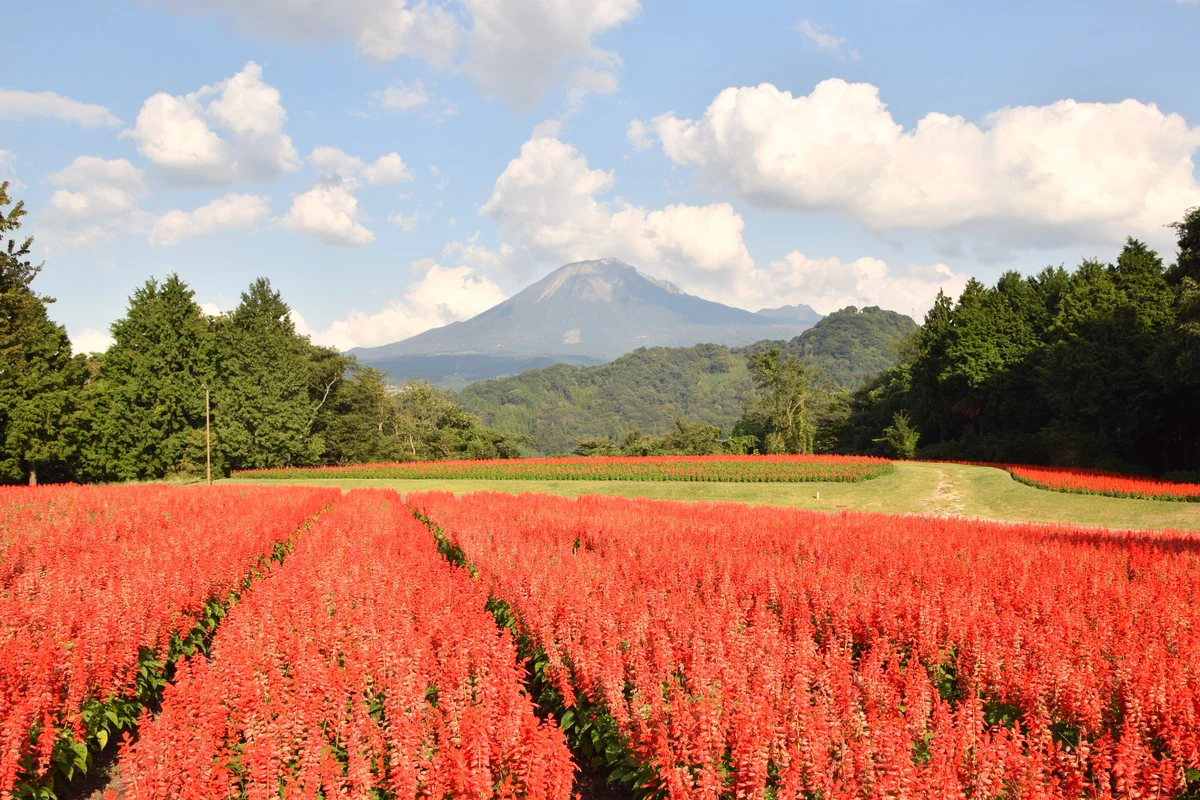
Flower Hill is the place for a wider view. Its planted slopes change with the season, and on a clear day Daisen rises beyond them. In autumn, red salvia can fill the foreground; in other seasons the palette changes completely. You are looking toward the mountain from a flower garden, so there is no mountain ascent in this visit. If cloud hides Daisen, the flowers still give you plenty to enjoy.

Mix the big views with small discoveries. In spring, follow the tulips into Flower Valley’s Dutch-inspired beds; in the dome, compare tropical foliage and orchids. A snack break or a short Flower Train ride can help younger visitors enjoy the second half of the day. Leave room to follow whatever looks interesting, and make the current flower report your guide rather than a photograph of a different month. Explore the grounds like a pro—download the Snappit app to instantly identify animals and plants.

Tottori Prefecture opened Hanakairo on 18 April 1999 as a place for recreation, tourism and flower horticulture. Its circular roofed walkway is central to both the visitor experience and the park’s name. Flower Valley also reflects an exchange with the Netherlands’ Keukenhof: its Dutch-style beds were designed by former Keukenhof director Mr. Koster.

What to do here

Explore the Flower Dome and Lily Hall, walk as much of the roofed corridor as suits your family, then choose Flower Hill or Flower Valley for the day’s best outdoor color. Add the Flower Train if it is running.

Seasonal info

The Lily Hall maintains flower displays year-round, while the native-lily relay is seasonal. Outdoor beds are replanted and bloom dates move with the weather. Winter illumination is a separate evening experience with different admission and opening arrangements; snow or ice can stop the Flower Train.

Accessibility

The roofed 1 km corridor is level, but reaching it matters. Elevator work at the West Building and Flower Dome is scheduled from 17 August 2026 into January 2027. Ask at the gate for the currently usable step-free approach and return route. Outdoor garden paths include changes of level.

Don't miss

1

Lilies in the East Building, with a native-species relay from May to August

2

The roofed circular walkway and its changing garden views

3

Flower Hill’s seasonal planting with Daisen beyond on clear days

4

Tropical foliage and orchids inside the glass Flower Dome

Walks and routes

The roofed garden circuit

Use the circular walkway to look over the garden before deciding where to spend longer. A full circuit is 1 km; allow 35–60 minutes with pauses, plus the approach and any detours. Try comparing a bed from above with its appearance at ground level later. You can also walk only part of the circuit.

The corridor itself is level. During the elevator works, ask staff which approach is suitable for your wheelchair or stroller; the distance from the gate will be longer than the circuit alone.
The roofed garden circuit

Dome, lilies and one outdoor highlight

Begin at the West Building information desk, cross toward the Flower Dome and spend time with its tropical plants. Choose a section of corridor, then visit the Lily Hall. Add Flower Hill when the weather is clear or Flower Valley when its spring beds are at their best. Return with enough time for a drink and your onward transport. Follow the current park map for the connecting paths.

The outdoor detour is optional. Ask staff about its slopes before committing to it, and keep the indoor displays as the main visit if a longer walk would be tiring.

Dome, lilies and one outdoor highlight

A relaxed half-day with children

About three hours, longer for a leisurely lunch

Start with the map and today’s flower recommendations. If anyone needs a lift-free route, settle that before leaving the gate.

Choose the Flower Dome and a comfortable stretch of corridor, then pause for a drink or the Flower Train.

Visit the Lily Hall and one seasonal outdoor area. Finish with lunch or a snack rather than squeezing in every corner.

Things to try

Play a flower-shape game

Give each person a different shape to find: a trumpet, a star or a rounded cluster. Compare answers at the next bench. Sketch or photograph what you find instead of picking it.

Take a slow Flower Train lap

The train starts and finishes outside the West Building. Use the short ride to choose a part of the garden to revisit on foot, rather than trying to photograph everything as it passes. Ask staff about boarding needs before buying a ticket.

Frame flowers against the mountain

At Flower Hill, include both the near planting and distant Daisen if the view is clear. If cloud covers the mountain, try a closer composition using repeated colors and shapes. Keep busy paths open for other visitors.

Keep the visit close to shelter

Build the day around the Flower Dome, Lily Hall and a short section of roofed corridor. Swap the Flower Hill detour for more time looking at leaf shapes and plant labels. Wear shoes with grip and follow staff directions around any wet or closed sections.

Wildlife and habitats

The Lily Hall in the East Building

Year-round cultivated displays; native-species relay generally May–August

Compare the direction each flower faces and the curve of its petals. Find the label before deciding whether two different-looking flowers are different species or garden varieties. The relay changes through the season, so each visit can show a different selection.

These lilies are cared-for exhibits. Native Japanese species and horticultural varieties may both be displayed; the whole collection is not one species.

Flower Hill’s autumn planting

Autumn, usually strongest around October

First look at the red hillside as a whole, then find a flower spike close to the path and notice how many small blooms make up the color. Keep your feet on the path and use a camera zoom rather than stepping into the bed.

A cultivated seasonal display. The 2026 festival predicts its main show from late September to early November; weather and replanting can change the scene.

Stories and discoveries

A garden designed to be seen from two levels

The corridor stays level while the landscape underneath rises and falls. That lets you compare flower beds as patterns from above and as individual plants when you return to ground level.

A link with a Dutch spring garden

Flower Valley’s Keukenhof connection is more than a nickname: the operator credits former Keukenhof director Koster with designing its Dutch-style planting beds.

Keeping flowers on show beyond their outdoor season

Staff control flowering for the Lily Hall’s year-round display. The native-lily relay follows a different idea, showing species in succession through late spring and summer.

When to visit

Spring

For April and early May, put Flower Valley’s tulips and the changing spring beds first. Cherry blossoms and Iceland poppies add variety at different points in the season; check which has reached its best stage.

Late spring and early summer

Roses and clematis are featured from around mid-May, followed by June lilies and hydrangeas. This is a good season to compare outdoor flowers with the native-lily relay inside.

Summer

Look for marigolds on Flower Hill and summer sunflower displays. Take exposed garden sections in short stages and use sheltered stops between them; a greenhouse can still feel warm in summer.

Autumn

Salvia, cosmos, roses and chrysanthemum displays make October particularly varied. The 2026 Autumn Festival runs 3 October–1 November, with Secret Garden access limited to its announced opening dates. Check the current closing time if visiting on 1 November, when the seasonal timetable changes.

Winter lights

Flower Illumination is announced for 14 November 2026–11 January 2027, 17:30–21:00 on operating days. Dress for an outdoor evening and check both the closure calendar and return transport. A daytime-only ticket does not cover staying for the evening lights.

Rows of scarlet flowers cover the foreground, with trees, green hills and a distant mountain beneath scattered clouds.

Red salvia beds at Tottori Hanakairo frame a distant view of Mount Daisen in October 2021.

© Raita Futo from Tokyo, Japan / Wikimedia Commons / CC BY 2.0. Scarlet_sage_in_Tottori_(51820969082).jpg. Source: https://commons.wikimedia.org/wiki/File:Scarlet_sage_in_Tottori_(51820969082).jpg. License: https://creativecommons.org/licenses/by/2.0/. Proportional downsampling to fit 1200 × 1200 pixels without enlargement; WebP quality 92, method 6. No crop, retouch, recoloring or added text. EXIF omitted. RawTherapee 5.8; EXIF date 2021-10-09. Source colors and processing retained; no claim of unprocessed capture. · Creative Commons

Getting there and practical advice

Entrance support and baby care

The West Building has the information desk, a waiting area, first-aid room and nursing room. It is the useful first stop for route advice and equipment loans.

Lunch and a sweet break

Bring a picnic or check the park’s restaurant and snack options. The Flower Dome has a pear soft-serve counter using a local specialty. Allow extra time for food on busy days and check outlet hours on arrival.

A quieter indoor pause

The North Building offers exhibition and rest spaces, with a viewing rest area on the fourth floor. Ask about a suitable route to the floor you want before making it your essential rest stop.

From JR Yonago Station

The free shuttle leaves from the south-side station square and takes about 25 minutes. Use the timetable for your date and check the return first. Buses are not reservable and can fill up; vehicles may have ordinary bus livery, so check the destination.

Driving and parking

Use 110 Tsuruta, Nanbu, Tottori for navigation. The operator estimates about 10 minutes from Mizoguchi IC or Daisen Kogen Smart IC; the latter requires ETC. Parking is free. Allow more time in holiday traffic or winter weather.

Choose the station for the onward connection

The operator recommends Yonago’s shuttle for public-transport visitors. Connections from JR Mizoguchi are limited; if you use that station, arrange the taxi leg rather than expecting a garden bus to be waiting.

Elevator works and alternate approaches

Works affect the West Building and Flower Dome from 17 August 2026 into January 2027, with timing subject to change. The park lists approaches from the Promenade Bridge via the Flower Dome and Crystal Road, or via the Herb Garden and Fragrance Plaza. Ask staff which is open and best for you, including your return journey.

Loans and stroller fit

Wheelchairs, walking-support carts and strollers are lent free at the entrance without reservations. Stock is limited; the park’s strollers are intended roughly for babies from six months to children around two years, subject to the child’s size and development.

Wheelchair travel on the shuttle

Services marked N normally use a low-floor bus with a ramp and wheelchair space, but substitutions are possible. Call ahead if you need to remain in your wheelchair. On the minibus, a wheelchair must be folded and the passenger must transfer, with help arranged by the visitor.

Opening times to check before setting out

For 2026, April–October daytime opening is 09:00–17:00, last entry 16:30; November 1–13 is listed as 09:00–16:30, last entry 16:00. From November 14–30, the park is listed open 09:00–21:00, and from December through January 11 it opens 13:00–21:00; last entry is 20:30. Posted winter closures include December 1, 8, 15 and 31, and January 5. Check the dated calendar for later winter days and event exceptions.

Sources and useful links

Wildlife you might spot

2

Each card links to a full Explore page with photos, traits, and fun facts.

Snap map for this place

Start with the big picture, then zoom in to explore individual wildlife observations around this place.

Loading map…

Good to know before you go

Ask what is flowering today before choosing your outdoor detour. The best bed changes through the season.

If stairs are difficult, check the elevator-work notice before you leave and ask staff to explain both the outward and return routes.

Check your return shuttle before exploring. Its timetable changes by season and day, and full buses cannot take everyone.

Bring water and sun protection for open flower beds. Carry a light rain layer even if you plan to use the covered walkway.

You may bring lunch and drinks. Take all your picnic rubbish home, and keep entrances and paths clear.

Watch for the Flower Train on shared garden paths, and keep children away from pond edges. Water play, bubbles and drones are prohibited.

Enjoy plants and insects where they are. Picking flowers, collecting fruit or insects, and damaging beds are prohibited.

Pets cannot enter; assistance dogs are excepted. Bring your own stroller if you need one guaranteed, as free loans cannot be reserved.

Frequently asked questions

The Lily Hall’s native-lily relay is a cultivated exhibition. “Native” describes where those species occur naturally. The park also retains wooded areas, but do not treat a display label or this garden visit as evidence of a wild population.
The published daytime tariff is ¥1,200 for adults and ¥600 for elementary/junior-high students in April–June; ¥960/¥480 in July–November and March; and ¥500/¥250 in December–February. However, the homepage showed ¥1,000/¥500 for 16 October 2026. Confirm your date’s price with the park. The listed illumination ticket is ¥1,200/¥600.
The operator advertises half-price admission for foreign visitors showing a passport or residence card. Ask the ticket desk which rate applies on your visit date. Eligible disability-related admission exemptions are also listed on the official visitor-information page.
Yes, a shorter visit around the covered corridor, Flower Dome and Lily Hall can work well. The links to outdoor displays are exposed, and rain can still blow into a roofed walkway. Skip distant beds if conditions are unpleasant.
No. Daisen is a distant landscape view from the garden. A mountain outing needs separate transport, time, equipment and current mountain information.
The normal garden circuit takes about 15 minutes. Listed fares are ¥400 for adults and ¥200 for elementary/junior-high students, cash only. Children in grade four or younger must ride with a guardian. Check operation on arrival; snow and ice can suspend it.

Recent snaps at this place

Recent snaps will appear here as new observations are added.

View all ›

Take the discovery with you

Exploring Tottori Hanakairo Flower Park?

Identify the wildlife you spot, learn as you go, and keep a collection of the adventure.

  1. 1Spot it
  2. 2Snap it
  3. 3Keep the discovery