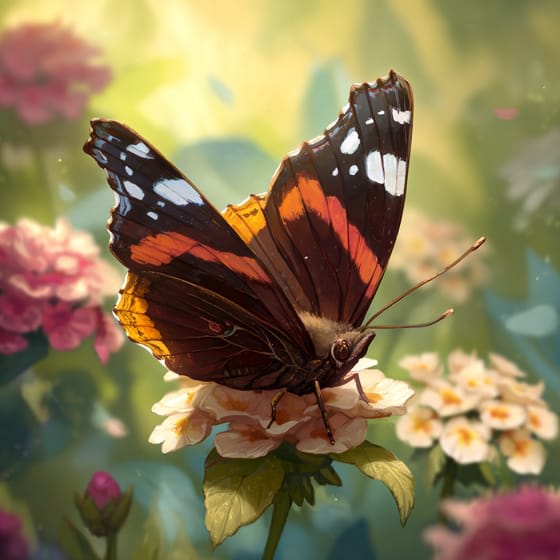





Admiral Butterfly
Limenitis arthemis
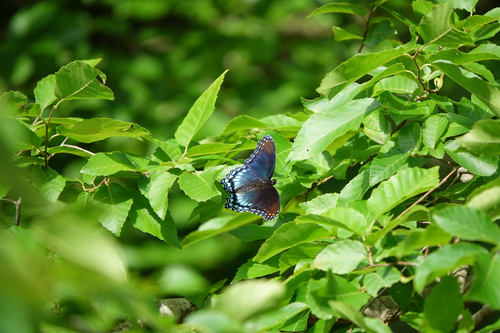
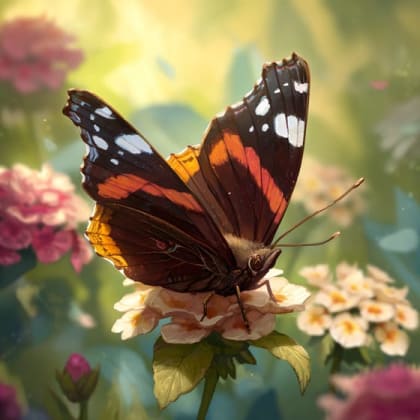
The Admiral Butterfly has dark wings with bright orange spots. It loves to flutter around flowers and trees!
Habitat: Woodlands and gardens
The Admiral Butterfly has dark, velvety wings often adorned with a prominent white band, which can vary by subspecies. Some subspecies also feature striking blue or reddish-orange spots. Its elegant appearance helps it stand out from other forest butterflies.
Category
InsectsRarity
Common
Danger
2/5 · Low
Snaps
83
Admiral caterpillars build a tiny "frass chain" from their droppings to disguise their resting perch!
Some Admiral Butterfly caterpillars mimic bird droppings to fool predators during their early stages.
The Red-spotted Purple, a subspecies, cleverly mimics a toxic butterfly to avoid being eaten!
Unlike many butterflies, adult Admirals also enjoy sipping moisture and minerals from damp soil.
Admiral Butterfly caterpillars can blend perfectly with twigs by decorating themselves with bits of frass, helping them hide from hungry birds.
Admiral Butterflies can perform rapid, erratic flight patterns, allowing them to quickly escape from predators like birds.
Admiral Butterflies have a straw-like proboscis that helps them sip nectar from flowers and nutrients from tree sap or rotting fruit.
Caterpillars munch on tree leaves, while adults sip sweet nectar, sap, and other liquids.
Age differences: Young caterpillars eat fresh leaves, while adult butterflies use their straw-like proboscis to sip liquids.
Wildlife encompasses all undomesticated animal and plant life existing in their natural habitats.
This trait characterizes organisms whose diet consists entirely or primarily of plant material.
Forest habitats are terrestrial environments dominated by dense tree cover, supporting a high diversity of plant and animal life.
Diurnal animals are primarily active during daylight hours, typically resting or sleeping at night.

Describes organisms that transfer pollen, enabling the fertilization and reproduction of plants.
Danger
2/5 · Low
Do not touch or pick up. Some insects sting or bite. Ask an adult for help.
The easiest way to identify Admiral Butterfly is to use the Snappit nature identifier app.
50-80 mm
25-35 mm
10-21 days
25 km/h
Caterpillars munch on tree leaves, while adults sip sweet nectar, sap, and other liquids.
Woodlands and gardens
Foraging
Zoom in to split clusters and explore where this object has been snapped.
Jun 18, 2026
Gloucester Downtown Historic DistrictPhoto attribution
(c) V. Ross Johnson, some rights reserved (CC BY-SA)
License: CC BY-SA 4.0 ↗
Image may be shown cropped inside the card frame.
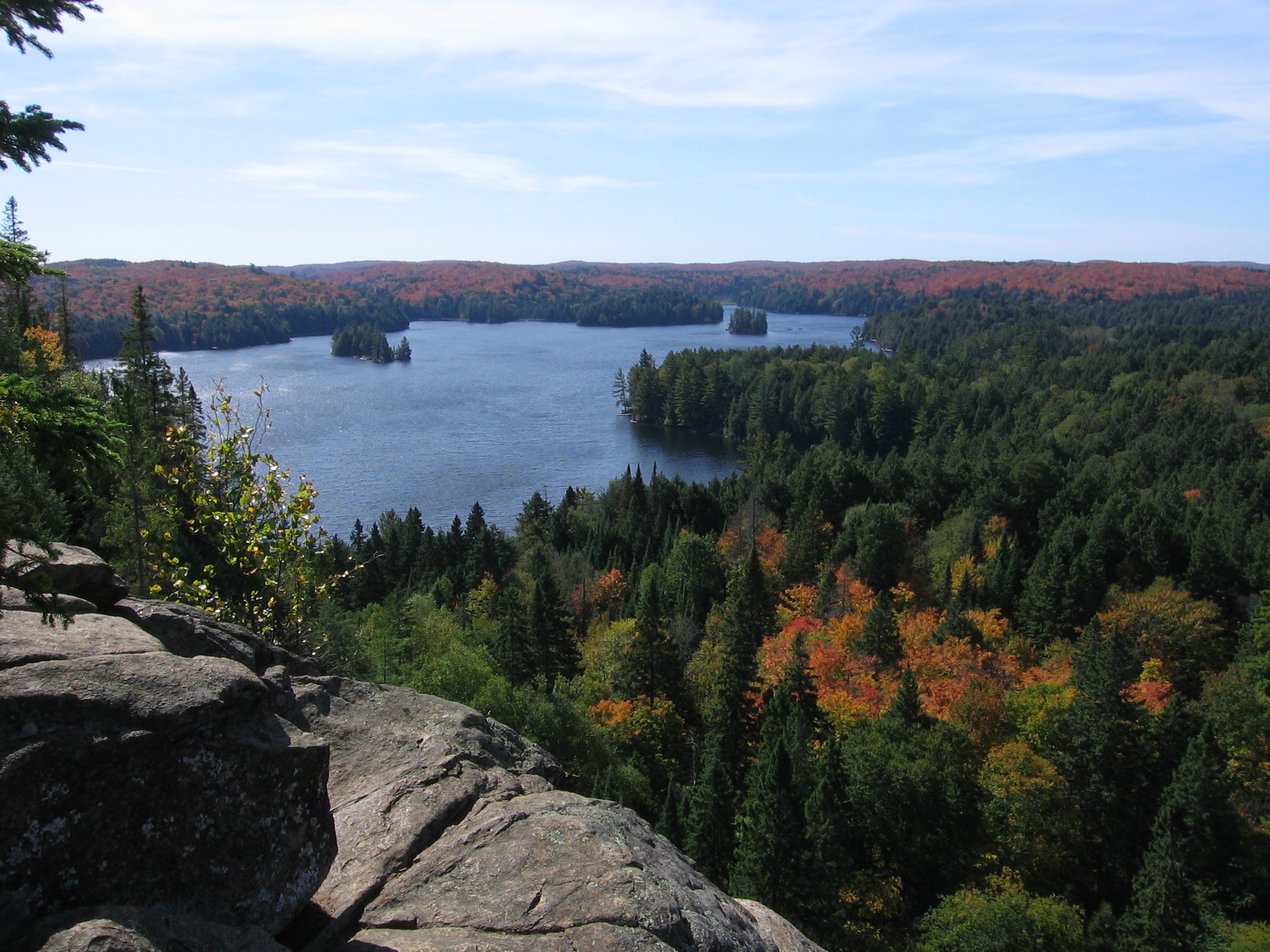
Ontario, CA
You might spot Canada Jay, American Beaver, and Black-Capped Chickadee.
View guide →

Illinois, US
You might spot Common Eastern Bumble Bee and Brown-Belted Bumble Bee.
View guide →

Tennessee, US
You might spot Black Bear, Yellow Wakerobin, and Pipevine Swallowtail.
View guide →

Rhode Island, US
You might spot Common Eastern Bumble Bee and Osprey.
View guide →

Missouri, US
You might spot Common Eastern Bumble Bee and Brown-Belted Bumble Bee.
View guide →

Wisconsin, US
You might spot Turkey, White-Tailed Deer, and Dame's Rocket.
View guide →
Take the discovery with you
Snap it with Snappit to identify it, learn what makes it special, and add the discovery to your collection.







.jpg&width=800)



