Yarrow

Manassas National Battlefield Park in Virginia offers a profound journey through pivotal American history, harmoniously blended with the tranquility of nature.
Manassas National Battlefield Park in Virginia offers a profound journey through pivotal American history, harmoniously blended with the tranquility of nature. This expansive park, located just under 30 miles from Washington, D.C., preserves the hallowed grounds of the First and Second Battles of Manassas (also known as Bull Run), where the course of the Civil War was dramatically shaped. Beyond its immense historical significance, the park is a vital natural sanctuary, encompassing over 5,000 acres of diverse habitats that provide a haven for wildlife and a serene escape for visitors.
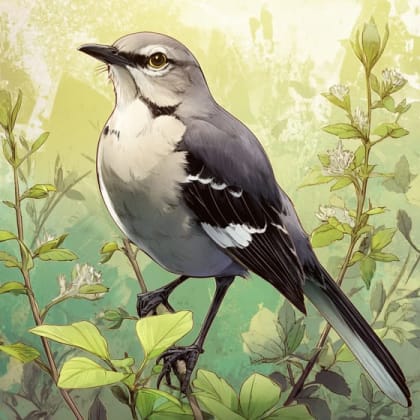
Visitors can explore a rich tapestry of historical sites and natural landscapes. The Henry Hill Visitor Center serves as an excellent starting point, featuring exhibits, artifacts, and an insightful orientation film. Over 40 miles of hiking trails and 21 miles of designated horseback riding trails wind through mature forests, open grasslands, meadows, and along freshwater creeks and ponds. These varied habitats are home to a vibrant array of species, including White-tailed Deer, Coyote, and Red Fox. Birdwatchers might spot Eastern Bluebirds, Field Sparrows, and the elusive Grasshopper Sparrow in the grasslands, or perhaps a Northern Mockingbird and American Robin in more wooded areas. Botanical enthusiasts will appreciate native flora like Virginia bluebells, Virginia Springbeauty, and Mayapple, alongside impressive Eastern Redcedar.
A visit to Manassas National Battlefield Park is a deeply moving experience that connects visitors to both the human and natural stories of this significant place. Whether you're standing on Henry House Hill where "Stonewall" Jackson earned his moniker, exploring the historic Stone House, or simply enjoying the peaceful expanse of grasslands teeming with life, the park leaves a lasting impression. Its blend of educational opportunities, recreational activities, and natural beauty makes it a memorable destination for anyone seeking to understand the past while appreciating the present ecology. Explore the grounds like a pro—download the Snappit app to instantly identify animals and plants.
Manassas National Battlefield Park was established to preserve the sites of two critical early engagements of the American Civil War: the First Battle of Bull Run (First Manassas) on July 21, 1861, and the Second Battle of Bull Run (Second Manassas) in August 1862. Both battles resulted in significant Confederate victories, profoundly impacting the morale and strategic outlook of both sides. It was during the First Battle that Confederate General Thomas J. Jackson famously earned his enduring nickname "Stonewall." The park was formally established in 1936 by an act of Congress (though some sources cite 1940) and was subsequently listed on the National Register of Historic Places on October 15, 1966. Today, the park ensures that the sacrifices and events that transpired on these fields are remembered and understood by future generations, while also protecting the landscape as a valuable natural resource.
Explore historical battlefields and monuments on foot or via self-guided driving tours.
Join ranger-led programs and walking tours for in-depth historical insights.
Hike or horseback ride over 40 miles of trails, enjoying the diverse natural landscapes.
Engage in birdwatching and wildlife viewing; grassland habitats are particularly good for certain bird species.
Picnic at designated areas like Brownsville or Stuart's Hill.
Kids can participate in Junior Ranger activities.
Spring brings blooming wildflowers like Virginia bluebells and Virginia Springbeauty. Fall offers vibrant foliage. Summer can be hot and humid. Winter can provide opportunities for spotting unique bird species.
The Henry Hill Visitor Center is accessible, with exhibits on the first floor and a captioned battle map program. Ramps provide access to Henry Hill, which is largely level near the visitor center and suitable for mobility devices when dry. Several accessible trails are available, including portions of Chinn Ridge (compacted dirt) and the 1/4-mile hard-surface loop at the Brownsville Picnic Area, which features an accessible pond dock. Accessible restrooms are available at the Brownsville Picnic Area. Assisted listening devices are also available upon request.
Features a museum, a fiber-optic battle map, and the 45-minute film "Manassas: End of Innocence."
An iconic landmark used as a hospital during both battles.
Focuses on the Second Battle of Manassas.
A historic bridge that played a role in Union retreats.
Each card links to a full Explore page with photos, traits, and fun facts.
Start with the big picture, then zoom in to explore individual wildlife observations around this place.
Start at the Henry Hill Visitor Center
Begin your visit here to gain essential historical context through exhibits, the orientation film, and maps.
Wear comfortable shoes
With over 40 miles of hiking trails, comfortable footwear is essential for exploring the battlefield.
Consider a ranger-led program
These tours offer invaluable insights and bring the history to life.
Utilize self-guided tours
Download the American Battlefield Trust's battle apps or pick up a brochure at the visitor center for detailed self-guided driving and walking tours.
Bring binoculars
For birdwatching and wildlife viewing, binoculars will enhance your chances of spotting species like Grasshopper Sparrows, Eastern Bluebirds, and White-tailed Deer.
Pack water and snacks
Especially on longer hikes or during warmer months, it's wise to carry refreshments as facilities may be limited outside the visitor center.
Dec 21, 2025
Sep 23, 2025
Sep 14, 2025
Aug 30, 2025
Jul 17, 2025

Maryland, US
You might spot White-Tailed Deer and Eastern Gray Squirrel.
View guide →
.jpg)
District of Columbia, US
You might spot Eastern Gray Squirrel, Duck, and House Sparrow.
View guide →

Illinois, US
You might spot American Robin, Canada Goose, and House Sparrow.
View guide →

Virginia, US
You might spot Spotted Lanternfly and Northern Cardinal.
View guide →
Take the discovery with you
Identify the wildlife you spot, learn as you go, and keep a collection of the adventure.