


Alpine Accentor
prunella collaris
The Alpine Accentor is a hardy, robust songbird uniquely adapted to life in the harsh, high-altitude mountain environments of Europe and Asia. Residing above the treeline among rocky scree and alpine meadows, this charming bird is famously bold and inquisitive, often approaching hikers and skiers with little fear. It is the largest member of the accentor family, exhibiting a stout body, strong legs, and complex social systems that allow it to thrive where few other passerine birds can survive.
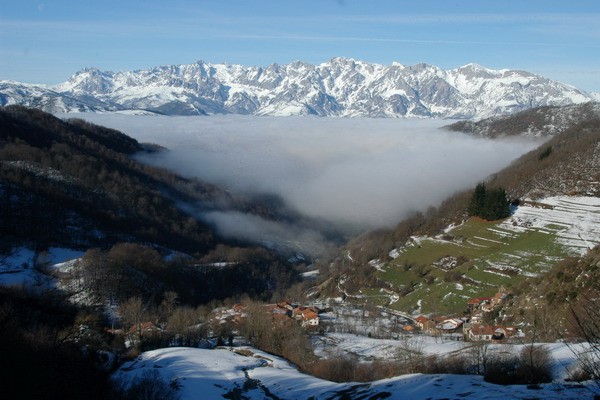
Habitat: Found on rocky alpine slopes, scree, and mountain peaks above the treeline.
This bird is characterized by its slate-grey head and chest, contrasted with warm rufous-brown streaking along its flanks and a white throat patterned with black spots. Its wings are dark brown with prominent double white wing bars, and its bill is fine and pointed with a yellow base. It is larger and stockier than its lowland cousin, the Dunnock, measuring about 15 to 18 centimeters in length.
Category
BirdsRarity
Common
Danger
1/5 · Very low
Snaps
Be the first to snap!
Alpine Accentors practice an intricate mating system where females mate with multiple males, and males help raise the offspring of different females in the group.
Because they spend so much time on mountain peaks, they are exceptionally tolerant of humans, sometimes eating crumbs right out of a quiet observer's hand.
During severe winter blizzards, they have been known to seek shelter inside high-altitude mountain refuges, castles, and monasteries.
Possesses specialized hemoglobin that binds oxygen more efficiently, allowing it to remain highly active in thin, low-oxygen mountain air.
Forms complex breeding groups of multiple males and females who cooperatively defend territory and share the duties of raising chicks.
Evades extreme winter conditions by executing short vertical migrations down mountain slopes to lower elevations rather than traveling long horizontal distances.
Feeds heavily on small insects and spiders during the warm summer months, transitioning to seeds, berries, and human food scraps in the winter.
Podisma pedestris
Preys on high-altitude insects during the summer breeding season.
Anthus spinoletta
Competes for foraging space and nesting sites in similar rocky alpine environments.

Accipiter nisus
Falls prey to aerial raptors patrolling mountainous cliffs and meadows.
No trait badges are assigned for this object yet.
No aliases listed yet.
Collections for this object will appear here as more themes are added.
Danger
1/5 · Very low
No special safety notes yet.
The easiest way to identify Alpine Accentor is to use the Snappit nature identifier app.
15-18 cm
30-35 cm
0.025-0.04 kg
3-8 years
45 km/h
Feeds heavily on small insects and spiders during the warm summer months, transitioning to seeds, berries, and human food scraps in the winter.
Found on rocky alpine slopes, scree, and mountain peaks above the treeline.
Zoom in to split clusters and explore where this object has been snapped.
Recent snaps will appear here as new observations are added.
Take the discovery with you
Snap it with Snappit to identify it, learn what makes it special, and add the discovery to your collection.




.jpg&width=800)











