





American beautyberry
Callicarpa americana
The American beautyberry is a lovely shrub that grows colorful purple berries. These berries are not only pretty but also attract birds and other animals who love to eat them!
Habitat: Forests
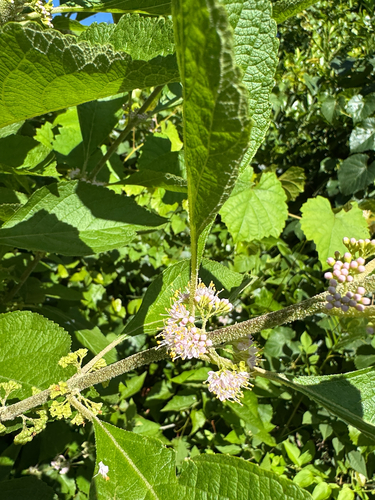
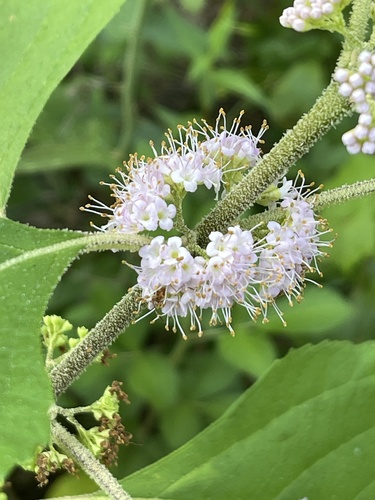
The American beautyberry has arching branches adorned with pale green, oval leaves. In fall, its most striking feature emerges: dense clusters of iridescent magenta-purple berries that tightly hug the stems, creating a vivid contrast.
Category
PlantsRarity
Common
Danger
1/5 · Very low
Snaps
35
Birds find beautyberry's colorful fruits especially tasty after the first freeze!
Its vibrant berries often remain on branches long after leaves have fallen.
Native Americans traditionally used parts of this plant for various purposes.
The name "Callicarpa" literally means "beautiful fruit" in Greek!
American beautyberry leaves can release compounds that naturally repel mosquitoes and other annoying insects.
This plant can quickly regrow from its roots, helping it bounce back after wildfires or heavy pruning.
American beautyberry can survive in dry conditions thanks to its efficient water usage and deep root system.
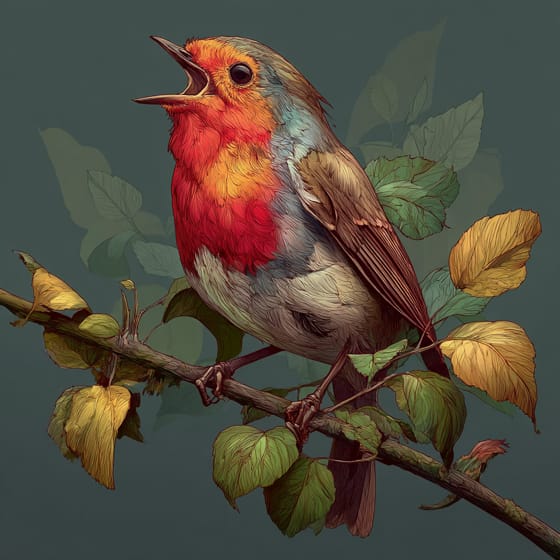
Turdus migratorius
Its berries provide important winter food.
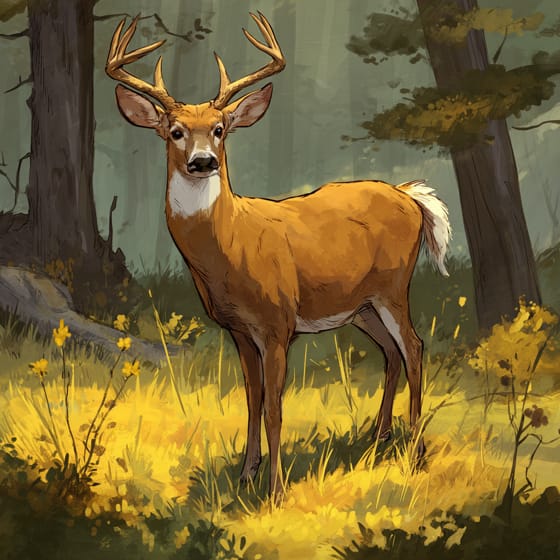
Odocoileus virginianus
Deer browse its leaves and young stems.
Apis mellifera
Bees visit its small, pinkish flowers.
A shrub is a woody plant smaller than a tree, typically with multiple stems branching from or near the ground.
Fruit-bearing plants produce fruits, which are the mature ovaries of flowering plants containing seeds.
Medicinal plants possess chemical compounds that can be used for therapeutic purposes to treat illnesses or maintain health.
Edible plants are those parts of a plant that are considered safe for human consumption.

Fall color refers to the seasonal change in foliage pigmentation, primarily in deciduous plants, displaying vibrant hues.

Describes plants that are particularly attractive and beneficial to a wide range of pollinating organisms.

Forest habitats are terrestrial environments dominated by dense tree cover, supporting a high diversity of plant and animal life.
Danger
1/5 · Very low
While beautyberries are safe to touch, it's best to look and not eat unless an adult says it's okay.
The easiest way to identify American beautyberry is to use the Snappit nature identifier app.
100-200 cm
100-200 cm
0.3-0.5 cm
Late Spring to Early Summer
No
Mild
Perennial
Zoom in to split clusters and explore where this object has been snapped.
Jun 15, 2026
Columbia Historic District IPhoto attribution
no rights reserved
License: CC0 1.0 ↗
Image may be shown cropped inside the card frame.
Jun 14, 2026
Alfred B. Maclay Gardens State ParkPhoto attribution
no rights reserved
License: CC0 1.0 ↗
Image may be shown cropped inside the card frame.

Florida, US
You might spot Anole, Eastern Box Turtle, and Golden Silk Spider.
View guide →

Georgia, US
You might spot Common Vetch, Tiny Bluet, and Carolina Crane's-Bill.
View guide →

Georgia, US
You might spot Gulf Fritillary, Anole, and American Beautyberry.
View guide →

Alabama, US
You might spot American Beautyberry, White-Tailed Deer, and Peppervine.
View guide →

Arkansas, US
You might spot Widow's-Cross, Yucca Giant-Skipper, and Outis Skipper.
View guide →

Arkansas, US
You might spot Pear-Shaped Puffball and American Beautyberry.
View guide →
Take the discovery with you
Snap it with Snappit to identify it, learn what makes it special, and add the discovery to your collection.








.jpg&width=800)



_001.jpg&width=800)



