





American Rubyspot
Hetaerina americana
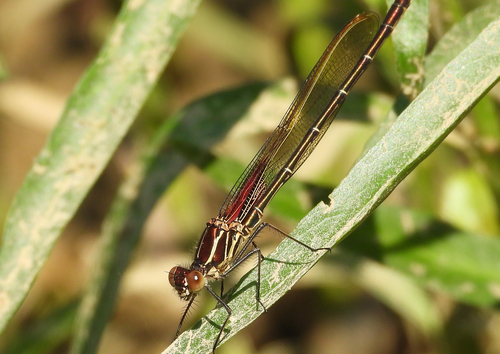
The American Rubyspot is a beautiful dragonfly with bright red spots on its wings. It loves to flutter around near water, showing off its colors to everyone who sees it.
Habitat: Wetlands
The American Rubyspot is a slender damselfly, instantly recognized by the brilliant, ruby-red spots at the base of its clear wings, especially prominent in males. Its body is metallic green to bronze, contrasting with a pale underside, making it distinctive among other damselflies.
Category
InsectsRarity
Common
Danger
1/5 · Very low
Snaps
6
Each of its giant eyes is made of thousands of tiny lenses!
Its babies live underwater for years before they become flying adults!
Males flash their amazing red wing spots to scare off other males!
They can grab prey right out of the air while flying super fast!
American Rubyspot can quickly dart and hover thanks to two pairs of independently controlled wings that help it chase flying insects.
American Rubyspot nymphs can breathe underwater using specialized gills at their tail, allowing them to hunt and grow safely.
American Rubyspot has dazzling ruby-red wing patches that help males attract mates and defend their territory from rivals.
Eats small flying insects, like mosquitoes and gnats.
Age differences: Nymphs eat aquatic invertebrates; adults eat flying insects.
Culex pipiens
Its nymphs and adults hunt this insect near water.
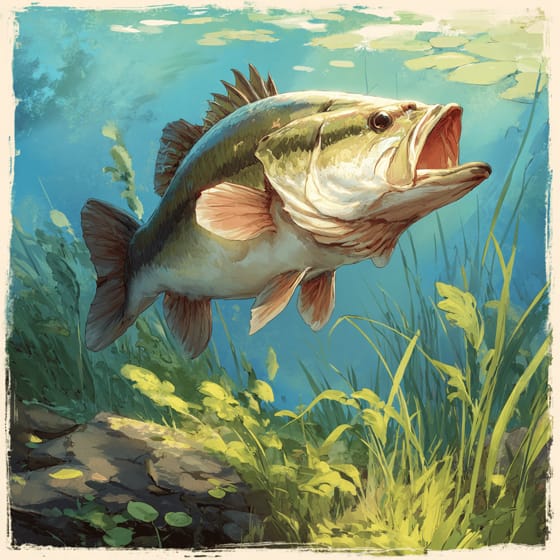
Micropterus salmoides
Adults and nymphs are a food source for this fish.
.jpg&width=800)
Tyrannus tyrannus
Flying adults are preyed upon by this aerial hunter.
Marked with spots or patches of a different color.
Solitary animals live alone for most of their lives, only interacting with others for mating or parental care.
Aerial creatures spend a significant portion of their lives airborne, utilizing flight for various activities such as hunting, migration, or nesting.
Colorful describes organisms or objects displaying a wide range of bright and distinct colors.

This trait identifies organisms whose diet primarily consists of insects and other small invertebrates.

This habitat trait identifies species found in wetlands, which are areas of land saturated with water, either permanently or seasonally, including marshes, swamps, and bogs.

Diurnal animals are primarily active during daylight hours, typically resting or sleeping at night.

Freshwater habitats include non-saline aquatic environments such as rivers, lakes, ponds, and wetlands, vital for numerous species.

This trait identifies organisms that exhibit exceptional swiftness in movement for hunting, escape, or travel.

Describes organisms that transfer pollen, enabling the fertilization and reproduction of plants.
No aliases listed yet.
Danger
1/5 · Very low
Be gentle and quiet around dragonflies so you don't scare them away.
The easiest way to identify American Rubyspot is to use the Snappit nature identifier app.
50-70 mm
35-45 mm
20-60 days
15 km/h
Eats small flying insects, like mosquitoes and gnats.
Wetlands
Pursuit
Zoom in to split clusters and explore where this object has been snapped.
Jun 6, 2026
Hocking Valley Scenic Railway Historic DistrictPhoto attribution
(c) Anna Hess, some rights reserved (CC BY)
License: CC BY 4.0 ↗
Image may be shown cropped inside the card frame.

South Carolina, US
You might spot Great Blue Heron, Spanish Moss, and Cahaba Lily.
View guide →

Virginia, US
You might spot Canada Goose, Duck, and Great Blue Heron.
View guide →

Virginia, US
You might spot Duck, Canada Goose, and Red Deadnettle.
View guide →
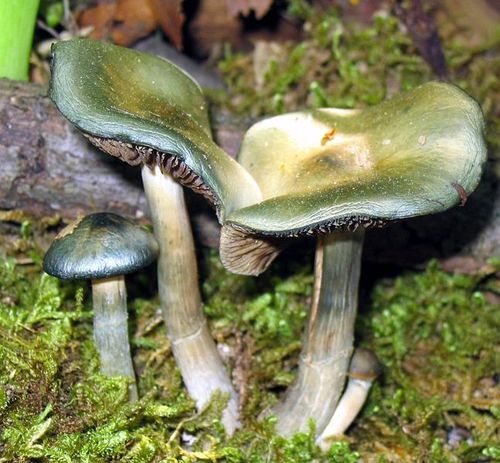
Ohio, US
You might spot Psychedelic Ovoid Mushroom and Powdered Dancer.
View guide →

US
You might spot Creosote Bush, Great-Tailed Grackle, and Ocotillo.
View guide →

Nebraska, US
You might spot Canada Goose, Blue Dasher, and Eastern Pondhawk.
View guide →
Take the discovery with you
Snap it with Snappit to identify it, learn what makes it special, and add the discovery to your collection.








.jpg&width=800)



