.jpg&width=800)





Eastern Kingbird
Tyrannus tyrannus
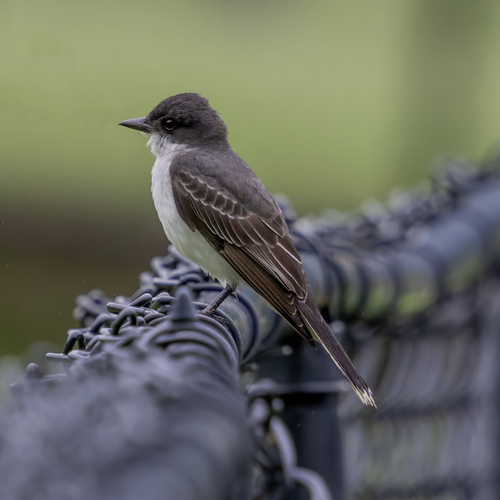
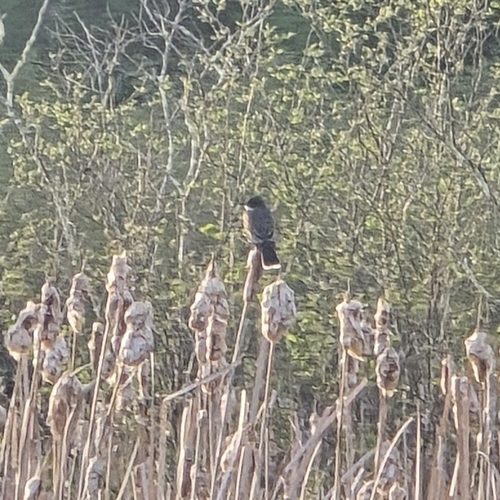
The Eastern Kingbird is a lively bird with a black head and white belly. It loves to catch insects in mid-air and can often be seen perched on fences or wires, watching for its next meal.
Habitat: Open fields and gardens
The Eastern Kingbird has a sleek, dark gray back with a contrasting pure white belly and a black tail tipped distinctly in white. Its head is dark black, often hiding a small, vibrant orange-red crown patch. This upright posture and clean markings make it easily identifiable.
Category
BirdsRarity
Common
Danger
1/5 · Very low
Snaps
77
A tiny, fiery orange patch hides on top of their head, usually only seen when they're excited!
Eastern Kingbirds can sometimes eat small fruits, making them more than just insect-eaters!
Their nest is often built on a horizontal tree branch, far from the trunk for safety!
They are called 'kingbirds' because they bravely chase much larger birds away from their nests!
Eastern Kingbirds can bravely chase much larger birds like hawks because of their fierce territorial instinct, which helps them protect their nest.
Eastern Kingbirds can catch flying insects with incredible agility in mid-air, because of their sharp eyesight and swift, acrobatic flight.
Eastern Kingbirds have a hidden patch of fiery orange-red feathers on their head that only shows when they're excited, helping them display during courtship or confrontation.
These birds primarily feast on flying insects, expertly caught mid-air, but also enjoy tasty berries!
Anax junius
A primary prey item.

Bombus impatiens
Kingbirds catch these bees mid-flight.
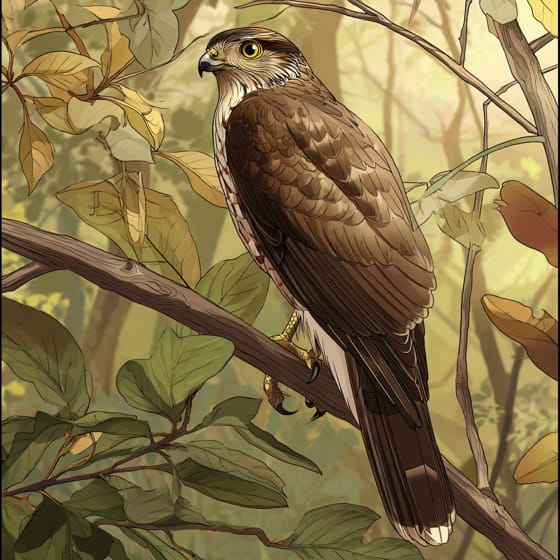
Accipiter cooperii
May prey on kingbird adults or fledglings.
Thamnophis sirtalis
Can raid nests for eggs and nestlings.

Morus rubra
Kingbirds consume its ripe fruits.
Feathered describes animals, primarily birds, possessing a covering of feathers.
Social animals live in organized groups, cooperating for survival benefits such as foraging, defense, and raising offspring.
Grassland habitats are terrestrial biomes dominated by grasses and herbaceous plants, supporting a variety of grazing animals.
This trait identifies organisms whose diet primarily consists of insects and other small invertebrates.

Diurnal animals are primarily active during daylight hours, typically resting or sleeping at night.

This trait identifies organisms that exhibit exceptional swiftness in movement for hunting, escape, or travel.

Migratory animals undertake seasonal movements from one region to another, typically in response to changes in climate or food availability.

This habitat trait indicates species that can coexist with humans in urban and suburban environments, utilizing man-made structures and green spaces.
No aliases listed yet.
Danger
1/5 · Very low
Enjoy watching birds from a distance and don't disturb their nests.
The easiest way to identify Eastern Kingbird is to use the Snappit nature identifier app.
20-23 cm
33-38 cm
0.033-0.055 kg
2-10 years
50 km/h
These birds primarily feast on flying insects, expertly caught mid-air, but also enjoy tasty berries!
Open fields and gardens
Zoom in to split clusters and explore where this object has been snapped.
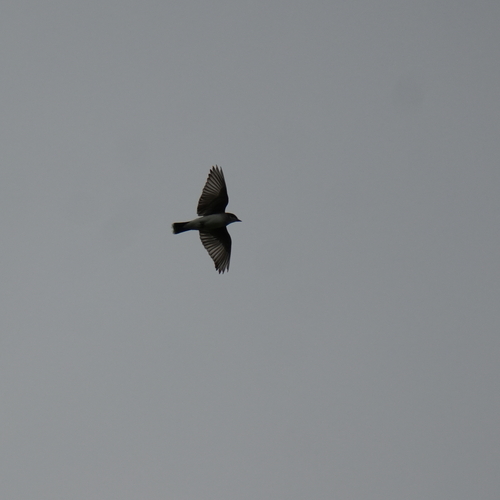
Jun 6, 2026
Reeves-Reed ArboretumPhoto attribution
(c) foxsu, some rights reserved (CC BY)
License: CC BY 4.0 ↗
Image may be shown cropped inside the card frame.
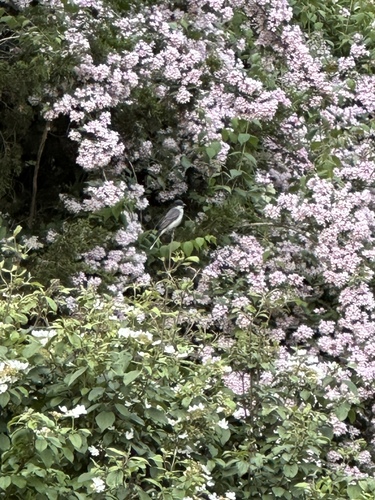
Jun 2, 2026
Hamburg Bridge Historic DistrictPhoto attribution
(c) Rochelle Davis, some rights reserved (CC BY)
License: CC BY 4.0 ↗
Image may be shown cropped inside the card frame.
May 25, 2026
Murphey Candler ParkPhoto attribution
(c) Dan Vickers, some rights reserved (CC BY)
License: CC BY 4.0 ↗
Image may be shown cropped inside the card frame.
May 20, 2026
Orford Street Historic DistrictPhoto attribution
(c) Troi Perkins, some rights reserved (CC BY)
License: CC BY 4.0 ↗
Image may be shown cropped inside the card frame.

New York, US
You might spot Sundial Lupine, Spotted Horsemint, and New Jersey Tea.
View guide →

Ohio, US
You might spot Eastern Fox Squirrel and Spotted Lanternfly.
View guide →

Georgia, US
You might spot Common Vetch, Tiny Bluet, and Carolina Crane's-Bill.
View guide →

Wisconsin, US
You might spot Turkey, White-Tailed Deer, and Dame's Rocket.
View guide →

Vermont, US
You might spot Japanese Knotweed and Red-Bellied Woodpecker.
View guide →

Louisiana, US
You might spot Brown Anole, White Ibis, and Duck.
View guide →
Take the discovery with you
Snap it with Snappit to identify it, learn what makes it special, and add the discovery to your collection.




.jpg&width=800)








