





Baldwin'S Flatsedge
cyperus croceus
Baldwin's Flatsedge is a tall, grass-like plant that grows in wet areas. It provides a cozy home for many small creatures and is fun to spot during nature walks!
Habitat: Wetlands, marshes, and along the edges of rivers and lakes.
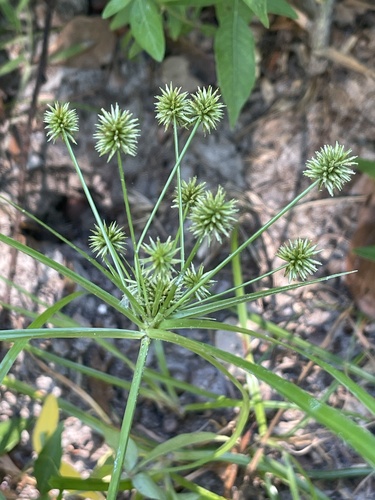
The Baldwin'S Flatsedge has slender, grass-like leaves and distinctive triangular stems. Its flowers are tightly clustered spikelets, typically reddish-brown to golden-brown, forming a dense, rounded head at the top of the stem.
Category
PlantsRarity
Common
Danger
0/5 · No known danger
Snaps
1
Its dried stems and leaves were sometimes historically woven into mats or baskets by indigenous peoples!
Its scientific name, Cyperus croceus, means 'sedge' and 'saffron-colored' for its spikelets!
Many people mistake this plant for grass, but you can feel its distinct triangular stem!
This common plant is found on almost every continent, proving it's a true global traveler!
Baldwin'S Flatsedge can spread quickly underground using special roots called rhizomes, helping it colonize new areas.
Baldwin'S Flatsedge has unique triangular stems that provide extra rigidity and help it stand tall in windy conditions.
Baldwin'S Flatsedge produces many tiny seeds that are easily dispersed by wind and water, helping it reproduce effectively.
Anas platyrhynchos
Seeds are a food source for these waterfowl.
Schistocerca americana
Larvae and adults feed on the foliage.
Hyla cinerea
Provides cover in moist, weedy habitats.
Social animals live in organized groups, cooperating for survival benefits such as foraging, defense, and raising offspring.
This trait characterizes organisms whose diet consists entirely or primarily of plant material.
Describes organisms that break down dead organic material, recycling nutrients back into the ecosystem.
Diurnal animals are primarily active during daylight hours, typically resting or sleeping at night.

Aquatic habitats encompass environments where organisms live predominantly in water, including oceans, rivers, lakes, and wetlands.
Danger
0/5 · No known danger
No special safety notes yet.
The easiest way to identify Baldwin'S Flatsedge is to use the Snappit nature identifier app.
30-90 cm
0.5-1.5 cm
Summer to fall
No
None
Perennial
Wind
Zoom in to split clusters and explore where this object has been snapped.
Jun 14, 2026
Alfred B. Maclay Gardens State ParkPhoto attribution
no rights reserved
License: CC0 1.0 ↗
Image may be shown cropped inside the card frame.
Take the discovery with you
Snap it with Snappit to identify it, learn what makes it special, and add the discovery to your collection.










.jpg&width=800)



_001.jpg&width=800)




