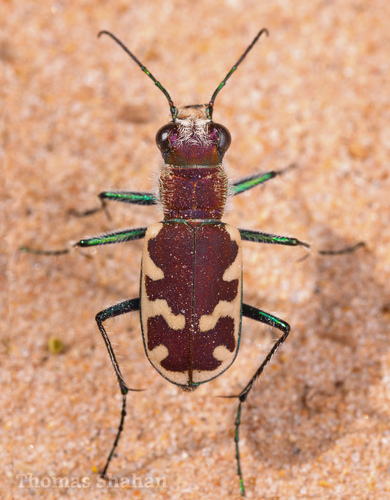


Big Sand Tiger Beetle
cicindela formosa
The Big Sand Tiger Beetle is an iconic, highly active predatory insect known for its blinding speed and striking, metallic coloration. Commonly found darting across open, sunny patches of dry sand, this beetle is a ferocious visual hunter that preys on a wide variety of small arthropods. Both as highly mobile adults and as sit-and-wait burrowing larvae, they are exceptionally adapted to some of the harshest, most heat-exposed sandy environments in North America. These beetles play a critical role as top invertebrate predators in fragile dune ecosystems, keeping populations of smaller insects in check. Spotting one is always an exciting challenge, as their incredible reflexes and rapid flight make them highly elusive to nature enthusiasts.
Habitat: Typically found in open, dry sandy areas such as sand dunes, blowouts, sandy roadsides, and pine barrens.
Adults typically measure between 1.5 to 1.9 cm in length and exhibit a robust, slightly flattened body. They are characterized by a brilliant metallic bronze, copper, or deep purple-red dorsal color, adorned with bold, creamy-white markings along the margins of their elytra. They possess large, prominent compound eyes that afford them excellent vision, and massive, overlapping sickle-shaped mandibles used to seize prey. Their long, slender legs are built for rapid running, often appearing iridescent green or blue under direct sunlight.
Category
InsectsRarity
Common
Danger
1/5 · Very low
Snaps
3
During their high-speed sprints, they run so fast that their photoreceptors cannot gather enough light, forcing them to stop momentarily to locate their prey again.
The larvae have a pair of specialized hooks on the back of their fifth abdominal segment that anchors them into their vertical burrows, preventing them from being dragged out by larger prey.
To survive the extreme heat of mid-day sand, they engage in 'stilting,' standing tall on their long legs to keep their bodies in the cooler air stream above the hot ground.
Runs at such high speeds that its eyes cannot process light fast enough, causing temporary blindness during the chase.
Larvae possess specialized hooks on their abdomen to anchor themselves in their sand burrows, preventing large prey from pulling them out.
Adults can stand high on their long legs to elevate their bodies above the scorching hot sand surface to prevent overheating.
Both adults and larvae are opportunistic carnivores that feed primarily on smaller ground-dwelling insects, spiders, and ants.
Anthrax georgicus
Larvae are heavily parasitized by the larvae of bee flies, which find the tiger beetle burrows and lay eggs near them.
Formica exsectoides
Adults hunt and consume various species of ants running across the sand.

Promachus rufipes
Preyed upon by large robber flies that intercept the beetles during short flights.
No trait badges are assigned for this object yet.
No aliases listed yet.
Collections for this object will appear here as more themes are added.
Danger
1/5 · Very low
No special safety notes yet.
The easiest way to identify Big Sand Tiger Beetle is to use the Snappit nature identifier app.
1+ cm
3+ cm
0.0001+ kg
2+ years
9 km/h
Both adults and larvae are opportunistic carnivores that feed primarily on smaller ground-dwelling insects, spiders, and ants.
Typically found in open, dry sandy areas such as sand dunes, blowouts, sandy roadsides, and pine barrens.
Zoom in to split clusters and explore where this object has been snapped.

Michigan, US
You might spot Bladder Campion, Bearberry, and Common Milkweed.
View guide →
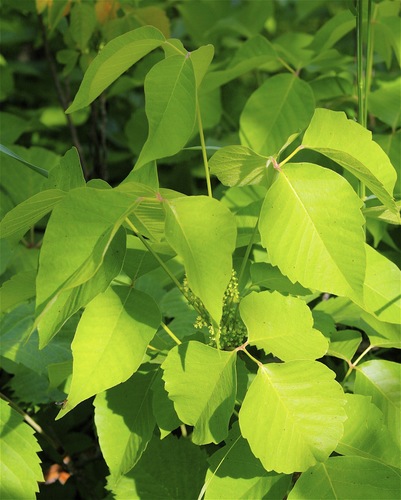
North Dakota, US
You might spot Western Poison Ivy, Wild Licorice, and Leadplant.
View guide →

Connecticut, US
You might spot Common Eastern Bumble Bee and Red-Tailed Hawk.
View guide →

Alabama, US
You might spot Eastern Newt, Six-Lined Racerunner, and Giant Floater.
View guide →

Nebraska, US
You might spot Nine-Spotted Lady Beetle and Convergent Lady Beetle.
View guide →
Take the discovery with you
Snap it with Snappit to identify it, learn what makes it special, and add the discovery to your collection.












.jpg&width=800)




