.jpg&width=800)





Spotted Lanternfly
Lycorma delicatula
The Spotted Lanternfly is a colorful insect with beautiful spots. It can be found on trees and plants, and it loves to suck the sap from them, which can make the plants unhealthy.
Habitat: Urban areas, forests
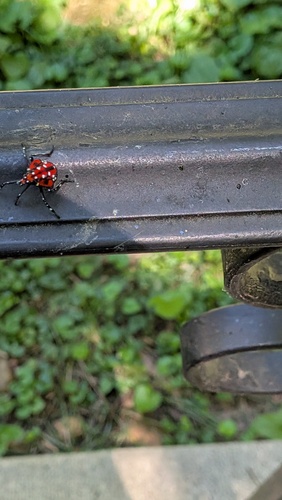
The Spotted Lanternfly has unique grey forewings covered in small black spots, contrasting sharply with its vibrant red hindwings that feature black and white stripes. Its distinct pattern and bright colours make it easily recognizable from other planthoppers.
Category
InsectsRarity
Common
Danger
1/5 · Very low
Snaps
324
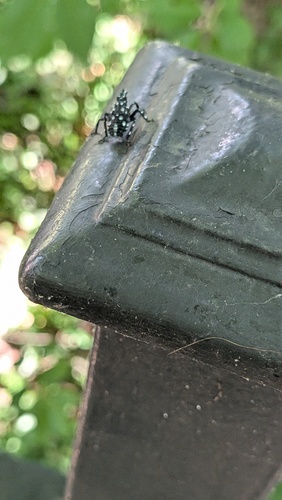
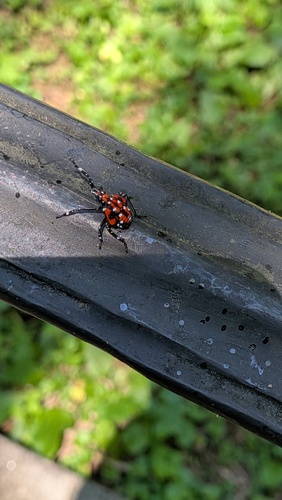
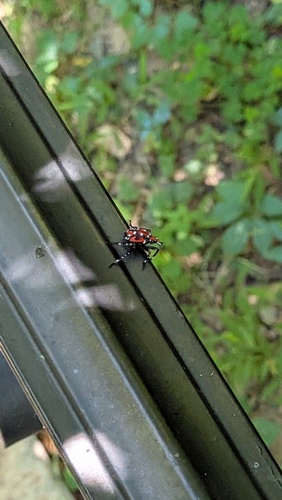
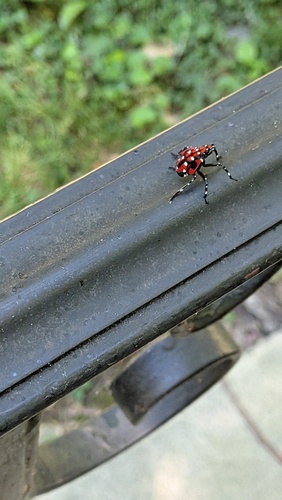
Wow! Baby lanternflies are black with white spots and turn bright red later!
Wow! Spotted Lanternflies can ride on cars and trains to travel to new places!
Wow! Their eggs look like a smear of mud or caulk on trees and rocks!
Wow! They squirt a sweet, sticky liquid called honeydew that coats plants!
Spotted Lanternfly can reveal bright red hindwings to startled predators because of its unique wing pattern that helps them deter attacks.
Spotted Lanternfly has specialized glands that produce honeydew because of its sap-based diet that helps them excrete excess sugar.
Spotted Lanternfly can leap surprisingly far because of its powerful legs that help them quickly escape danger or find new feeding spots.
Spotted Lanternfly has forewings that blend with tree bark because of its mottled grey colouration that helps them hide from predators.
These insects sip sugary sap from many plants, like trees and grapevines, using a straw-like mouth.
Age differences: Nymphs feed on a wider variety of plants, moving to woody hosts as they mature.
Ailanthus altissima
Its primary host plant and preferred food source.
Vitis vinifera
Causes significant damage to vineyards and grape crops.
Anastatus orientalis
A tiny wasp that lays its eggs inside lanternfly eggs.
Fumago vagans
This fungus grows on the sticky honeydew excreted by lanternflies.
Marked with spots or patches of a different color.
Solitary animals live alone for most of their lives, only interacting with others for mating or parental care.
Colorful describes organisms or objects displaying a wide range of bright and distinct colors.
This trait characterizes organisms whose diet consists entirely or primarily of plant material.

Forest habitats are terrestrial environments dominated by dense tree cover, supporting a high diversity of plant and animal life.

Diurnal animals are primarily active during daylight hours, typically resting or sleeping at night.

This trait identifies organisms that exhibit exceptional swiftness in movement for hunting, escape, or travel.

This habitat trait indicates species that can coexist with humans in urban and suburban environments, utilizing man-made structures and green spaces.

Vampiric organisms are those that obtain nutrients by feeding on the blood or bodily fluids of other animals.

Invasive species are non-native organisms that cause harm to the environment, economy, or human health.
No aliases listed yet.
Danger
1/5 · Very low
Don't touch or pick up insects without asking an adult first.
The easiest way to identify Spotted Lanternfly is to use the Snappit nature identifier app.
40-50 mm
20-30 mm
150-180 days
These insects sip sugary sap from many plants, like trees and grapevines, using a straw-like mouth.
Urban areas, forests
Foraging
6
Zoom in to split clusters and explore where this object has been snapped.
Jun 20, 2026
Cleveland ParkPhoto attribution
(c) Martin Kalfatovic, some rights reserved (CC BY)
License: CC BY 4.0 ↗
Image may be shown cropped inside the card frame.
Jun 20, 2026
Cleveland ParkPhoto attribution
(c) Martin Kalfatovic, some rights reserved (CC BY)
License: CC BY 4.0 ↗
Image may be shown cropped inside the card frame.
Jun 20, 2026
Cleveland ParkPhoto attribution
(c) Martin Kalfatovic, some rights reserved (CC BY)
License: CC BY 4.0 ↗
Image may be shown cropped inside the card frame.
Jun 20, 2026
Cleveland ParkPhoto attribution
(c) Martin Kalfatovic, some rights reserved (CC BY)
License: CC BY 4.0 ↗
Image may be shown cropped inside the card frame.
Jun 20, 2026
Cleveland ParkPhoto attribution
(c) Martin Kalfatovic, some rights reserved (CC BY)
License: CC BY 4.0 ↗
Image may be shown cropped inside the card frame.

New Jersey, US
You might spot Garlic Mustard, Sensitive Fern, and Common Mugwort.
View guide →

Virginia, US
You might spot Eastern Box Turtle and White-Tailed Deer.
View guide →

Ohio, US
You might spot Eastern Fox Squirrel and Spotted Lanternfly.
View guide →

Rhode Island, US
You might spot Common Mugwort, Duck, and Azure Bluet.
View guide →

Rhode Island, US
You might spot Common Eastern Bumble Bee and Osprey.
View guide →

Maryland, US
You might spot Crane-Fly Orchid, Fragile Forktail, and Ebony Jewelwing.
View guide →
Take the discovery with you
Snap it with Snappit to identify it, learn what makes it special, and add the discovery to your collection.










.jpg&width=800)
