.jpg&width=800)





Blue-bellied Roller
Coracias cyanogaster
The Blue-bellied Roller is a colorful bird with bright blue and green feathers. It loves to fly high in the sky and can often be seen gliding gracefully over trees and fields.
Habitat: Savannas
The Blue-bellied Roller has a striking brown head and back contrasting with a vivid, sky-blue belly, throat, and rump. Its flight feathers are deep purplish-blue with a black trailing edge, making it truly stand out.
Category
BirdsRarity
Common
Danger
1/5 · Very low
Snaps
Be the first to snap!
Both parent rollers share incubating eggs and feeding their hungry chicks.
Their name "Roller" comes from their spectacular tumbling courtship flights!
They can even catch and eat venomous scorpions, carefully removing the sting first!
They often nest inside abandoned tree hollows or old woodpecker nests.
Blue-bellied Rollers can perform incredible aerial dives to catch insects because they have strong, agile wings.
Blue-bellied Rollers flash bright blue wing patches during flight that helps them warn off rivals or attract mates.
Blue-bellied Rollers have excellent eyesight that helps them spot tiny insects from high branches.
An insect-eating bird that hunts bugs from high perches in open woodlands.
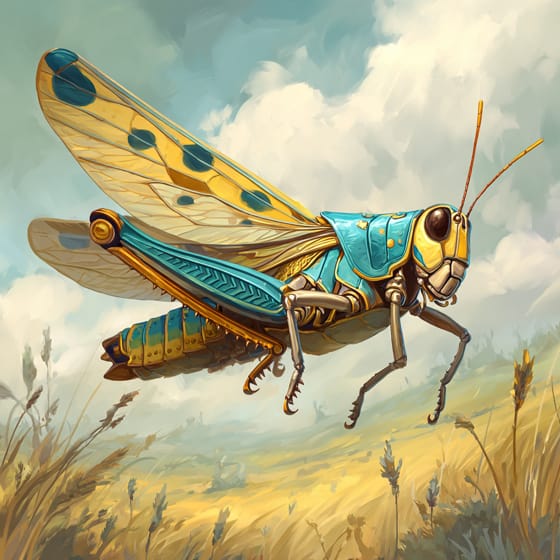
Locusta migratoria
eats these common insects from the air or ground.
Campethera permista
uses its abandoned tree cavities for nesting.
Buteo rufofuscus
a common bird of prey and potential predator.
Feathered describes animals, primarily birds, possessing a covering of feathers.
Aerial creatures spend a significant portion of their lives airborne, utilizing flight for various activities such as hunting, migration, or nesting.
Colorful describes organisms or objects displaying a wide range of bright and distinct colors.
Gliding animals move through the air by launching themselves and maintaining flight with specialized body structures, without flapping wings.

This trait identifies organisms whose diet primarily consists of insects and other small invertebrates.

This habitat trait denotes species native to savannas, which are grasslands with scattered trees, typically found in tropical or subtropical regions with distinct wet and dry seasons.

Diurnal animals are primarily active during daylight hours, typically resting or sleeping at night.

This trait identifies organisms that exhibit exceptional swiftness in movement for hunting, escape, or travel.
No aliases listed yet.
Danger
1/5 · Very low
Always watch birds from a distance and do not try to touch them.
The easiest way to identify Blue-bellied Roller is to use the Snappit nature identifier app.
28-30 cm
55-65 cm
0.1-0.15 kg
8-10 years
50 km/h
An insect-eating bird that hunts bugs from high perches in open woodlands.
Savannas
Zoom in to split clusters and explore where this object has been snapped.
Recent snaps will appear here as new observations are added.
Take the discovery with you
Snap it with Snappit to identify it, learn what makes it special, and add the discovery to your collection.




.jpg&width=800)








