female.JPG&width=800)





bog myrtle
Myrica gale
Bog myrtle is a lovely green shrub that grows in wet places like marshes. It has small, fragrant leaves that can smell sweet and spicy, making it special in nature!
Habitat: Wetlands
The bog myrtle is a bushy deciduous shrub with slender, reddish-brown stems and narrow, grey-green leaves. Its tiny, yellowish-brown flowers appear as distinct catkins before the leaves emerge in early spring. It often forms dense, aromatic thickets.
Category
PlantsRarity
Common
Danger
1/5 · Very low
Snaps
4
Ancient Viking warriors used bog myrtle to keep bugs off!
Before hops, bog myrtle gave beer its bubbly, bitter taste!
Its leaves create a bright yellow dye for clothes and wool!
This plant can grow in bogs where almost nothing else survives!
Bog myrtle has special helpers in its roots that grab nutrients from tough, watery soils, helping it grow strong where others can't.
Bog myrtle's leaves are packed with fragrant oils that naturally shoo away biting insects, protecting itself and anyone nearby.
This plant's leaves were historically used to give beer a unique flavor before hops were common, making it an ancient 'spice' rack.
Frankia alni
fixes nitrogen in its root nodules
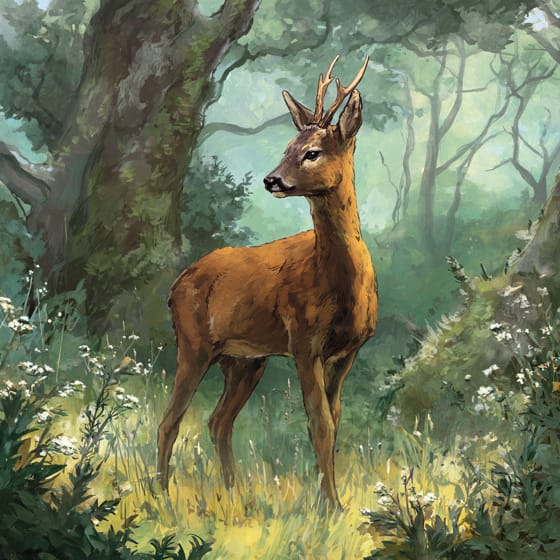
Capreolus capreolus
browses on its leaves and young shoots
Anas platyrhynchos
provides nesting cover in wet habitats
Aromatic plants produce and emit fragrant volatile organic compounds, often for defense or to attract pollinators.
A shrub is a woody plant smaller than a tree, typically with multiple stems branching from or near the ground.
Medicinal plants possess chemical compounds that can be used for therapeutic purposes to treat illnesses or maintain health.
Describes plants that are particularly attractive and beneficial to a wide range of pollinating organisms.

This habitat trait identifies species found in wetlands, which are areas of land saturated with water, either permanently or seasonally, including marshes, swamps, and bogs.
Danger
1/5 · Very low
Always explore plants with an adult and don't touch anything you don't know.
The easiest way to identify bog myrtle is to use the Snappit nature identifier app.
50-150 cm
50-150 cm
1-3 cm
Early spring (March-April)
Yes
None
Perennial
Zoom in to split clusters and explore where this object has been snapped.

New York, US
You might spot Coral, Sea Lion, and African Penguin.
View guide →
New York, US
You might spot Sand Tiger Shark, African Penguin, and Sea Lion.
View guide →

Maine, US
You might spot American Toad, Spring Peeper, and Eastern Teaberry.
View guide →

New York, US
You might spot White-Tailed Deer, Monarch, and Duck.
View guide →
Take the discovery with you
Snap it with Snappit to identify it, learn what makes it special, and add the discovery to your collection.









.jpg&width=800)



_001.jpg&width=800)




