





Boreal Chickadee
Poecile hudsonicus
The Boreal Chickadee is a small, cheerful bird with a black cap and a soft brown body. They love to flit around in trees and are often found in northern forests, singing sweet songs.
Habitat: Forests
The Boreal Chickadee has a distinct brown cap on its head and reddish-brown flanks, setting it apart from other chickadees. Its back is grey, and its cheeks are a clear white, creating a neat contrast with its darker cap.
Category
BirdsRarity
Common
Danger
1/5 · Very low
Snaps
1
Boreal Chickadees often mate for life and stay together year-round!
Their fluffy feathers make them look bigger to trick predators!
They sometimes eat snow instead of flying to find water in winter!
They use specific alarm calls to warn others about different types of danger!
Boreal Chickadee can lower its body temperature at night, a trick called torpor, that helps them survive freezing boreal winters.
Boreal Chickadees can hide thousands of seeds and insects, a skill that helps them find food when supplies are scarce.
Boreal Chickadees have strong feet and legs that help them cling upside down to branches while searching for tiny insects.
Boreal Chickadees can dig out nesting holes in soft, rotting wood that helps them create safe nurseries for their chicks.
These tiny birds feast on insects, spiders, and conifer seeds, especially during the cold winter months!

Accipiter striatus
A swift forest predator that actively hunts small birds like chickadees.
Picea mariana
Relies on its cones for seeds and its dense branches for winter shelter.
Choristoneura fumiferana
Consumes larvae and pupae of this moth, helping to control its populations.
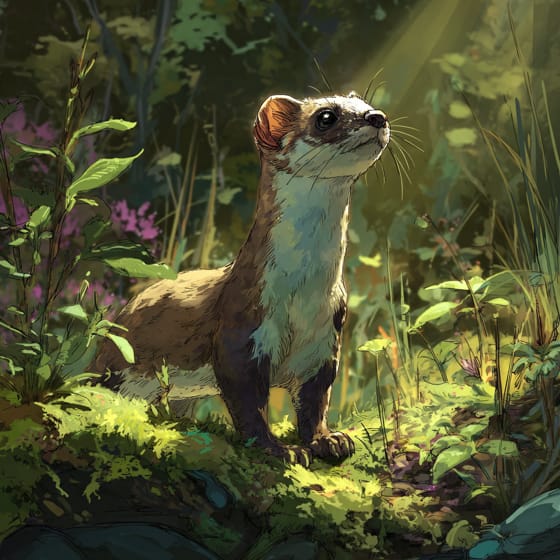
Mustela erminea
A cunning small mammal that can hunt birds even in their tree cavities.
Feathered describes animals, primarily birds, possessing a covering of feathers.
Social animals live in organized groups, cooperating for survival benefits such as foraging, defense, and raising offspring.
This trait identifies organisms whose diet includes both plant and animal matter.
Singing animals produce complex vocalizations, often for purposes of attracting mates, defending territory, or communicating within their species.

Arboreal animals live primarily in trees, utilizing them for shelter, food, and protection from predators.

Forest habitats are terrestrial environments dominated by dense tree cover, supporting a high diversity of plant and animal life.

Diurnal animals are primarily active during daylight hours, typically resting or sleeping at night.
No aliases listed yet.
Danger
1/5 · Very low
Enjoy watching birds from a distance and don't try to touch them.
The easiest way to identify Boreal Chickadee is to use the Snappit nature identifier app.
12.5-14 cm
19-22 cm
0.009-0.012 kg
2-5 years
55 km/h
These tiny birds feast on insects, spiders, and conifer seeds, especially during the cold winter months!
Forests
Zoom in to split clusters and explore where this object has been snapped.
Take the discovery with you
Snap it with Snappit to identify it, learn what makes it special, and add the discovery to your collection.





.jpg&width=800)








