





White-winged Dove
Zenaida asiatica
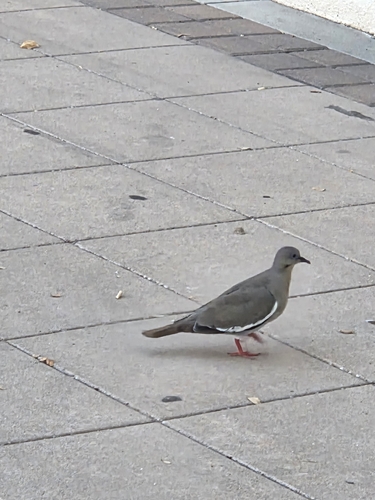
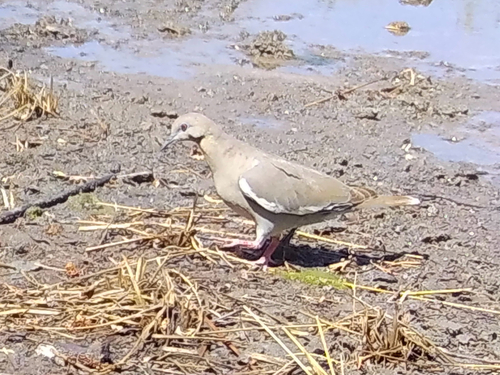
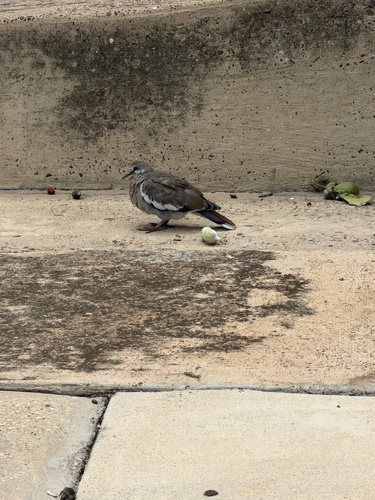
The White-winged Dove is a beautiful bird with soft gray feathers and striking white wing patches. They are often seen in gardens and parks, making gentle cooing sounds that are very soothing.
Habitat: Urban areas, Desert
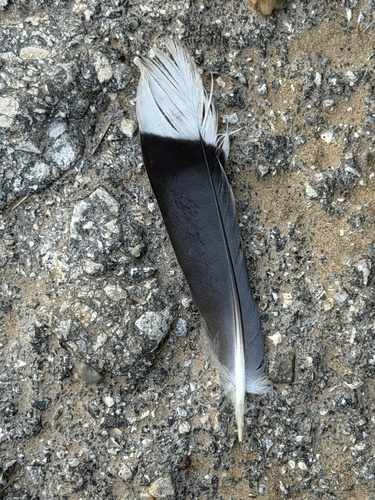
The White-winged Dove is a medium-sized, plump dove, distinct for the bright white patch on the edge of each wing, clearly visible in flight or at rest. It also has a striking blue eye-ring and a small black line beneath the eye.
Category
BirdsRarity
Common
Danger
1/5 · Very low
Snaps
37
Chili peppers don't bother them; doves lack the receptors for capsaicin!
They can travel over 50 miles in a single day to find water!
They often build flimsy nests, so eggs can sometimes be seen through the bottom!
White-winged Doves are one of the few birds that drink by sucking up water like a straw!
White-winged Doves can drink slightly saline water that helps them survive in arid desert environments.
White-winged Doves can safely eat spiny cactus fruits and seeds because they have tough beaks and digestive systems.
White-winged Doves have specialized wing feathers that create a unique whistling sound when they fly fast.
These doves mainly eat seeds and fruits from plants, including some thorny desert cacti!

Carnegiea gigantea
Consumes the nutritious fruit and seeds, aiding seed dispersal.
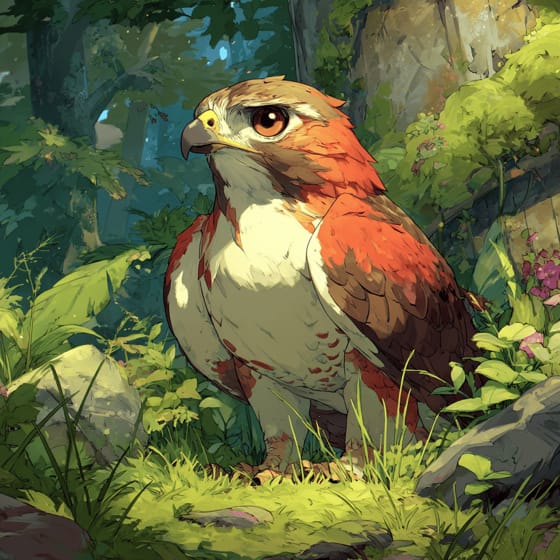
Buteo jamaicensis
A common aerial predator of adult doves and nestlings.
Opuntia engelmannii
Feeds on the juicy pads and fruits, especially in arid areas.
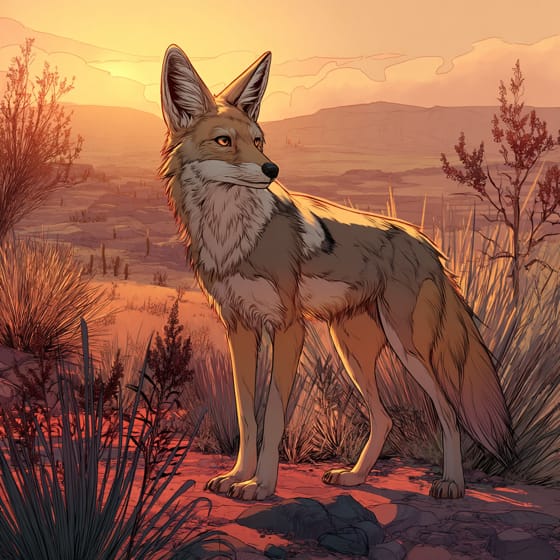
Canis latrans
Preys on doves, particularly near water sources.
Feathered describes animals, primarily birds, possessing a covering of feathers.
Social animals live in organized groups, cooperating for survival benefits such as foraging, defense, and raising offspring.
Singing animals produce complex vocalizations, often for purposes of attracting mates, defending territory, or communicating within their species.
This trait characterizes organisms whose diet consists entirely or primarily of plant material.

Desert habitats are arid regions characterized by extremely low precipitation and often extreme temperatures, supporting specialized flora and fauna.

Diurnal animals are primarily active during daylight hours, typically resting or sleeping at night.

This habitat trait indicates species that can coexist with humans in urban and suburban environments, utilizing man-made structures and green spaces.
No aliases listed yet.
Danger
1/5 · Very low
Enjoy watching birds from a distance and do not try to touch or chase them.
The easiest way to identify White-winged Dove is to use the Snappit nature identifier app.
29-31 cm
48-53 cm
0.12-0.17 kg
7-10 years
70 km/h
These doves mainly eat seeds and fruits from plants, including some thorny desert cacti!
Urban areas, Desert
Zoom in to split clusters and explore where this object has been snapped.
Jun 11, 2026
Mesilla PlazaPhoto attribution
(c) Suanne Pyle, some rights reserved (CC BY)
License: CC BY 4.0 ↗
Image may be shown cropped inside the card frame.
Jun 1, 2026
Las Vegas High School Neighborhood Historic DistrictPhoto attribution
(c) Katrina Smith, some rights reserved (CC BY)
License: CC BY 4.0 ↗
Image may be shown cropped inside the card frame.
May 23, 2026
Fort McIntoshPhoto attribution
(c) Ian McFaul, some rights reserved (CC BY)
License: CC BY 4.0 ↗
Image may be shown cropped inside the card frame.
May 23, 2026
Fort McIntoshPhoto attribution
(c) Ian McFaul, some rights reserved (CC BY)
License: CC BY 4.0 ↗
Image may be shown cropped inside the card frame.

New Mexico, US
You might spot Tree Cholla, Colorado Pinyon, and House Finch.
View guide →

Colorado, US
You might spot Common Side-Blotched Lizard and Eastern Collared Lizard.
View guide →

Texas, US
You might spot Eastern Fox Squirrel and Great-Tailed Grackle.
View guide →

Alabama, US
You might spot Painted Bunting, House Finch, and Red-Shouldered Hawk.
View guide →

Arizona, US
You might spot Great-Tailed Grackle, Stinknet, and Northern Mockingbird.
View guide →

New Mexico, US
You might spot White-Winged Dove and Silverleaf Nightshade.
View guide →
Take the discovery with you
Snap it with Snappit to identify it, learn what makes it special, and add the discovery to your collection.




.jpg&width=800)








