





Brown Knapweed
Centaurea jacea
Brown Knapweed is a pretty flower with purple petals and a brown center. It grows in fields and meadows, making them look colorful and lively.
Habitat: Grasslands
The Brown Knapweed has distinctive purplish-pink to reddish-purple thistle-like flowers, often solitary, that bloom atop upright stems. Its distinguishing feature is the brownish, papery, fringed bracts surrounding the flower head, giving it a unique textured look. Leaves are narrow, lance-shaped, and usually hairy.
Category
PlantsRarity
Common
Danger
1/5 · Very low
Snaps
1
Butterflies and bees often flock to its vibrant purple flowers for a sweet snack.
Historically, parts of this plant were used in folk remedies for different ailments.
Its scientific name, Centaurea, might come from a wise centaur in Greek myths!
The dried flower heads were sometimes used as a natural, scratchy scrubbing brush.
Brown Knapweed has deep taproots that help it reach water in dry soils, allowing it to survive in tough, parched conditions.
Brown Knapweed produces lots of sweet nectar and pollen, which acts like a beacon for many different helpful insects.
Its seeds can be carried away by the wind or by animals, helping the plant spread and find new sunny spots to grow.
Apis mellifera
collects nectar and pollen
Bombus terrestris
visits flowers for food
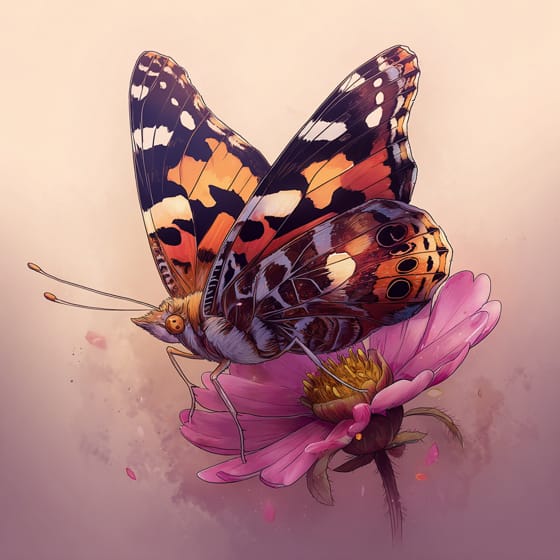
Vanessa cardui
butterfly feeds on nectar
Agonopterix assimilella
caterpillars feed on leaves
Flowering plants are any plants that produce flowers as part of their reproductive cycle.
Summer blooming plants produce their flowers during the summer season, often providing vibrant color when many other plants have finished.
Colorful describes organisms or objects displaying a wide range of bright and distinct colors.
Grassland habitats are terrestrial biomes dominated by grasses and herbaceous plants, supporting a variety of grazing animals.

Describes plants that are particularly attractive and beneficial to a wide range of pollinating organisms.

Possessing sharp, pointed projections or spines on the body or surface.

Describes organisms that transfer pollen, enabling the fertilization and reproduction of plants.
No aliases listed yet.
Danger
1/5 · Very low
Always look but don't touch wild plants unless you know they are safe.
The easiest way to identify Brown Knapweed is to use the Snappit nature identifier app.
30-80 cm
20-40 cm
2-4 cm
Summer to early fall
Yes
None
Perennial
Zoom in to split clusters and explore where this object has been snapped.
Take the discovery with you
Snap it with Snappit to identify it, learn what makes it special, and add the discovery to your collection.









.jpg&width=800)



_001.jpg&width=800)




