





Pinxter Flower
Rhododendron periclymenoides
The Pinxter Flower is a beautiful, pink flower that blooms in spring. It grows in clusters and is loved by butterflies and bees for its sweet nectar.
Habitat: Forests
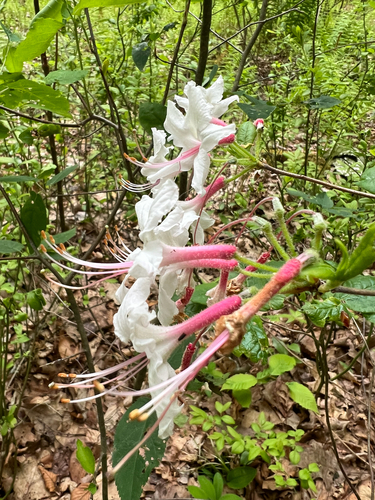
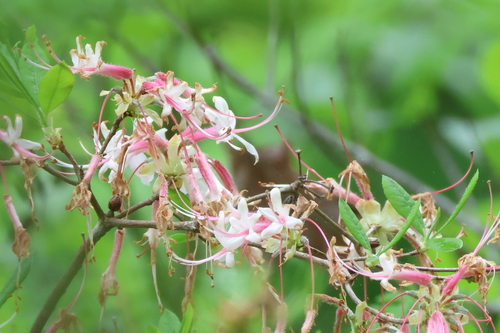
The Pinxter Flower is a deciduous shrub with showy clusters of trumpet-shaped flowers, ranging from pale pink to white, often with long, protruding stamens. It blooms in early spring, creating a striking visual contrast before its leaves fully emerge.
Category
PlantsRarity
Common
Danger
1/5 · Very low
Snaps
7
Its unique name, "Pinxter," comes from an old Dutch word for Pentecost!
Native Americans used parts of this plant for traditional medicinal purposes.
This flower is a Rhododendron, a name meaning 'rose tree' in Greek!
Unlike 'flame azaleas,' Pinxter flowers dazzle with cool pink and white colors!
Pinxter Flower has vibrant pink, trumpet-shaped flowers that act like a visual target, guiding long-tongued insects to its sweet nectar.
Pinxter Flower has toxic compounds in its leaves and flowers, protecting it from being eaten by most hungry animals.
Bombus impatiens
Feeds on nectar and pollen.
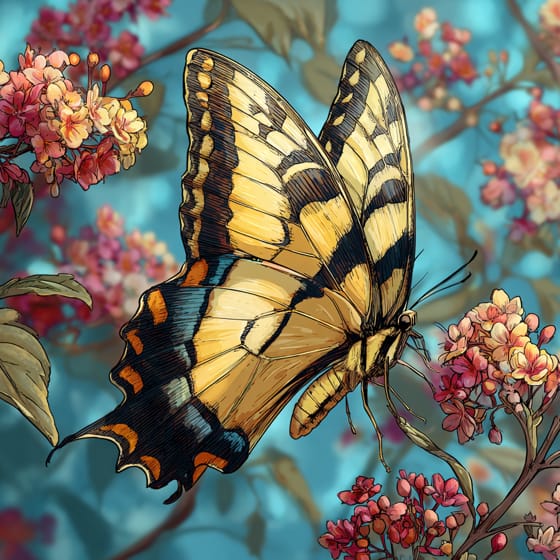
Papilio glaucus
Visits flowers for nectar.

Archilochus colubris
Feeds on nectar from tubular flowers.

Odocoileus virginianus
May browse leaves, but generally avoided due to toxicity.
Deciduous plants periodically shed all their leaves, typically during autumn or dry seasons.
Flowering plants are any plants that produce flowers as part of their reproductive cycle.
Cluster flowers are inflorescences where individual flowers are arranged closely together on a common stem.
A shrub is a woody plant smaller than a tree, typically with multiple stems branching from or near the ground.

Spring blooming plants produce their flowers during the spring season, often signifying the end of winter and the start of new growth.

Fragrant flowers emit a pleasant aroma, often to attract pollinators or for defense.

Colorful describes organisms or objects displaying a wide range of bright and distinct colors.

Describes plants that are particularly attractive and beneficial to a wide range of pollinating organisms.

Forest habitats are terrestrial environments dominated by dense tree cover, supporting a high diversity of plant and animal life.
Danger
1/5 · Very low
Do not touch or eat flowers without asking an adult.
The easiest way to identify Pinxter Flower is to use the Snappit nature identifier app.
90-300 cm
90-300 cm
3.8-5 cm
Spring (April-May)
No
Moderate
Perennial
Zoom in to split clusters and explore where this object has been snapped.
May 22, 2026
Hopkins Mill Historic DistrictPhoto attribution
(c) Deana Tempest Thomas, some rights reserved (CC BY)
License: CC BY 4.0 ↗
Image may be shown cropped inside the card frame.
Apr 26, 2026
Scottsville Historic DistrictPhoto attribution
(c) Andre Knocklein, some rights reserved (CC BY)
License: CC BY 4.0 ↗
Image may be shown cropped inside the card frame.

Connecticut, US
You might spot Green Frog, Wood Anemone, and Sweet Pepperbush.
View guide →

Connecticut, US
You might spot White-Tailed Deer and Common Eastern Bumble Bee.
View guide →

New Jersey, US
You might spot Eastern Newt, Spongy Moth, and Viper's-Bugloss.
View guide →

Rhode Island, US
You might spot Wood Frog, Sensitive Fern, and Northern Starflower.
View guide →

Connecticut, US
You might spot Diamondback Terrapin, Eastern Bluebird, and Bloodroot.
View guide →

Connecticut, US
You might spot Ghost Pipe, American Wintergreen, and Mountain Laurel.
View guide →
Take the discovery with you
Snap it with Snappit to identify it, learn what makes it special, and add the discovery to your collection.





.jpg&width=800)


_001.jpg&width=800)




