

Cheirolophus Teydis
cheirolophus teydis
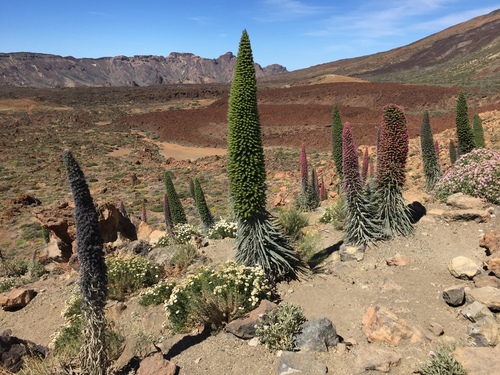
Cheirolophus teydis, commonly known as the Teide cornflower or Cabezón del Teide, is a striking perennial shrub endemic to the high-altitude volcanic slopes of Tenerife and La Palma in the Canary Islands. Growing robustly in the harsh, sun-drenched subalpine zones, this resilient plant is a magnificent example of island adaptation. It stands out with its globose form and erect stems capped by pale yellow, thistle-like flower heads. Historically, it has survived in some of the most barren, rocky environments of Mount Teide, adapting beautifully to nutrient-poor soils and extreme temperature fluctuations. This species plays an important ecological role in its restricted habitat, offering pollen and nectar to native insects like the endemic bumblebee in areas where few other plants can thrive. Visitors to the Teide National Park during late spring are often treated to the spectacular sight of these shrubs in full bloom.
Habitat: Found in high-altitude subalpine scrublands and rocky volcanic slopes of the Canary Islands, primarily between 1,800 and 2,200 meters above sea level.
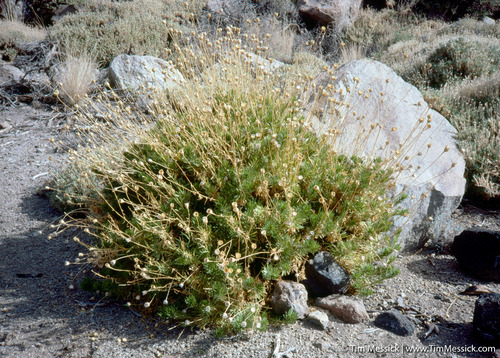
Cheirolophus teydis is a medium to large woody shrub reaching heights between 100 and 200 cm. It features long, lanceolate, pale green leaves with serrated margins that are densely clustered at the tips of its branching stems. The most distinctive identifier is its large, pale yellow to whitish flower heads which are surrounded by numerous overlapping, scale-like bracts with slightly fringed edges. These globular flower heads sit atop long, leafless stalks, making them highly visible against the plant's foliage.
Category
PlantsRarity
Common
Danger
1/5 · Very low
Snaps
Be the first to snap!
Because of intense grazing by introduced rabbits and goats, many of the remaining wild specimens are restricted to inaccessible vertical cliffs.
The specific epithet 'teydis' directly refers to Mount Teide, the towering volcano on Tenerife where this species was first described.
This plant is a 'living fossil' of the Canary Islands, belonging to a genus that underwent rapid evolutionary radiation on the archipelago.
Possesses a highly specialized root system capable of anchoring and extracting moisture from loose, dry volcanic lapilli.
Features waxy, leathery leaf surfaces that limit water loss under intense subalpine solar radiation and dry winds.
Produces lightweight, wind-dispersed seeds equipped with a pappus, allowing them to colonize isolated rocky crevices.
As a photoautotrophic plant, Cheirolophus teydis produces its own food through photosynthesis, utilizing sunlight, carbon dioxide, water, and minerals from volcanic soils.
Capra hircus
Feral goats graze heavily on this endangered plant, posing a significant threat to its survival.
Gallotia galloti
An endemic lizard feeds on the flowers and fruits, aiding in seed dispersal.
Bombus canariensis
Native pollinator visiting the pale yellow flower heads to collect nectar and pollen.
No trait badges are assigned for this object yet.
No aliases listed yet.
Collections for this object will appear here as more themes are added.
Danger
1/5 · Very low
No special safety notes yet.
Start with the whole plant, then compare leaf arrangement, leaf edges, stems and any flowers or fruit. Opposite leaves grow in pairs; alternate leaves come one at a time along the stem. These details tell you far more together than a single green leaf does. Plant Identifier: upload a photo and compare the visible details.
100-200 cm
5-15 years
As a photoautotrophic plant, Cheirolophus teydis produces its own food through photosynthesis, utilizing sunlight, carbon dioxide, water, and minerals from volcanic soils.
Found in high-altitude subalpine scrublands and rocky volcanic slopes of the Canary Islands, primarily between 1,800 and 2,200 meters above sea level.
Photosynthesis
Zoom in to split clusters and explore where this object has been snapped.
Recent snaps will appear here as new observations are added.
Take the discovery with you
Snap it with Snappit to identify it, learn what makes it special, and add the discovery to your collection.