





meadow anemone
Anemonastrum canadense
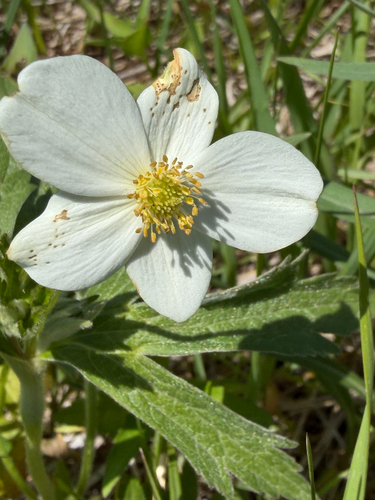
The meadow anemone is a lovely flower that blooms in spring and summer. Its delicate white petals and yellow center make it look like a little star in the grass!
Habitat: Meadows and forest edges
The meadow anemone has simple, pure white flowers with 5 to 9 petal-like sepals, surrounding a bright yellow cluster of stamens. Its deeply lobed, dark green leaves contrast beautifully with the bright blooms, making it stand out as it forms lovely colonies.
Category
PlantsRarity
Common
Danger
1/5 · Very low
Snaps
24
After pollination, the beautiful white flowers can strangely turn green before they wither away.
Even its fluffy seeds are super light and can float on water to travel to new homes!
Its scientific name, Anemonastrum canadense, roughly means 'wind flower of Canada'!
This flower is sometimes called 'Thimbleweed' because its seed heads look like tiny thimbles!
Meadow anemone has **underground stems** (rhizomes) that help it spread easily, creating wide patches of flowers in meadows.
This plant has **mildly irritating sap** that helps it deter some hungry animals from taking a bite of its leaves.
Its **bright white petals and sunny yellow center** help it attract many busy bees and butterflies for pollination.

Bombus impatiens
collects nectar, transferring pollen between flowers.
Apis mellifera
gathers nectar and pollen from its blooms.

Celastrina neglecta
visits flowers to drink nectar.
Deciduous plants periodically shed all their leaves, typically during autumn or dry seasons.
Flowering plants are any plants that produce flowers as part of their reproductive cycle.
Spring blooming plants produce their flowers during the spring season, often signifying the end of winter and the start of new growth.
Summer blooming plants produce their flowers during the summer season, often providing vibrant color when many other plants have finished.

Fragrant flowers emit a pleasant aroma, often to attract pollinators or for defense.

Describes plants that are particularly attractive and beneficial to a wide range of pollinating organisms.

Forest habitats are terrestrial environments dominated by dense tree cover, supporting a high diversity of plant and animal life.
No aliases listed yet.
Danger
1/5 · Very low
Always look but don't touch flowers unless you know they are safe!
The easiest way to identify meadow anemone is to use the Snappit nature identifier app.
30-60 cm
30-90 cm
2.5-5 cm
Late spring to early summer
No
Mild
Perennial
Zoom in to split clusters and explore where this object has been snapped.
May 15, 2026
High Trestle TrailPhoto attribution
(c) Kevin, some rights reserved (CC BY)
License: CC BY 4.0 ↗
Image may be shown cropped inside the card frame.

Illinois, US
You might spot Brown-Belted Bumble Bee and Eastern Gray Squirrel.
View guide →

Michigan, US
You might spot Yellow Lady's Slipper and Ring-Billed Gull.
View guide →

Iowa, US
You might spot Common Milkweed, Amur Honeysuckle, and Canada Anemone.
View guide →

Minnesota, US
You might spot Common Eastern Bumble Bee and Turkey.
View guide →

Wisconsin, US
You might spot Common Eastern Bumble Bee, Red-Belted Bumble Bee, and Duck.
View guide →

Québec, CA
You might spot Common Eastern Bumble Bee and Asian Lady Beetle.
View guide →
Take the discovery with you
Snap it with Snappit to identify it, learn what makes it special, and add the discovery to your collection.






.jpg&width=800)


_001.jpg&width=800)




